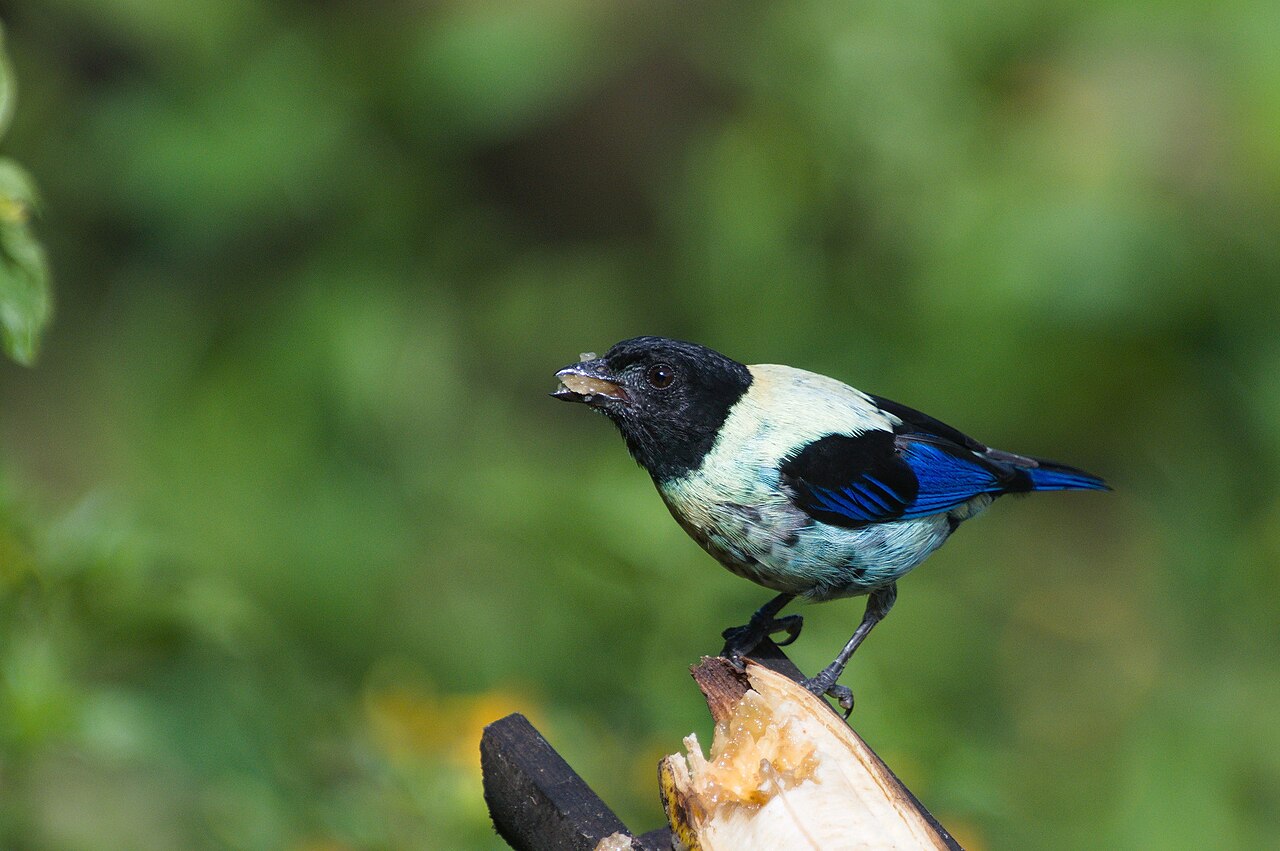
The black-headed shrike-babbler is a bird species traditionally placed with the Old World babblers in the family Timaliidae. However, it might be one of the few Eurasian vireos (Vireonidae).
Region
Himalayas and northern Indochina
Typical Environment
Found from the eastern Himalayas of India, Nepal, and Bhutan through northern Myanmar into southwest China (Yunnan) and parts of Thailand, Laos, and Vietnam. It inhabits evergreen and mixed montane broadleaf forests, often with oak, rhododendron, and laurel. The species favors mid- to upper-canopy levels and frequents forest edges and clearings. It tolerates secondary growth and selectively logged forest where sufficient canopy remains.
Altitude Range
1200–3000 m
Climate Zone
Highland
Ease of Keeping
Beginner friendly: 1/5
Once placed with Old World babblers (Timaliidae), this species and its relatives are now widely treated as Eurasian vireos (Vireonidae) due to vocal and genetic evidence. Males have a striking black head contrasting with warm rufous underparts, while females are duller and lack the solid black hood. It often joins mixed-species flocks and forages methodically like a vireo. Its clear, whistled phrases carry through montane forests of the Himalayas and Southeast Asia.


Pteruthius rufiventer from Khangchendzonga National Park, West Sikkim, Sikkim, India.
Temperament
active and methodical
Flight Pattern
short rapid wingbeats
Social Behavior
Often participates in mixed-species foraging flocks with tits, yuhinas, and warblers. During breeding it forms territorial pairs that build a neat cup nest on a horizontal fork or suspended from thin branches. Both parents incubate and feed the young, foraging mostly in the mid-canopy.
Migratory Pattern
Partial migrant
Song Description
Song is a series of clear, whistled phrases delivered at a measured pace, vireo-like in quality. Calls include sharp chip notes and soft scolds given while foraging.
Plumage
Male shows a glossy black head and throat with olive-green mantle and wings, bright wing paneling, and rich rufous to chestnut belly; female is more olive-brown overall with duller underparts and lacks the full black hood. Both sexes have a stout, slightly hooked bill and contrasting wing bars or panels.
Diet
Primarily small insects and other arthropods gleaned from leaves, buds, and twigs. It takes caterpillars, beetles, and spiders, occasionally hovering to pick hidden prey. Small berries and soft fruits may be taken opportunistically, especially outside the breeding season.
Preferred Environment
Feeds in the mid to upper canopy of montane evergreen and mixed forests, along edges, and in gaps. Often forages deliberately through foliage, sometimes hanging or making short sallies to snatch prey.