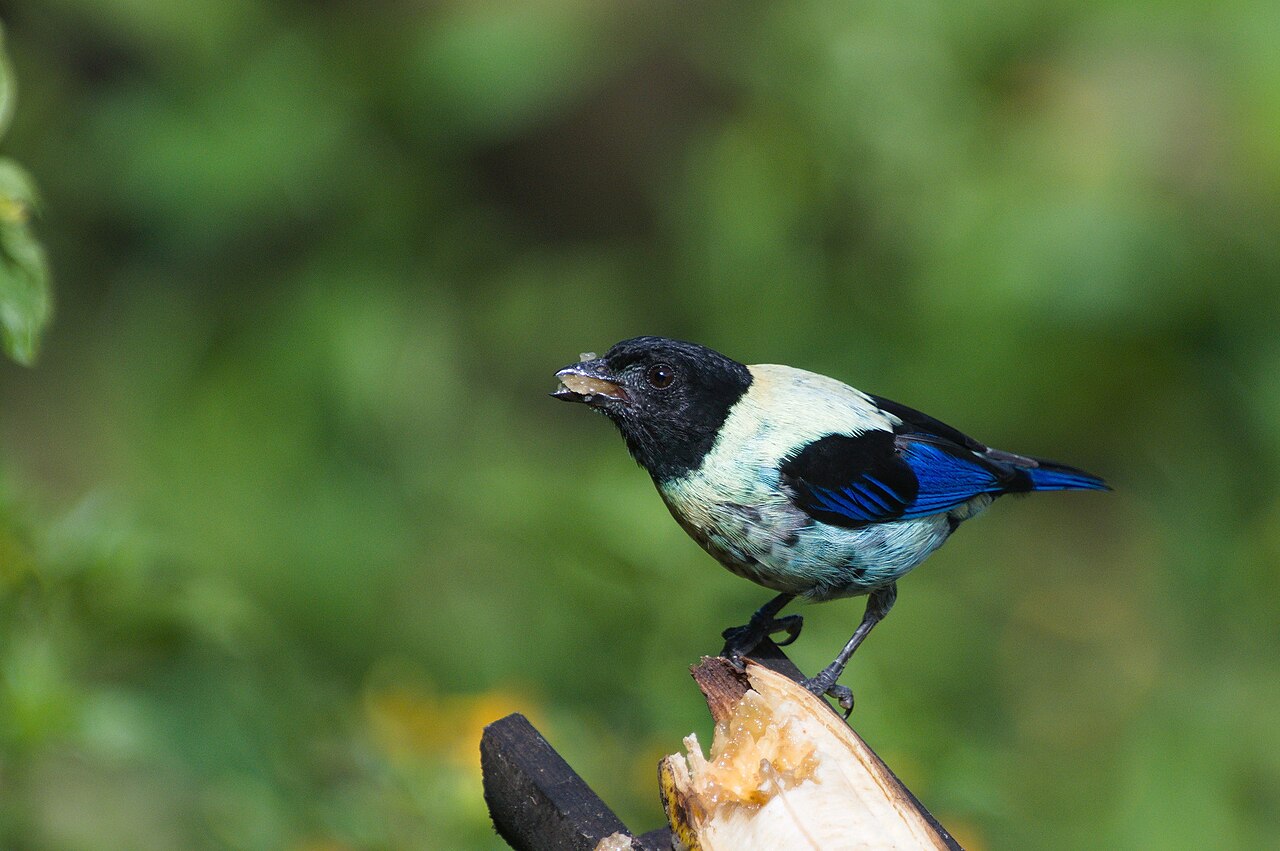
The black-headed tailorbird, also known as the white-browed tailorbird, is a species of songbird in the cisticola family, Cisticolidae. First formally described by the Scottish ornithologist Arthur Hay in 1877, it is endemic to the southeastern Philippines, where it is found on the islands of Mindanao, Dinagat, and Siargao. It inhabits dense undergrowth in lowland forests at elevations of up to 1,000 m (3,300 ft).
Region
Southeast Asia
Typical Environment
Occurs in the southeastern Philippines, where it inhabits dense undergrowth of lowland primary and secondary forests. It favors thickets, vine tangles, forest edges, and riparian scrub, and occasionally enters overgrown gardens near forest. The species keeps close to the ground and lower midstory, moving through cover while foraging. It is most frequently encountered in relatively undisturbed patches but can persist in moderately degraded habitats with sufficient understory.
Altitude Range
Sea level to 1000 m
Climate Zone
Tropical
Ease of Keeping
Beginner friendly: 1/5
A tiny, active tailorbird that stitches leaves together to form a pouch-like nest using plant fibers and spider silk. It skulks in dense understory, often more easily heard than seen, delivering sharp, repetitive calls. First described in 1877 by Arthur Hay, it is confined to the southeastern Philippines.


A 2009 Philippine stamp featuring the black-headed tailorbird
Temperament
skulking and active
Flight Pattern
short rapid wingbeats
Social Behavior
Usually seen in pairs or small family groups within dense understory. Builds a characteristic sewn-leaf nest using plant fibers and spider silk. Territorial during the breeding season, with pairs maintaining small home ranges.
Migratory Pattern
Resident
Song Description
A series of sharp, metallic chips and rapid, repetitive notes delivered from low cover. Calls are high-pitched and penetrating, often revealing the bird’s presence when it remains hidden.
Plumage
Olive-green upperparts with whitish underparts and buffy flanks; long, graduated tail often held cocked. Head largely black with a contrasting white eyebrow (supercilium). Fine, slender bill and relatively plain wings.
Diet
Feeds mainly on small insects, including caterpillars, beetles, and other arthropods gleaned from leaves and stems. Also takes spiders and occasionally small larvae from rolled leaves. Foraging is methodical but quick, with frequent hops and short sallies within shrub layers.
Preferred Environment
Forages in dense shrubbery, vine tangles, bamboo clumps, and low forest edges. Typically remains within the lower understory and along riparian thickets where foliage is thick.