
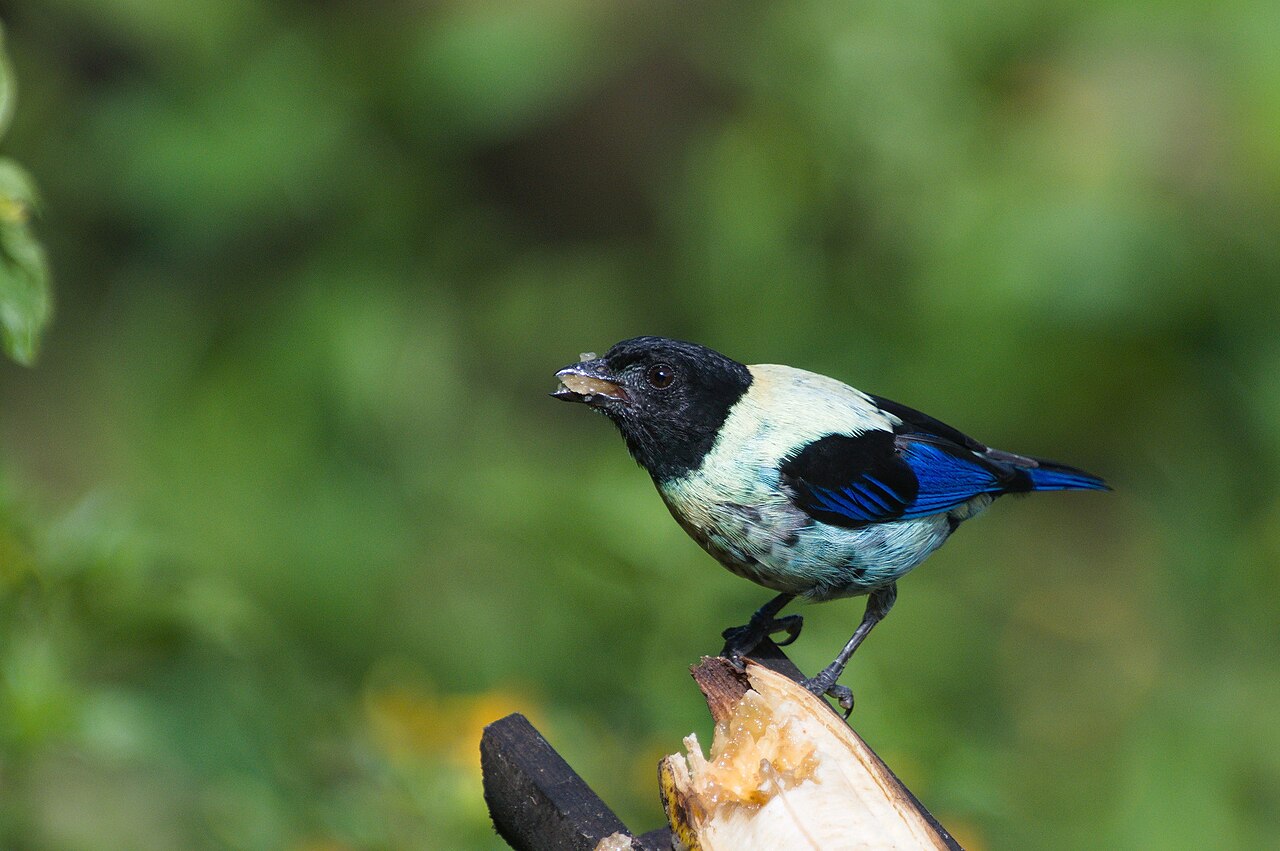
The black-headed tanager is a species of bird in the family Thraupidae. It is found in the Andes of northeastern Colombia and the Venezuelan Coastal Range. Its natural habitats are subtropical or tropical moist montane forests, subtropical or tropical high-altitude shrubland, and heavily degraded former forest. The black-hooded tanager was formerly considered to be conspecific with this species.
Region
Northern Andes and Venezuelan Coastal Range
Typical Environment
Occurs on humid montane slopes of northeastern Colombia and across the Venezuelan Coastal Range. It favors cloud forest edges, elfin woodland, and densely vegetated ravines, and readily uses secondary growth and degraded former forest. Birds also appear along forested roadsides and in shade-coffee mosaics where fruiting shrubs are present. The species typically ranges from the midstory to canopy but will descend to shrubs when feeding.
Altitude Range
800–3200 m
Climate Zone
Highland
Ease of Keeping
Beginner friendly: 1/5
The black-headed tanager is a highland member of the tanager family (Thraupidae), inhabiting humid Andean slopes and the Venezuelan Coastal Range. It frequents forest edges, second growth, and shrubby montane habitats where it forages on small fruits and insects. It often joins mixed-species flocks, moving actively through the canopy and midstory. The black-hooded tanager was formerly treated as conspecific, but is now recognized as a separate species.


Temperament
active and somewhat shy
Flight Pattern
short rapid wingbeats
Social Behavior
Usually seen in pairs or small family groups and commonly joins mixed-species flocks in the canopy. Nests are cup-shaped and placed in dense vegetation or small trees; both parents likely assist with provisioning. Territorial displays are modest, with soft chases through foliage.
Migratory Pattern
Resident
Song Description
Song is a thin, tinkling series of high notes interspersed with buzzy trills. Calls are sharp, high-pitched tsit and tsee notes used to keep contact while foraging.
Plumage
Compact tanager with a contrasting dark head and brighter green to bluish-green body; plumage smooth and slightly glossy. Often shows a bluish shoulder panel and subtle pale edging to the wing feathers.
Diet
Takes small fruits and berries, especially from melastomes and other montane shrubs. Regularly gleans insects and other arthropods from leaves and twigs and will sally short distances to snatch flying prey. Occasionally investigates flowers for nectar or small invertebrates.
Preferred Environment
Feeds in the midstory and canopy of cloud forest edges, second-growth thickets, and shrubby slopes. Also uses semi-open mosaics such as shade-coffee and roadside vegetation where fruiting shrubs are abundant.


