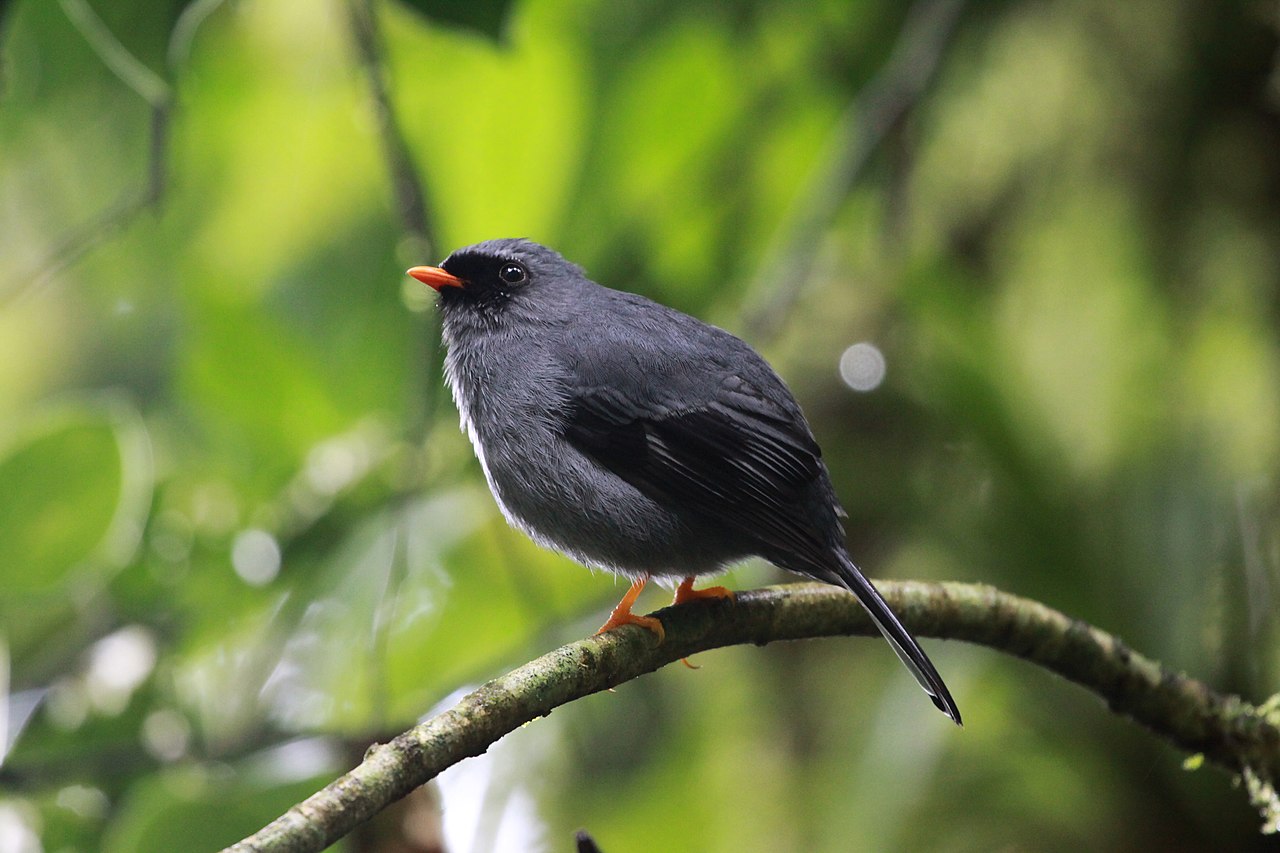
The black-faced monarch is a passerine songbird in the family Monarchidae found along the eastern seaboard of Australia, and also New Guinea.
Region
Eastern Australia and New Guinea
Typical Environment
Breeds in coastal and subcoastal forests from southeastern Queensland through New South Wales into eastern Victoria, with nonbreeding movements to New Guinea and Cape York Peninsula. Prefers moist eucalypt forests, rainforest edges, riparian corridors, and sheltered gullies with dense midstory. Often found near creeks and in shaded understory, including regrowth and well-vegetated parks close to forest. In New Guinea it uses lowland to foothill rainforest and monsoon forest edges.
Altitude Range
Sea level to 1200 m
Climate Zone
Subtropical
Ease of Keeping
Beginner friendly: 1/5
This monarch flycatcher breeds in forests along Australia’s eastern seaboard and migrates north to winter in New Guinea and far northern Australia. It forages by gleaning and short sallies, helping control forest insect populations. It can be confused with the Spectacled Monarch, but lacks the latter’s bold white eye-ring and shows a solid black face mask.

Temperament
shy and unobtrusive
Flight Pattern
short rapid wingbeats with quick sallies
Social Behavior
Typically seen singly or in pairs during the breeding season, defending small territories in dense vegetation. Builds a neat cup nest suspended in a fork or horizontal twig, often over water; both parents incubate and feed young. Outside breeding, may join mixed-species flocks in the forest understory.
Migratory Pattern
Seasonal migrant
Song Description
A clear, melodious series of piping whistles, often descending and repeated from shaded perches. Calls include soft chups and sharper contact notes while foraging.
Plumage
Smooth grey upperparts with darker wings, warm rufous to cinnamon underparts, and a bold black face and throat mask; subtly paler belly and fine pale fringes on wing coverts.
Diet
Feeds mainly on flying and foliage-dwelling insects such as moths, beetles, flies, and caterpillars, along with spiders. Gleans from leaves and twigs, snatches prey from the air, and occasionally probes bark crevices. May take small berries opportunistically when insects are scarce.
Preferred Environment
Forages in the shaded understory to mid-canopy of moist forests, along creek lines, and at rainforest edges. Frequently uses perches just inside dense cover, making short dashes to capture prey.