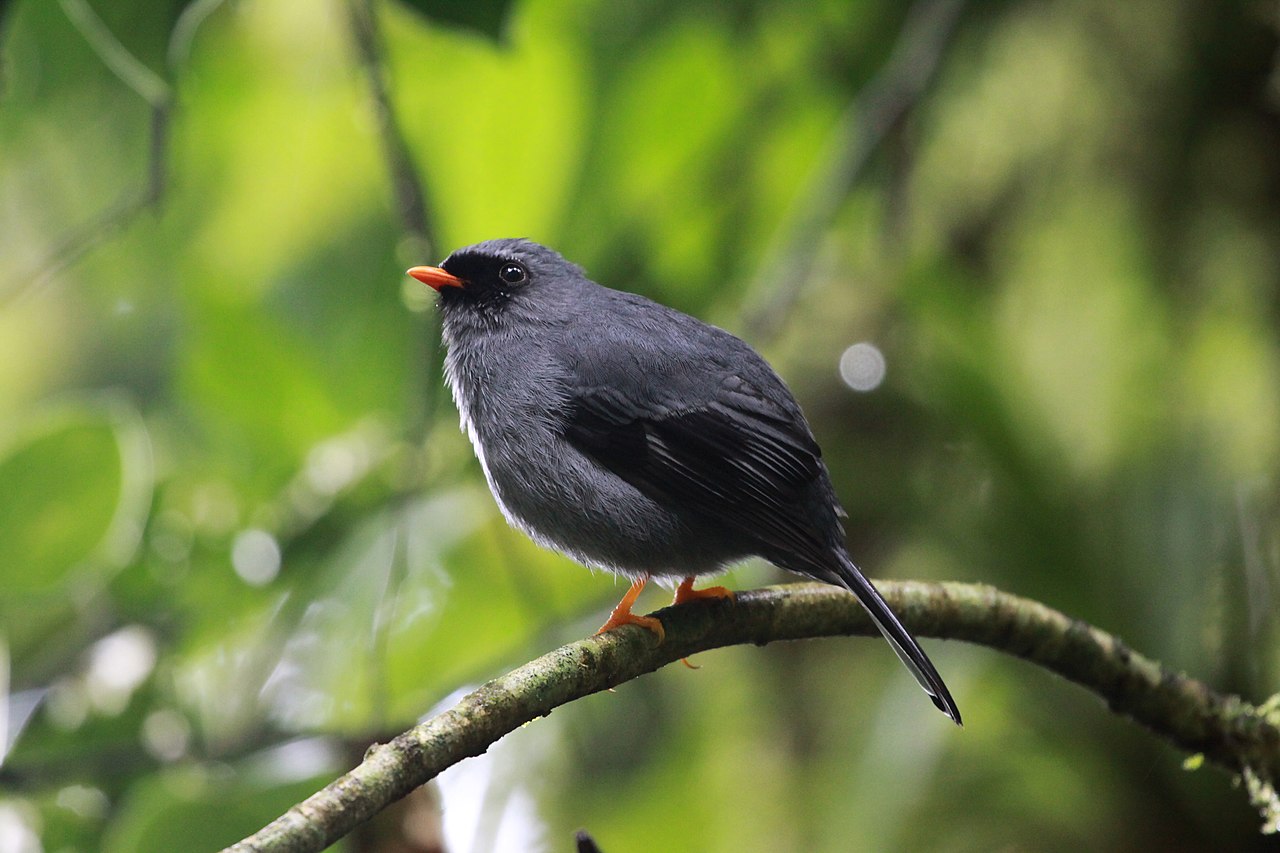
The black-faced sandgrouse is a species of bird in the Pteroclidae family. It is found in Ethiopia, Kenya, Somalia, Tanzania, and Uganda.
Region
East Africa
Typical Environment
Occurs in arid and semi-arid bush, open savanna, and stony plains with scattered shrubs, especially Acacia–Commiphora habitats. It favors sparsely vegetated ground and gravel pans where it can blend into the substrate. The species depends on access to permanent or seasonal water and makes regular flights to drink. It avoids dense woodland and lush grasslands, and can use lightly grazed rangeland and the margins of subsistence farmland.
Altitude Range
0–1800 m
Climate Zone
Arid
Ease of Keeping
Beginner friendly: 1/5
A sandgrouse of dry East African savannas, the black-faced sandgrouse is famous for dawn and dusk flights to waterholes. Like other sandgrouse, males can carry water soaked into their belly feathers to chicks at the nest. Its cryptic, finely barred plumage makes it hard to spot on stony ground. Pairs or small groups are common, but larger congregations gather at reliable water sources.


P. d. ellenbecki ♂,♀P. d. decoratus ♂,♀Journal für Ornithologie
Temperament
wary and cryptic
Flight Pattern
strong flier with short rapid wingbeats
Social Behavior
Usually seen in pairs or small family groups, with larger flocks forming at waterholes. Ground-nesting in a simple scrape lined with small stones or plant fragments. Both parents attend the young; males transport water to chicks in specialized belly feathers.
Migratory Pattern
Resident
Song Description
Gives mellow, far-carrying, rolling calls during fly-ins to water at dawn and dusk. Notes are nasal and repeated, used to keep contact within groups in open country.
Plumage
Cryptic sandy-brown to buff with fine barring and mottling on the upperparts; underparts paler. Feathers are tight and sleek, aiding fast, direct flight.
Diet
Primarily takes dry seeds of grasses and forbs, picked from the ground. It supplements with fresh shoots and leaves when available. Occasional small invertebrates may be taken, especially by chicks, but these are a minor part of the diet. Grit is swallowed to aid seed grinding.
Preferred Environment
Feeds on open, sparsely vegetated ground such as stony flats, short-grass savanna, and the edges of scrub. Often forages along tracks, overgrazed patches, and recently burned areas where seeds are accessible.