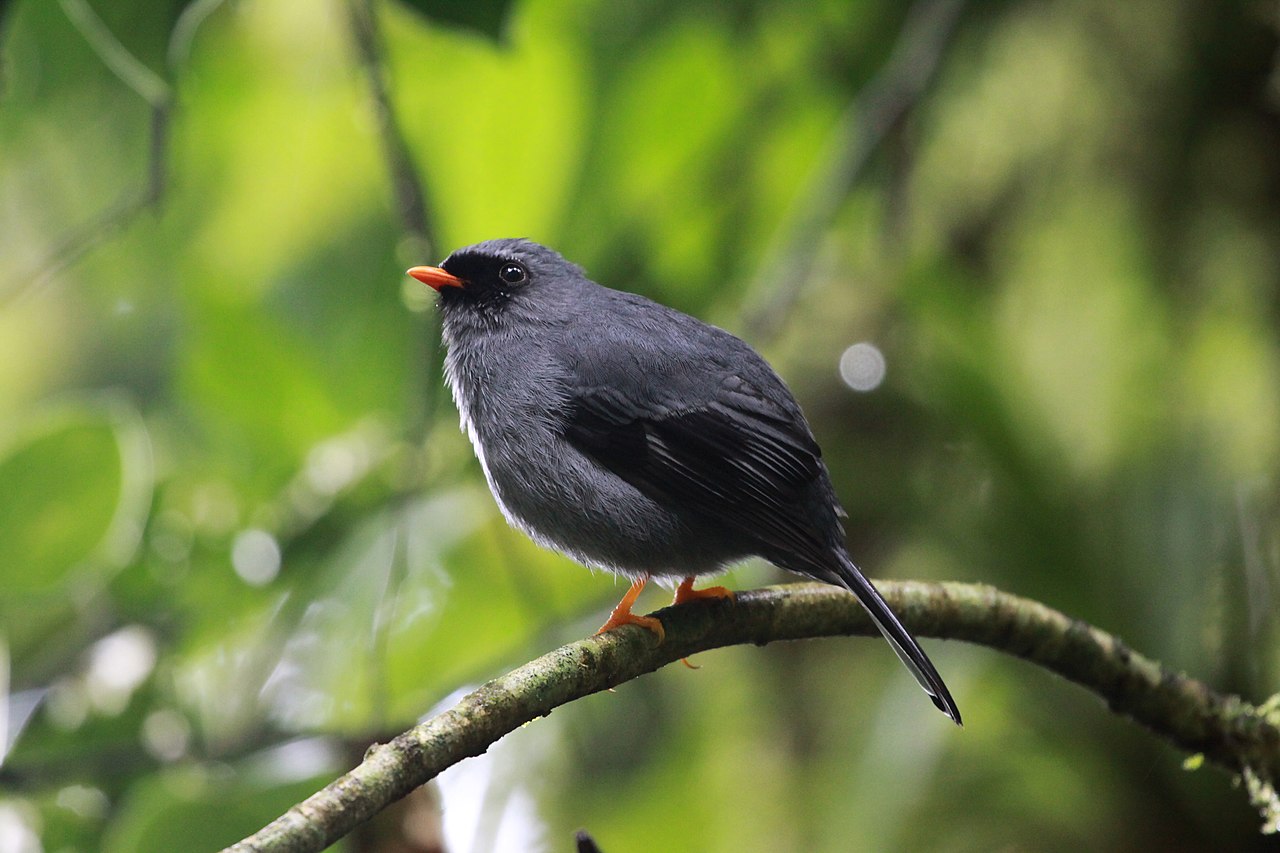
The black-faced munia is a species of estrildid finch found in Indonesia and East Timor. It occurs in a wide range of habitats including artificial landscapes, forest, grassland and savannah. It was first described by the Swedish naturalist Carl Linnaeus in the twelfth edition of his Systema Naturae in 1766. The IUCN has evaluated the status of this bird as being of least concern.
Region
Wallacea (eastern Indonesia and Timor)
Typical Environment
Occurs widely across the Maluku and Lesser Sunda Islands, including Timor, and adjacent islands. It inhabits grasslands, forest edges, scrub, savannah, wetlands with reedbeds, and agricultural landscapes such as rice paddies and village gardens. The species tolerates disturbed areas and often forages along roadsides and fallow fields. It is largely sedentary but may move locally in response to food availability.
Altitude Range
Sea level to 1500 m
Climate Zone
Tropical
Ease of Keeping
Beginner friendly: 3/5
The black-faced munia is an estrildid finch native to Indonesia and East Timor, thriving in both natural and human-altered habitats, including rice fields. It was described by Carl Linnaeus in 1766 and is currently assessed as Least Concern by the IUCN. Highly social and adaptable, it often forms flocks and can quickly exploit seeding grasses after rains.

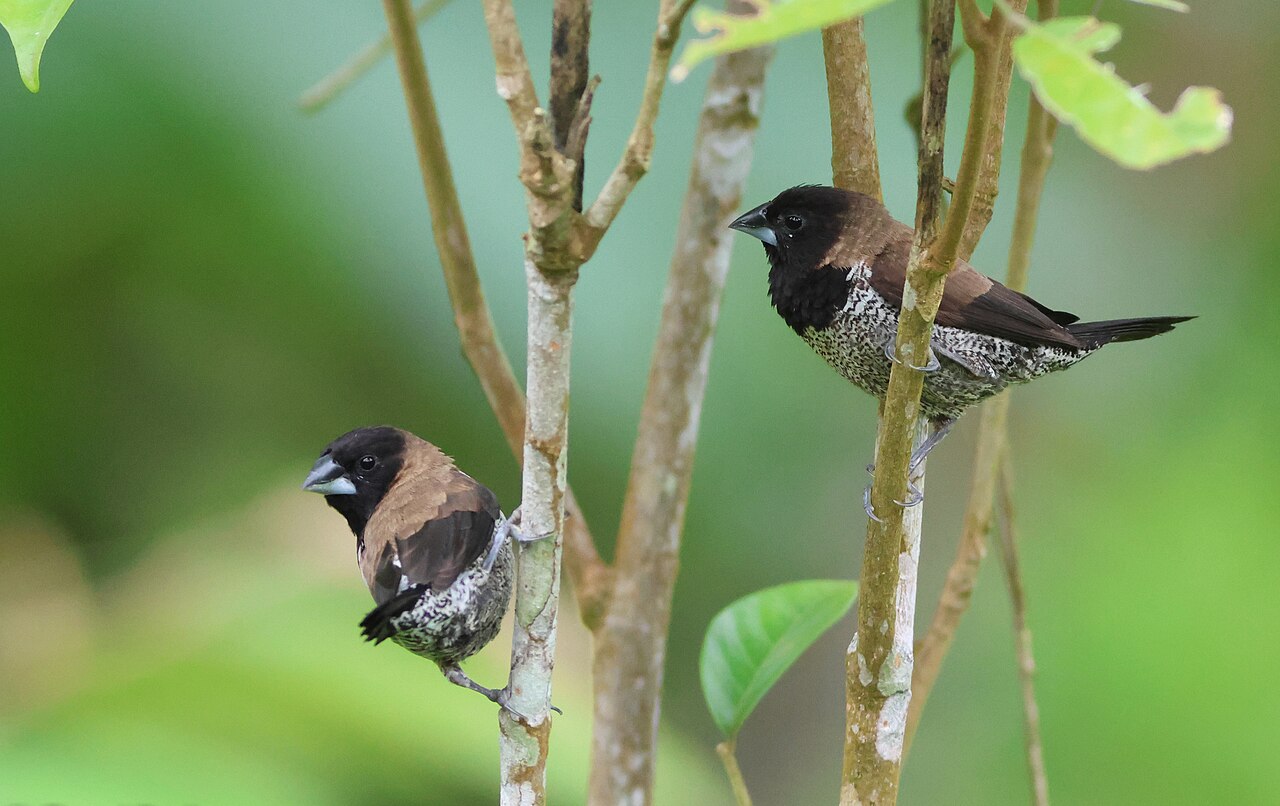
Black-faced Munia from Tomohon, North Sulawesi
Temperament
social and active
Flight Pattern
short rapid wingbeats
Social Behavior
Usually found in small to medium-sized flocks, sometimes gathering in larger groups at abundant food sources. Pairs build globular grass nests in reeds, shrubs, or low trees and may nest semi-colonially. Breeding often coincides with periods of peak grass seeding after rains.
Migratory Pattern
Resident
Song Description
Soft, tinkling twitter interspersed with simple trills and buzzes. Calls are quiet contact notes used to keep flock cohesion, with slightly more musical phrases during courtship.
Plumage
Warm brown upperparts with a deep black face and throat contrasted by pale buff to whitish underparts; some birds show faint scaling on the lower belly. Short, neat plumage with a compact, finch-like silhouette.
Diet
Primarily feeds on small grass and sedge seeds, including cultivated grains such as rice and millet. Birds pick seeds directly from seed heads or glean fallen seeds on the ground. They will occasionally take small invertebrates, especially when feeding nestlings, but plant material dominates the diet.
Preferred Environment
Forages in open grassy areas, paddy fields, weedy margins, and along trails and field edges. Frequently visits stubble and fallow plots where seeding grasses are abundant.