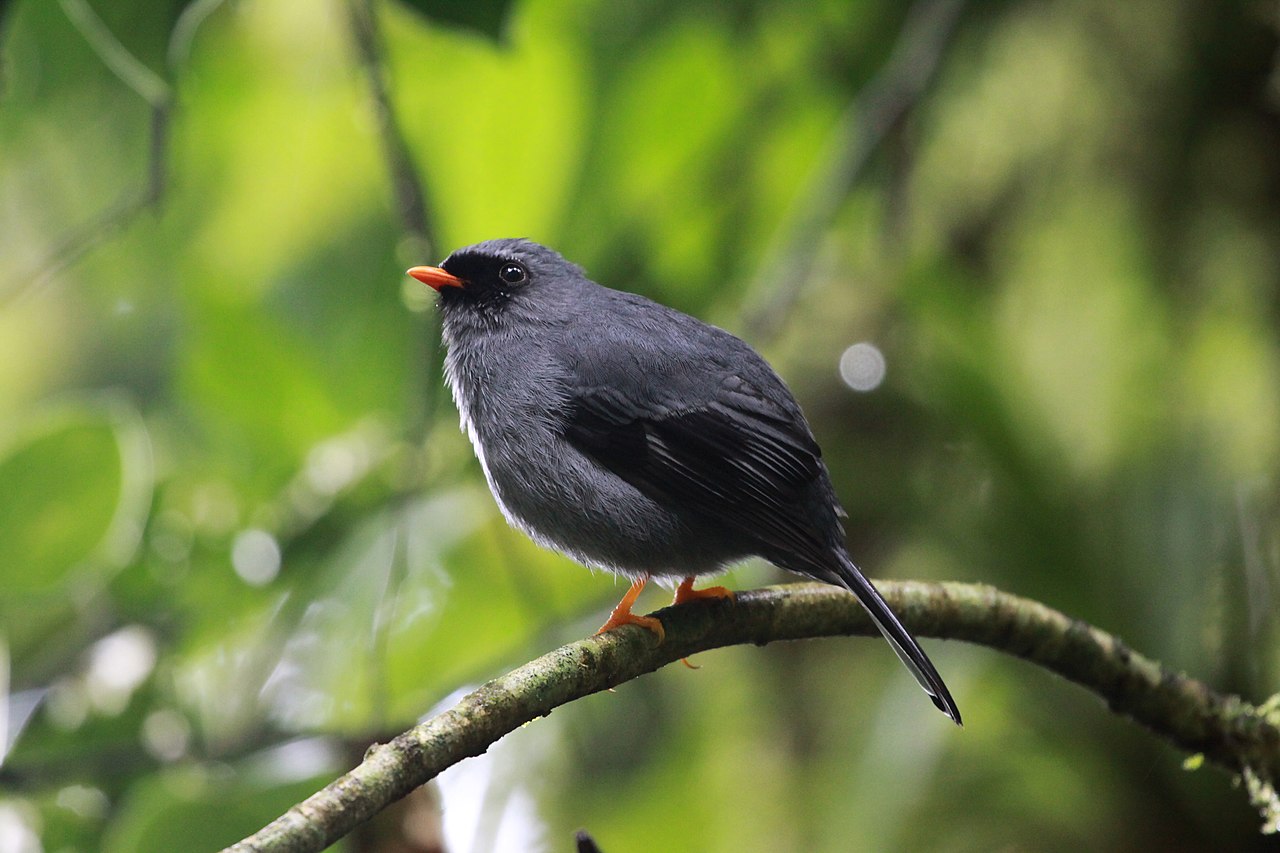
The black-faced rufous warbler is a species of bird in the family Cisticolidae. It is found in Cameroon, Central African Republic, Republic of the Congo, Democratic Republic of the Congo, Equatorial Guinea, Gabon, Kenya, Rwanda, South Sudan, Tanzania, and Uganda. Its natural habitats are subtropical or tropical moist lowland forest and subtropical or tropical moist montane forest.
Region
Central and East Africa
Typical Environment
It inhabits lowland and montane tropical forests from Cameroon and Gabon east through the Congo Basin to Uganda, Rwanda, South Sudan, Kenya, and northwestern Tanzania. The species favors dense understory in primary and secondary forest, including vine tangles, forest edges, and riverine thickets. It is frequently encountered in regenerating clearings and along trails where cover remains thick. Within montane zones it keeps to moist gullies and well-vegetated ravines.
Altitude Range
Sea level to 2400 m
Climate Zone
Tropical
Ease of Keeping
Beginner friendly: 1/5
This shy forest warbler keeps to dense undergrowth, where it forages methodically through tangles and vine-choked thickets. Pairs often keep in contact with antiphonal duets, a behavior common in several African cisticolids. It may join mixed-species flocks in the understory, especially in more disturbed forest edges.

Temperament
secretive and skulking
Flight Pattern
short rapid wingbeats, low through understory
Social Behavior
Usually found singly or in pairs that maintain close contact while moving through dense cover. Pairs are thought to duet, with males and females alternating phrases. The nest is placed low in dense vegetation, and both parents participate in rearing the young.
Migratory Pattern
Resident
Song Description
A series of clear, sharp whistles and trills often given as an antiphonal duet between partners. Calls include soft tcks and scolding notes delivered from concealed perches.
Plumage
Rich rufous-brown overall with a contrasting dark, blackish face and lores; wings and tail slightly darker rufous with minimal patterning. Underparts are warm rufous with a smooth, unbarred look. Plumage appears uniformly soft and sleek, aiding its skulking habits in dense foliage.
Diet
Feeds primarily on small insects and other arthropods, gleaned from leaves, stems, and vine tangles. It inspects tangled vegetation carefully and will probe into curled leaves and bark crevices. Occasional small spiders and larvae are taken; fruit is rarely, if ever, consumed.
Preferred Environment
Forages in the shaded understory of humid forests, particularly where vines and saplings form dense cover. Also uses edges, clearings with thick regrowth, and streamside thickets.