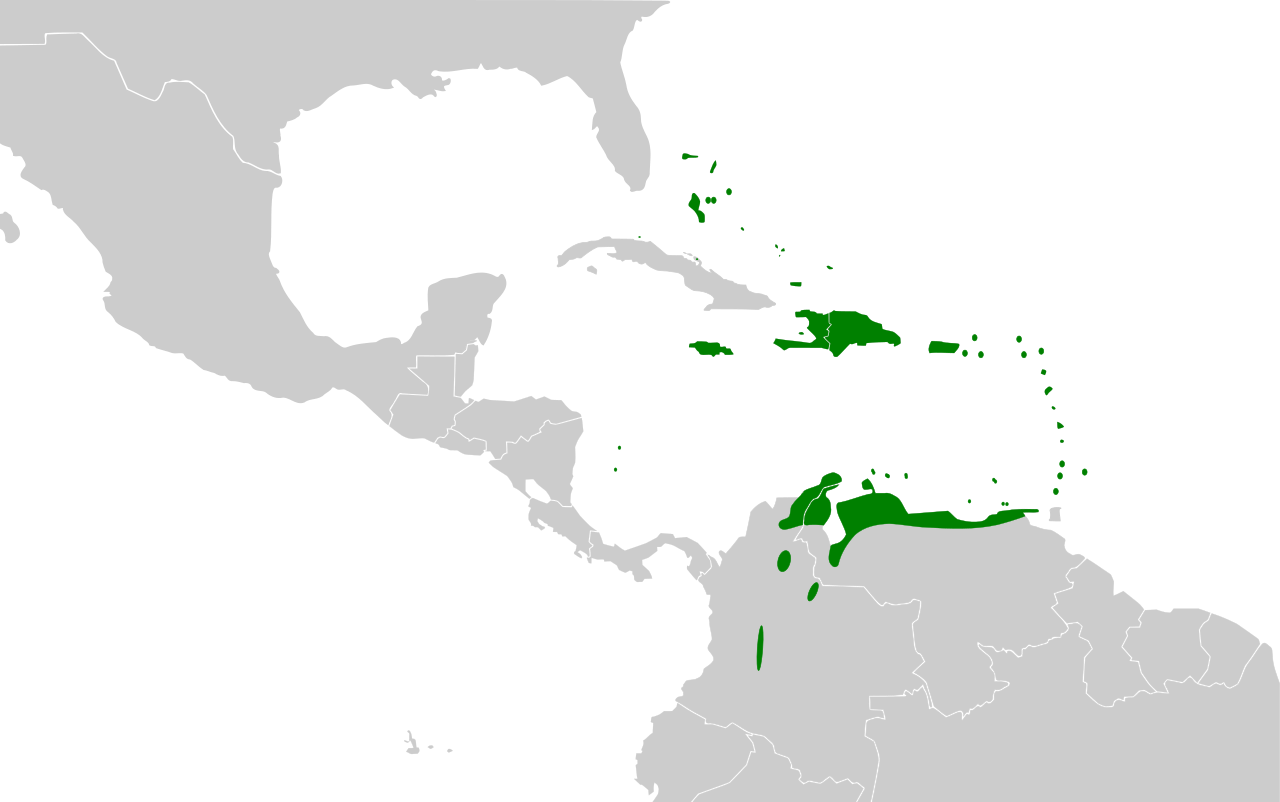
The black-faced grassquit is a small bird. It is recognized as a tanager closely related to Darwin's finches. It breeds in the West Indies except Cuba, on Tobago but not Trinidad, and along the northern coasts of Colombia and Venezuela.
Region
Caribbean and northern South America
Typical Environment
Found throughout much of the West Indies (notably absent from Cuba), on Tobago but not Trinidad, and along the northern coasts of Colombia and Venezuela. It occupies open and semi-open habitats including weedy fields, coastal scrub, dry thorn scrub, pastures, and suburban gardens. The species favors areas with abundant seeding grasses and low shrubs for cover. It adapts well to disturbed landscapes and edge environments.
Altitude Range
Sea level to 1200 m
Climate Zone
Tropical
Ease of Keeping
Beginner friendly: 2/5
The black-faced grassquit is a small Caribbean tanager closely related to Darwin’s finches, with a thick, finch-like bill adapted for cracking grass seeds. Males show a striking black face and throat, while females are olive-brown and streaked for camouflage. It often forages on the ground in weedy patches and readily visits backyard feeders offering millet.



An adult female
Temperament
social and active
Flight Pattern
short rapid wingbeats
Social Behavior
Often forages in small loose groups outside the breeding season. During breeding, pairs form and nest low in shrubs or grasses, building a cup-shaped nest. Males sing from exposed low perches to defend small territories.
Migratory Pattern
Resident
Song Description
A series of thin, buzzy, insect-like trills and chips, delivered rapidly. Calls include sharp tseep and tzik notes given while foraging or in flight.
Plumage
Male with black face and throat merging into dusky underparts and olive upperparts; female olive-brown with fine streaking and paler underparts.
Diet
Primarily consumes grass and weed seeds, using its stout bill to husk and crack them efficiently. Supplements diet with small insects and other arthropods, especially when feeding young. Will also take small fruits and visit seed feeders, particularly for millet.
Preferred Environment
Feeds on the ground and low vegetation in weedy fields, roadsides, and brushy edges. Also forages in coastal scrub, dry second-growth, and gardens with seeding grasses.