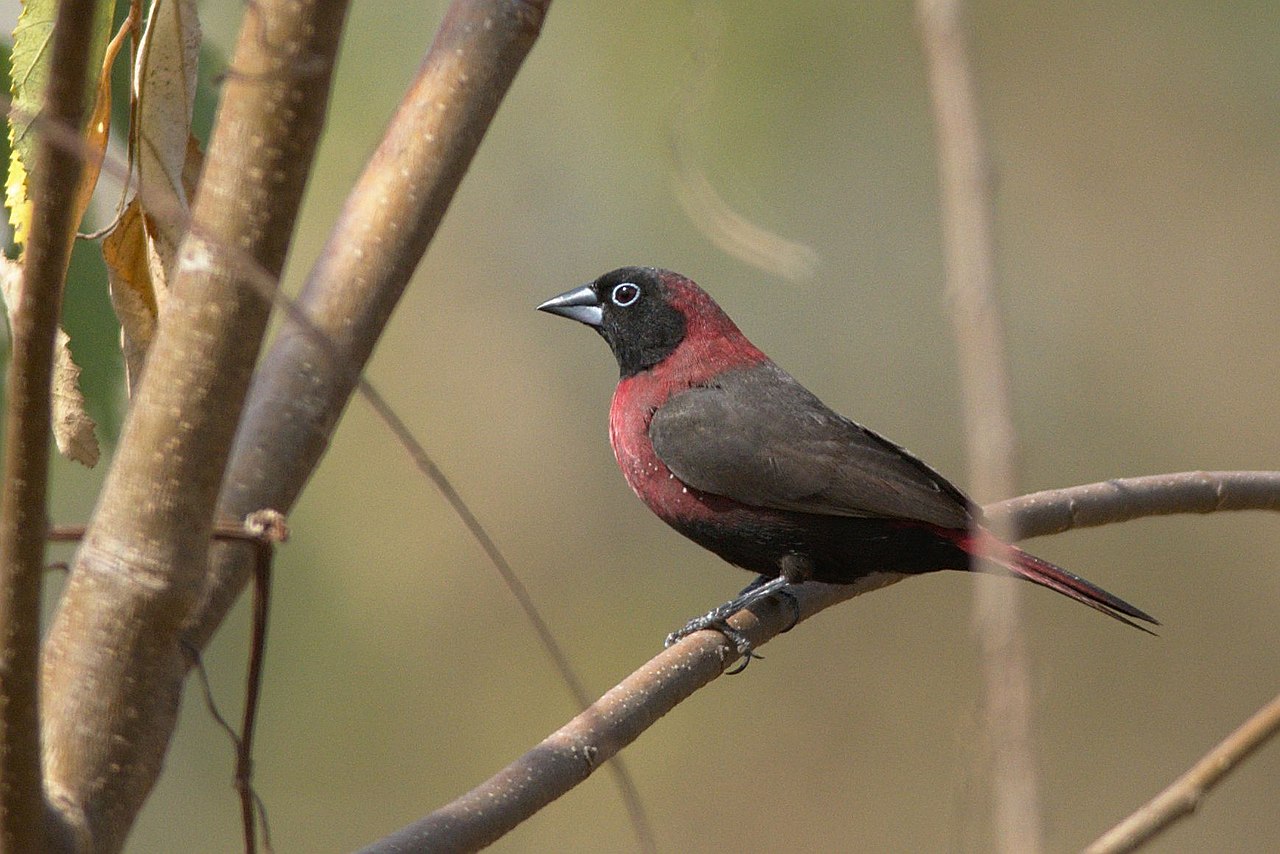
The black-faced dacnis is a species of bird in the family Thraupidae. It is commonly found typically in pairs throughout the Amazon Rainforest.
Region
Amazon Basin
Typical Environment
Found widely across lowland humid forests of the Amazon, including terra firme and seasonally flooded várzea. It favors the mid to upper canopy and forest edges, along rivers, and in secondary growth. The species also ventures into clearings with tall trees and occasionally into plantations adjacent to intact forest. Often accompanies mixed-species flocks moving along canopy strata.
Altitude Range
0–1200 m
Climate Zone
Tropical
Ease of Keeping
Beginner friendly: 1/5
A small tanager of the Amazon canopy, the black-faced dacnis is most often seen in pairs or small groups moving quickly through the upper foliage. Males are striking with a bold black facial mask, while females are greener and more subdued. It frequently joins mixed-species flocks, gleaning insects and taking small fruits. Its tolerance of forest edges and second growth helps it persist in moderately disturbed habitats.


Temperament
social and active
Flight Pattern
short rapid wingbeats
Social Behavior
Typically encountered in pairs or small family groups and frequently integrated into fast-moving mixed-species canopy flocks. Nests are small cups placed high in trees; clutches are usually 2–3 eggs. Both parents participate in provisioning the young.
Migratory Pattern
Resident
Song Description
Vocalizations are high, thin lisping notes interspersed with rapid tinkling trills. Calls are sharp, sibilant chips given while foraging in the canopy.
Plumage
Male shows bright turquoise-blue to blue-green upperparts with a contrasting black facial mask and throat; wings and back are darker. Female is largely green above with yellowish to pale underparts and a faint pale supercilium; overall duller and less contrasting than the male.
Diet
Consumes a mix of small fruits and arthropods. Often gleans insects from leaves and twigs and occasionally sallies to snatch prey. Also takes berries from fruiting trees and shrubs in the canopy and along forest edges.
Preferred Environment
Forages mainly in the mid to upper canopy, along edges, river margins, and in second-growth patches. Frequently follows mixed flocks to exploit disturbed or sunlit foliage where arthropods are more exposed.