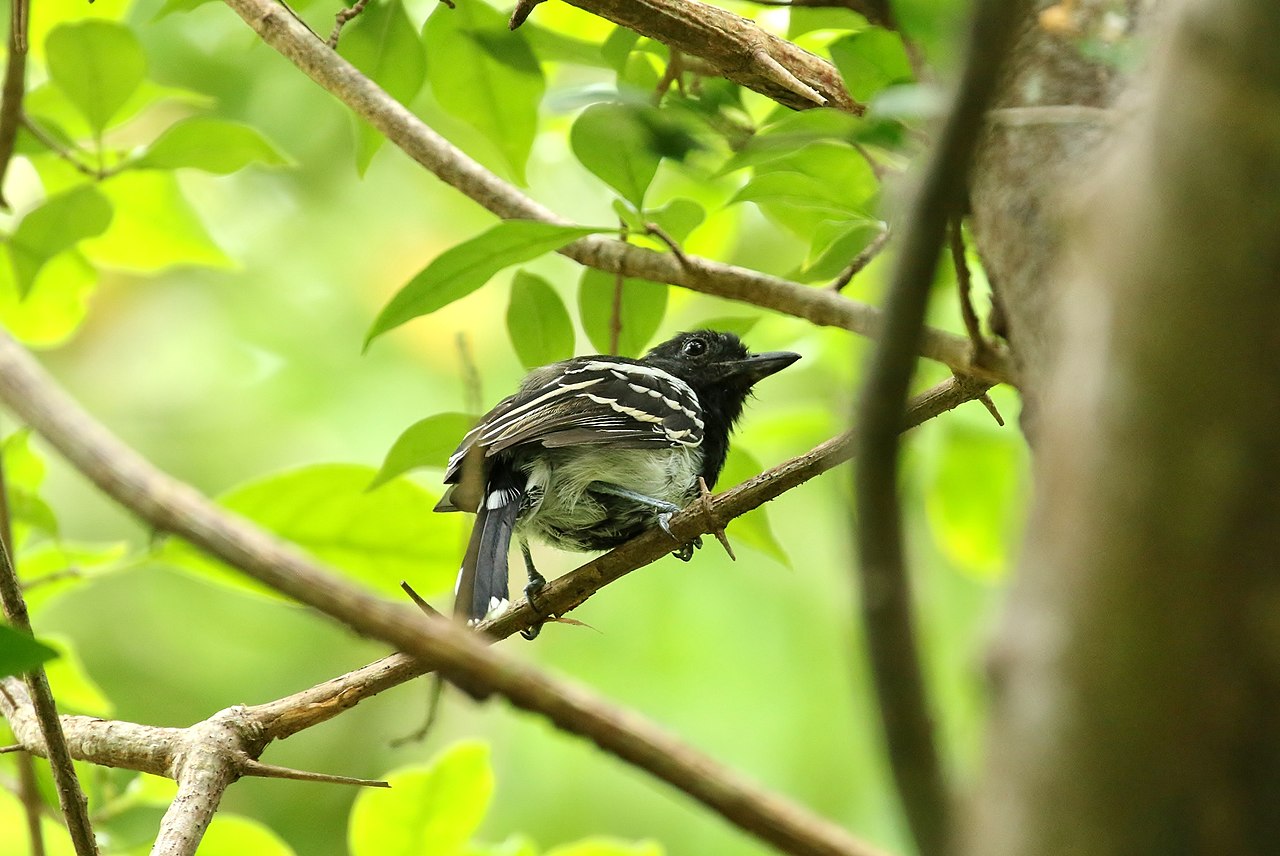
The black-and-white warbler is a species of New World warbler, and the only member of its genus, Mniotilta. It breeds in northern and eastern North America and winters in Florida, Central America, and the West Indies down to Peru. This species is a very rare vagrant to western Europe. Relative to other New World warblers, it is not well studied.
Region
North and Central America and the Caribbean
Typical Environment
Breeds widely across northern and eastern North America, from much of Canada through the northeastern and upper midwestern United States and into parts of the Appalachians. Winters in the southeastern United States (notably Florida), Mexico, the Caribbean, Central America, and into northern South America as far as Colombia, Venezuela, and Peru. Uses mature deciduous and mixed forests, forest edges, and second growth during breeding. In winter it occupies a range of wooded habitats including mangroves, shade coffee plantations, and tropical forests. It is an occasional vagrant to western Europe.
Altitude Range
Sea level to 2500 m
Climate Zone
Other
Ease of Keeping
Beginner friendly: 1/5
The black-and-white warbler is the only member of its genus, Mniotilta. Unusually for a warbler, it forages like a nuthatch or creeper, creeping along trunks and large branches to probe bark for insects. It is among the earlier spring migrants in eastern North America and often nests on or near the ground at the base of trees. Its bold zebra-striped plumage makes it one of the easiest warblers to identify.


Columbus Park – Chicago

Black-and-white warbler

Breeding male

Black-and-white warbler visits Central Park in New York City


Temperament
active and territorial in breeding season
Flight Pattern
short rapid wingbeats with brief undulations
Social Behavior
Typically solitary or in pairs while breeding, with males defending territories. The nest is usually placed on or near the ground, well hidden in leaf litter or at the base of a tree; the female does most incubation. In the nonbreeding season they frequently join mixed-species flocks and range widely through forest strata.
Migratory Pattern
Seasonal migrant
Song Description
Song is a high, thin, wheezy series often rendered as wee-see wee-see wee-see, repeated insistently. Calls include a sharp, dry chip and thin see notes.
Plumage
Boldly striped black-and-white above and below, giving a zebra-like appearance; males are darker and more contrasting, females duller and slightly browner toned.
Diet
Primarily small arthropods, including caterpillars, beetles, ants, and spiders. It specializes in gleaning and probing bark crevices for hidden prey, often hitching along trunks and major limbs. Occasionally hawks short distances to snatch insects flushed from bark. Fruit consumption is minimal and largely incidental.
Preferred Environment
Feeds on tree trunks and large branches in mature forests, but also uses forest edges and second growth. In winter it forages in mangroves, semi-open tropical woodland, and shaded agroforestry like coffee plantations, often from the mid-story down to the trunk bases.