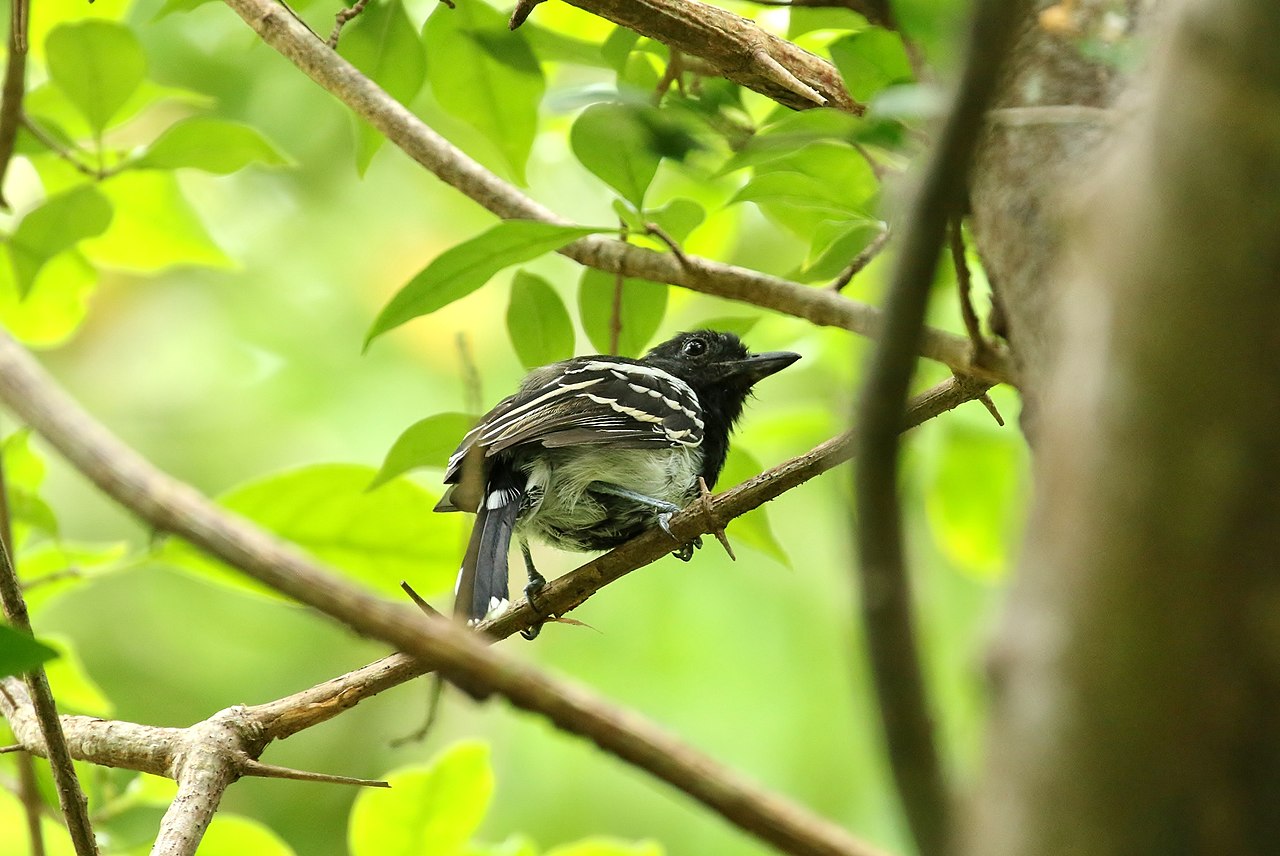
The black-and-yellow tanager is a fairly small passerine bird. This tanager resides in the hills of Costa Rica and Panama.
Region
Central America
Typical Environment
Found in the foothills and lower montane forests of Costa Rica and western Panama, especially on the Caribbean slope. It favors mature evergreen forest, edges, and tall secondary growth with a well-developed canopy. The species often tracks fruiting trees along ridges and clearings and moves with mixed-species flocks. It is generally local but can be fairly common where suitable habitat persists.
Altitude Range
300–1500 m
Climate Zone
Tropical
Ease of Keeping
Beginner friendly: 1/5
This small tanager frequents the canopy of foothill forests and often joins mixed-species flocks, moving quickly through fruiting trees. Despite its bold coloration, it can be surprisingly hard to spot in dense foliage. It is a regional specialty of southern Central America, with a relatively narrow elevational range. Pairs or small groups are most often detected by their thin, high calls.


Temperament
social and active
Flight Pattern
short rapid wingbeats
Social Behavior
Typically travels in pairs or small groups and frequently joins mixed-species canopy flocks. Nests are cup-shaped and placed well-hidden in dense foliage. Breeding pairs maintain small territories during the nesting season.
Migratory Pattern
Resident
Song Description
Vocalizations are thin, high-pitched tseet and see notes, often given while foraging in the canopy. Song is a soft series of high, sibilant notes and short trills, easily overlooked amid flock activity.
Plumage
Male is glossy black with extensive bright yellow on the head, underparts, and rump; female is olive-yellow overall with duskier wings and back. Both sexes have a short, conical bill and cleanly contrasting plumage with little streaking.
Diet
Eats small fruits and berries and supplements with insects and other arthropods. Forages by gleaning from leaves and twigs and by sallying short distances to snatch prey. Frequently visits fruiting trees and uses mixed flocks to locate food-rich patches.
Preferred Environment
Primarily feeds in the mid- to upper canopy of moist foothill forest, edges, and tall second growth. Also works along forested ridges and gaps where sunlight encourages fruiting shrubs and trees.