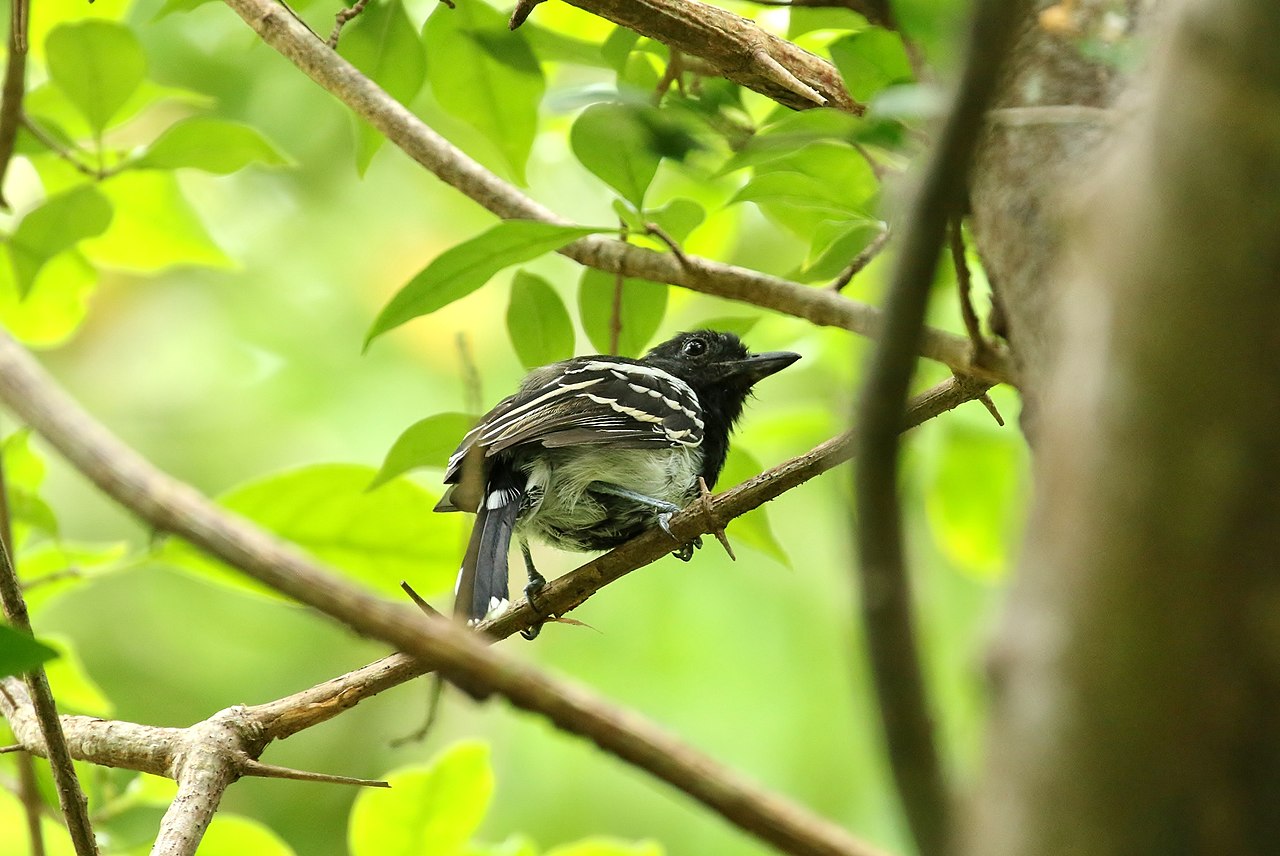
The black-and-yellow phainoptila or black-and-yellow silky-flycatcher is a species of bird in the family Ptiliogonatidae. It is monotypic within the genus Phainoptila. It is found in Costa Rica and Panama.
Region
Costa Rica and western Panama highlands
Typical Environment
Occupies humid montane forests, especially cloud forest, oak forest, and adjacent secondary growth. Often uses forest edges, clearings with fruiting trees, and roadsides with dense vegetation. It forages at mid-canopy to canopy level but also descends to lower strata where fruits are abundant. Occurs in both primary and mature secondary forest and sometimes high-elevation gardens near forest.
Altitude Range
1200–3300 m
Climate Zone
Highland
Ease of Keeping
Beginner friendly: 2/5
Also called the black-and-yellow silky-flycatcher, it is the only species in the genus Phainoptila. Males are strikingly black and yellow, while females are olive-green with yellowish underparts. It is a quiet, often inconspicuous frugivore that helps disperse seeds of montane plants. Found in high-elevation forests of Costa Rica and western Panama.


Temperament
quiet and unobtrusive
Flight Pattern
short rapid wingbeats; direct short flights between fruiting trees
Social Behavior
Usually seen singly, in pairs, or small family groups, and frequently joins mixed-species flocks. Builds a small cup nest placed on horizontal branches in dense foliage. Both sexes participate in parental care.
Migratory Pattern
Resident
Song Description
Vocalizations are soft and thin, consisting of high, sibilant tsee notes and short twittering phrases. Song is modest and easily overlooked amid montane forest sounds.
Plumage
Male shows glossy black head and upperparts contrasting with vivid yellow underparts; tail relatively short. Female is olive-green above with yellowish underparts and a more subdued contrast overall.
Diet
Primarily consumes small fruits and berries from montane shrubs and trees, including mistletoes and melastomes. Will occasionally take small insects, especially when feeding young. Often perches quietly and sallies short distances to pluck fruit, swallowing it whole. Its frugivory makes it an important seed disperser in cloud-forest ecosystems.
Preferred Environment
Forages at forest edges, along gaps, and in canopy and midstory of humid montane forest. Frequently visits fruiting trees and shrubs in secondary growth and high-elevation gardens near intact forest.