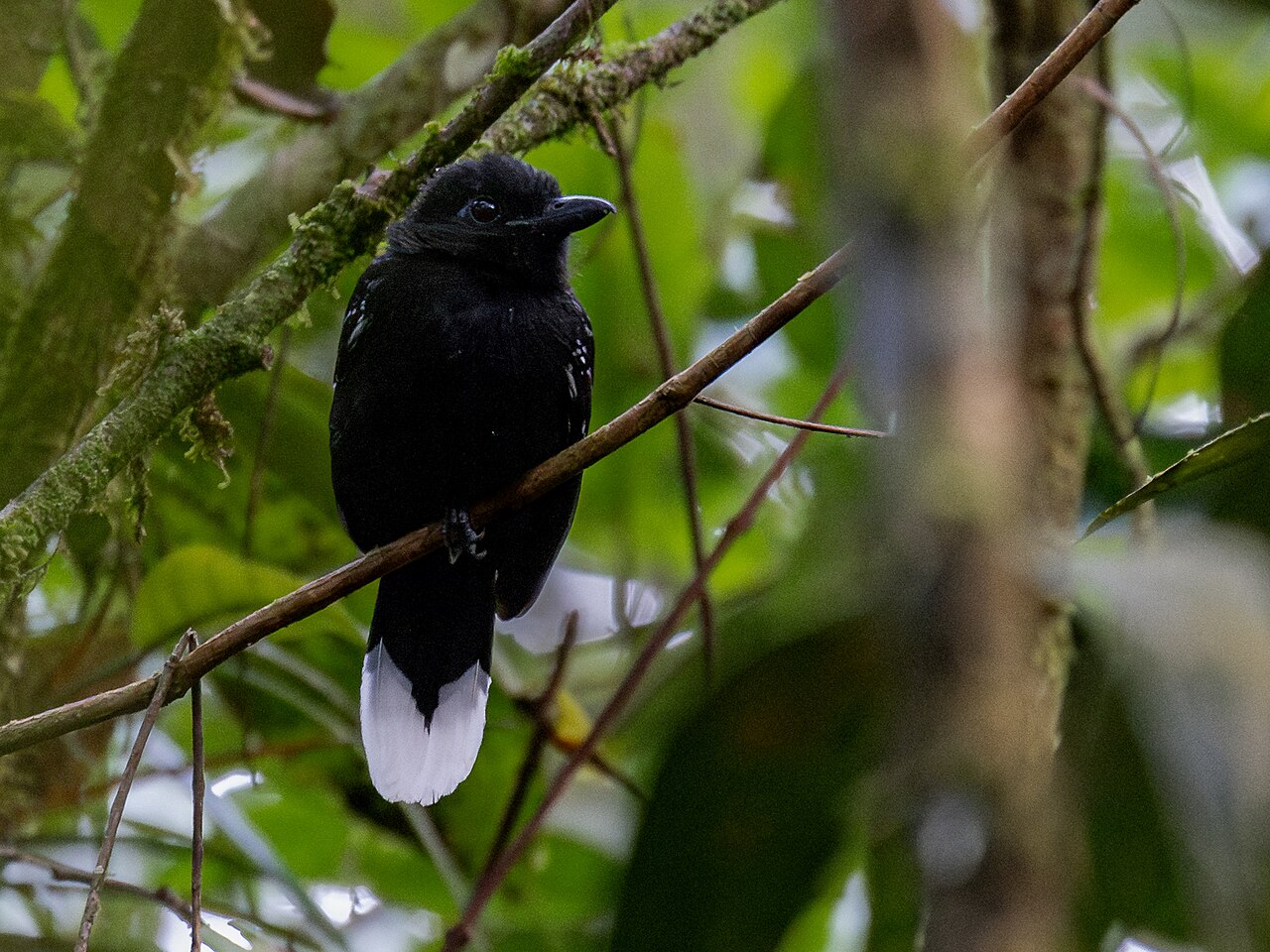
The band-backed wren is a small songbird of the wren family.
Region
Mesoamerica (southern Mexico to western Panama)
Typical Environment
Occurs from southern Mexico through Guatemala, El Salvador, Honduras, Nicaragua, and Costa Rica to western Panama. It favors dry to semi-humid forests, thorn scrub, open woodlands, and second-growth edges. Common around forest margins, clearings, and shade-coffee plantations, and it adapts well to semi-rural areas. Forages from the understory to mid-canopy, occasionally descending to the ground. Typically avoids dense, closed-canopy rainforest interiors.
Altitude Range
0–1800 m
Climate Zone
Tropical
Ease of Keeping
Beginner friendly: 1/5
The band-backed wren is a large, boldly patterned wren that often travels in small family groups. Like several of its close relatives, it practices cooperative breeding, with helpers assisting the dominant pair. It builds bulky stick nests used for both breeding and communal roosting. Its loud, chattering songs and duets carry far through dry forests and edge habitats.


Temperament
social and active
Flight Pattern
short rapid wingbeats
Social Behavior
Often found in small family groups that move together while foraging. Cooperative breeding is common, with helpers assisting the dominant pair in territory defense and chick rearing. Builds bulky stick nests used for breeding and communal roosting; territories are defended year-round.
Migratory Pattern
Resident
Song Description
Loud, bubbly series of chattering notes, trills, and scolds delivered from exposed perches. Pairs may duet, and groups can produce chorus-like sequences. Calls carry well and are given frequently while foraging.
Plumage
Boldly barred back with black-and-white bands, barred wings and tail, and whitish underparts with buffy flanks that may show fine barring. The head shows a conspicuous white supercilium and darker mask through the eye. Plumage is crisp and patterned, giving a scaly or banded look across the upperparts.
Diet
Primarily consumes insects and other small arthropods, gleaned from bark, leaves, and twigs. Will also take spiders and occasionally small fruits or berries, especially in drier seasons. Probes crevices and dead wood, sometimes smashing prey against branches to subdue it.
Preferred Environment
Forages in thorny scrub, woodland edges, second growth, and semi-open forests. Often searches in tangles, vine-laden trees, and along trunks and larger branches, and sometimes visits gardens or shade-coffee farms.