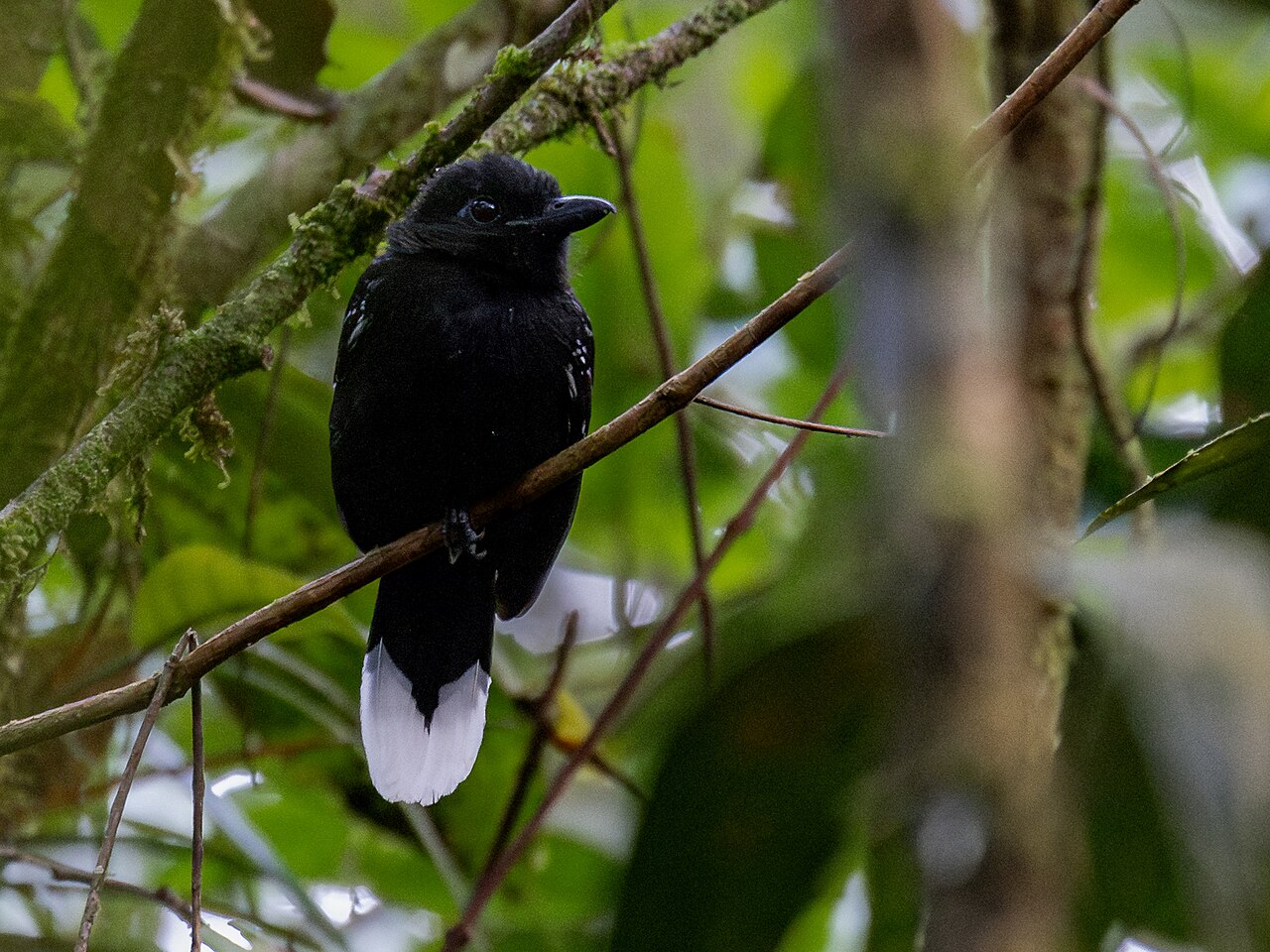
The band-rumped swift is a species of bird in subfamily Apodinae of the swift family Apodidae. It is found from Panama south through Colombia into Ecuador, east from Venezuela into the Guianas and Brazil, and on Trinidad.
Region
Southern Central America and northern South America
Typical Environment
Occurs from Panama south through western Colombia into northwestern Ecuador, and east across Venezuela, the Guianas, much of northern and central Brazil, and on Trinidad. It favors lowland humid forests, forest edges, and river corridors, but also hunts over secondary growth and open country. The species regularly ranges above canopy height and over clearings and water bodies where aerial insects concentrate. In some areas it uses towns and plantations as foraging space, particularly during insect emergences.
Altitude Range
Sea level to 1600 m
Climate Zone
Tropical
Ease of Keeping
Beginner friendly: 1/5
This small swift is named for its contrasting pale rump band, visible in good light as it scythes through the air. Like other Chaetura swifts, it has stiff tail spines that help it cling to vertical surfaces at roosts and nest sites. It often forages in mixed-species swift flocks and takes advantage of termite and ant swarms. Nests are shallow, saliva-glued platforms placed inside tree cavities or human structures.


Temperament
social and active
Flight Pattern
fast with short rapid wingbeats interspersed with brief glides
Social Behavior
Frequently forms small to large flocks, often mixed with other swift species. Nests in cavities of trees and occasionally in buildings, attaching a small nest with saliva to interior walls. Pairs are likely monogamous within a season, and groups may roost communally.
Migratory Pattern
Resident
Song Description
Vocalizations are high, rapid twittering trills and chips given in flight, especially over foraging areas or near roosts. Calls can sound buzzy and continuous when flocks are excited or circling a nest site.
Plumage
Sooty to dark brown overall with a distinctly paler, narrow band across the rump and lower back; throat slightly paler. Wings are long and scythe-shaped; tail is short and squared with projecting spines.
Diet
Consumes small flying insects caught on the wing, including ants, termites, flies, beetles, and small wasps. It often exploits swarming events, sweeping back and forth to harvest dense concentrations of prey. Foraging occurs at variable heights, from below canopy level to high over the forest and above rivers and clearings.
Preferred Environment
Most often feeds over humid lowland forest, river channels, oxbows, and forest edges. Also forages over towns, plantations, and open fields when insects are abundant.