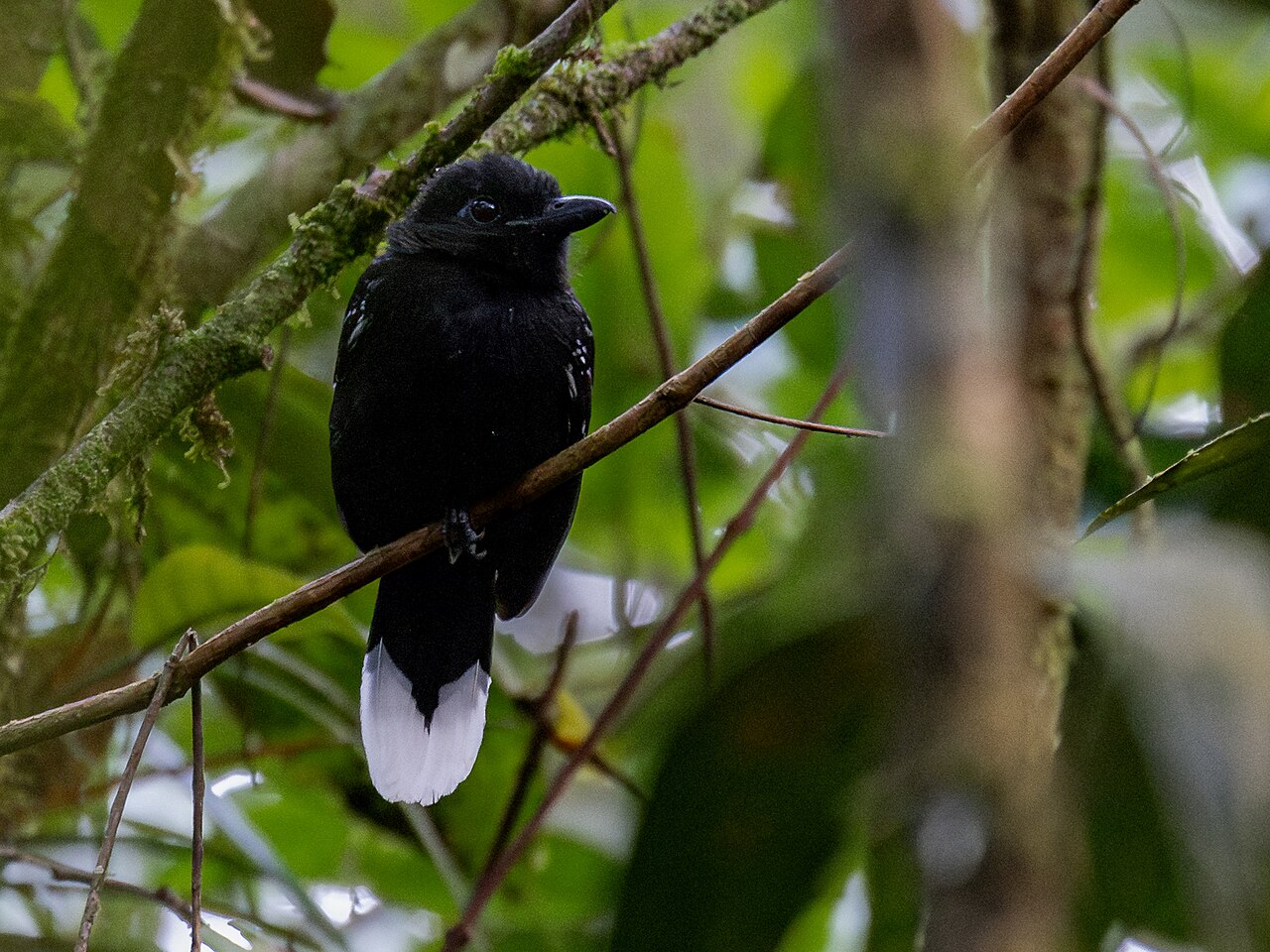
The band-bellied owl is a species of owl in the family Strigidae. It is found in Bolivia, Colombia, Ecuador and Peru.
Region
Western Amazon Basin and Andean foothills (Colombia, Ecuador, Peru, Bolivia)
Typical Environment
It inhabits humid evergreen lowland and foothill forests, including terra firme and mature secondary forest. The species favors dense interior forest and forest edges, often along rivers, ravines, and steep foothill slopes. It roosts in the subcanopy to canopy in shaded, well-covered sites. Logging and fragmentation can reduce local occurrence, but it may persist in large forest blocks with intact structure.
Altitude Range
200–1600 m
Climate Zone
Tropical
Ease of Keeping
Beginner friendly: 1/5
The band-bellied owl is a large, forest-dwelling owl of the western Amazon and Andean foothills. It is notably darker than the Spectacled Owl and lacks the striking white 'spectacles', showing a pale throat and heavily barred belly instead. Mostly nocturnal and elusive, it is heard more often than seen, giving deep, resonant hoots that may include duets between pairs. It hunts from perches, taking small mammals, birds, and large insects.


Temperament
solitary and territorial
Flight Pattern
silent, powerful flier with short glides between strong wingbeats
Social Behavior
Typically seen alone or in pairs, especially during the breeding season. It nests in large tree cavities or similar sheltered hollows, likely laying one to two eggs. Both parents attend the young, which leave the nest before they can fly well and are fed nearby. Roosting is usually in dense foliage high in the forest.
Migratory Pattern
Resident
Song Description
A series of deep, resonant hoots, often delivered in measured sequences at dusk and night. Pairs may duet, with one bird giving lower, booming notes and the other responding with slightly higher-pitched phrases. Also utters growls and screeches when agitated.
Plumage
Dark chocolate-brown upperparts with a contrasting pale throat and buffy underparts that become heavily dark-banded on the lower belly. The facial disk is dusky to buff without the bold white 'spectacles' seen in its close relative. Feathers are dense and soft, aiding silent flight.
Diet
It preys on small mammals such as rodents and bats, as well as small birds, frogs, and large insects. Hunting is primarily from a perch with short, direct sallies to the ground or to lower branches. It will also scan along forest edges and clearings where prey activity is higher. Diet composition varies locally with prey availability.
Preferred Environment
Foraging occurs in the midstory to subcanopy, along forest trails, stream corridors, and edges. It favors structurally complex, mature forest where perches and cavities are abundant. Activity often increases near natural openings where prey is easier to detect.