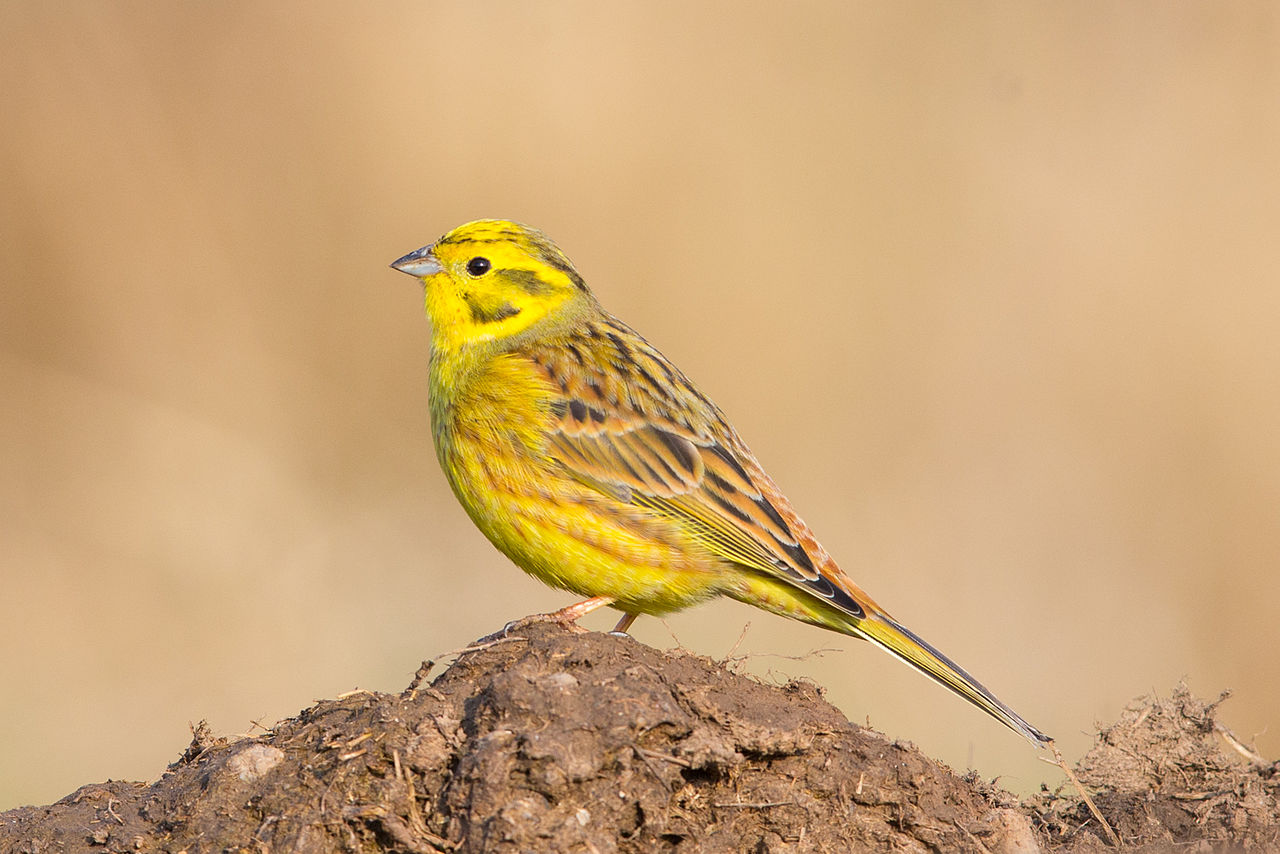
The yellow-winged pytilia, also known as the red-faced pytilia, is an African estrildid finch.
Region
West and Central Africa
Typical Environment
Occurs from the West African savanna belt east into western Central Africa, inhabiting open woodland, savanna, forest edges, and scrub. It favors areas with tall grasses, scattered shrubs, and thickets near watercourses. Often found in secondary growth, farm edges, and lightly wooded clearings. It keeps close to cover and forages mostly near the ground or low vegetation.
Altitude Range
0–1700 m
Climate Zone
Tropical
Ease of Keeping
Beginner friendly: 2/5
The yellow-winged pytilia, also called the red-faced pytilia, is a small estrildid finch of West and western Central Africa. Males show a striking red facial mask with bright yellow wing panels, while females are duller and often lack the full red mask. It frequents grassy savannas and thickets and is sometimes targeted by brood-parasitic indigobirds and whydahs. Its subtle, tinkling song and quiet behavior make it more often heard than seen.

Temperament
shy and secretive
Flight Pattern
short rapid wingbeats, low over cover
Social Behavior
Usually seen in pairs or small family groups, sometimes joining mixed finch flocks outside the breeding season. Nests are neat, ball-shaped structures concealed in dense grass or shrubs. Pairs are monogamous during breeding and defend small territories around the nest.
Migratory Pattern
Resident
Song Description
A soft, tinkling series of high-pitched notes and trills delivered from within cover or low perches. Contact calls are thin and sibilant, often given while foraging. The song can be easily overlooked in windy savanna habitats.
Plumage
Compact finch with smooth plumage; males show a bright red facial mask, grayish head, olive to brownish upperparts, and a distinct yellow wing panel. Underparts are gray to buff with fine barring on the flanks. Females are duller with reduced or absent red on the face and more subdued yellow on the wings.
Diet
Primarily small grass seeds and other seeds taken from the ground and low seed heads. Supplements diet with small insects, especially during breeding, and may take termite alates after rains. Will opportunistically pick at soft plant material and tiny fruits.
Preferred Environment
Feeds along grassy paths, thicket edges, and in rank grasses beneath shrubs and trees. Often forages on or near the ground, moving quickly between patches of cover. May visit cultivated edges where seeding grasses persist.