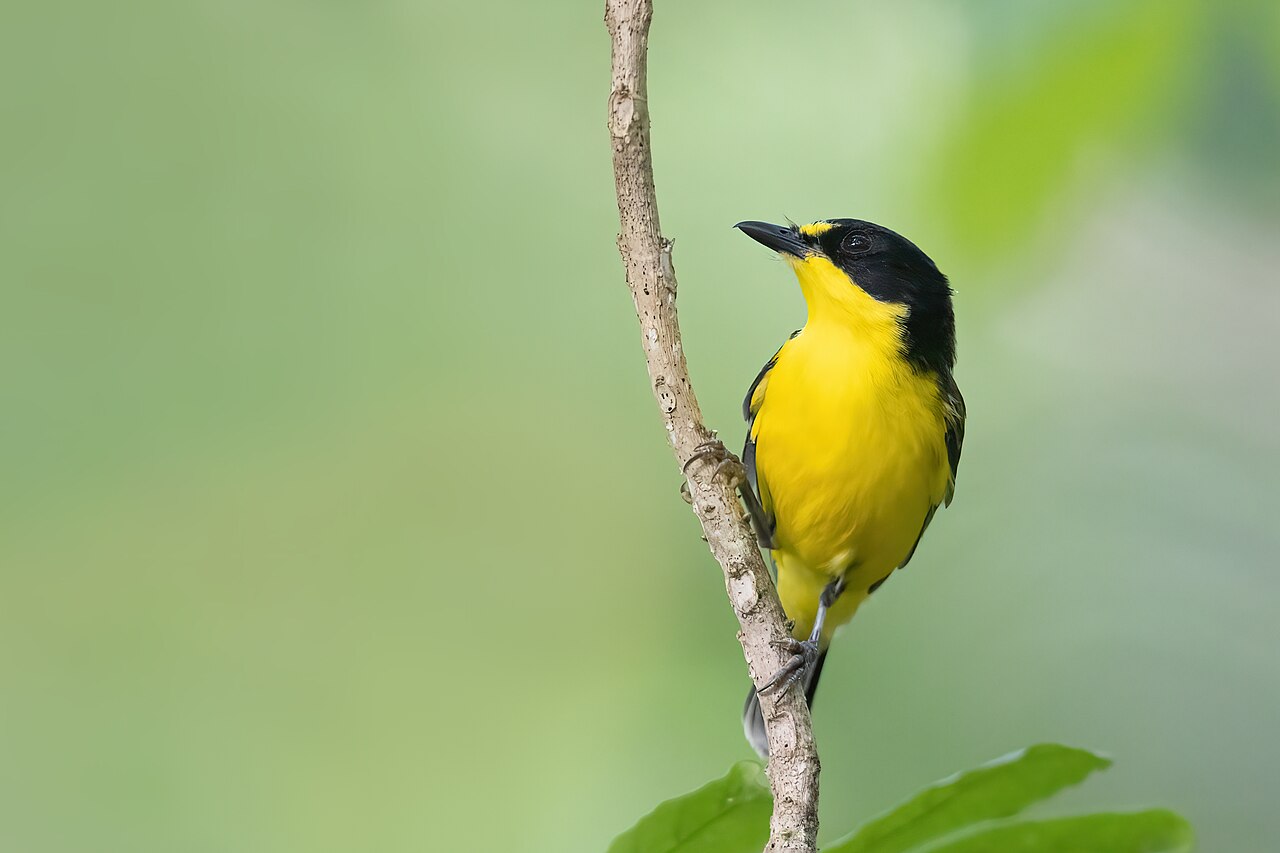
The yellow-throated bulbul is a species of songbird in the bulbul family of passerine birds. The species is endemic to southern peninsular India. They are found on scrub habitats on steep, rocky hills many of which are threatened by granite quarrying. It is confusable only with the white-browed bulbul with which its range overlaps but is distinctively yellow on the head and throat apart from the yellow vent. The calls of this species are very similar to that of the white-browed bulbul.
Region
Peninsular India
Typical Environment
Occurs patchily on granite and lateritic hillocks with dry scrub and thorny thickets, especially along the Eastern Ghats and adjacent Deccan uplands. It favors boulder-strewn slopes, rocky gullies, and ledges with sparse shrubs and figs. Birds are often near seasonal seepages or small pools on rocks. The species avoids dense forest and open farmland, persisting in rugged terrain that offers cover and fruiting shrubs.
Altitude Range
100–1200 m
Climate Zone
Tropical
Ease of Keeping
Beginner friendly: 1/5
This elusive bulbul is confined to scrub on steep, rocky hill slopes of peninsular India and is often overlooked due to its shy habits. Granite quarrying and habitat fragmentation are its chief threats. It can be confused with the white-browed bulbul, but shows a richer yellow wash on the face and throat in addition to the yellow vent.


1847 illustration
Temperament
shy and skulking
Flight Pattern
short rapid wingbeats
Social Behavior
Usually found singly, in pairs, or small family parties that move quietly among rocks and shrubs. Builds a small cup nest low in a shrub or tangle, typically 2–3 eggs. Both parents share incubation and feeding duties. Territorial during the breeding season but tolerant of nearby pairs in suitable habitat patches.
Migratory Pattern
Resident
Song Description
Song consists of clear, mellow whistles and scratchy phrases delivered from concealed perches. Calls closely resemble those of the white-browed bulbul, including short, ringing notes and chatter. Vocalizations carry well across rocky slopes, especially at dawn and late afternoon.
Plumage
Olive-brown to grey-brown above with paler, lightly streaked underparts and a soft texture typical of bulbuls. The throat and much of the face are bright yellow, contrasting with the duller upperparts. The vent is yellow; wings and tail are darker brown with subtle edging.
Diet
Takes a mix of small fruits and berries (including figs and lantana), flower nectar on occasion, and a variety of insects and other small invertebrates. Forages methodically among scrub and low trees, gleaning from leaves and twigs. Will also pick fallen fruit from rock ledges and the ground, and hawk briefly for flying insects when abundant.
Preferred Environment
Feeds along scrubby hill slopes, rocky gullies, and edges of dry deciduous and thorn forest. Often concentrates around fruiting shrubs and figs near seepages or sheltered ravines.