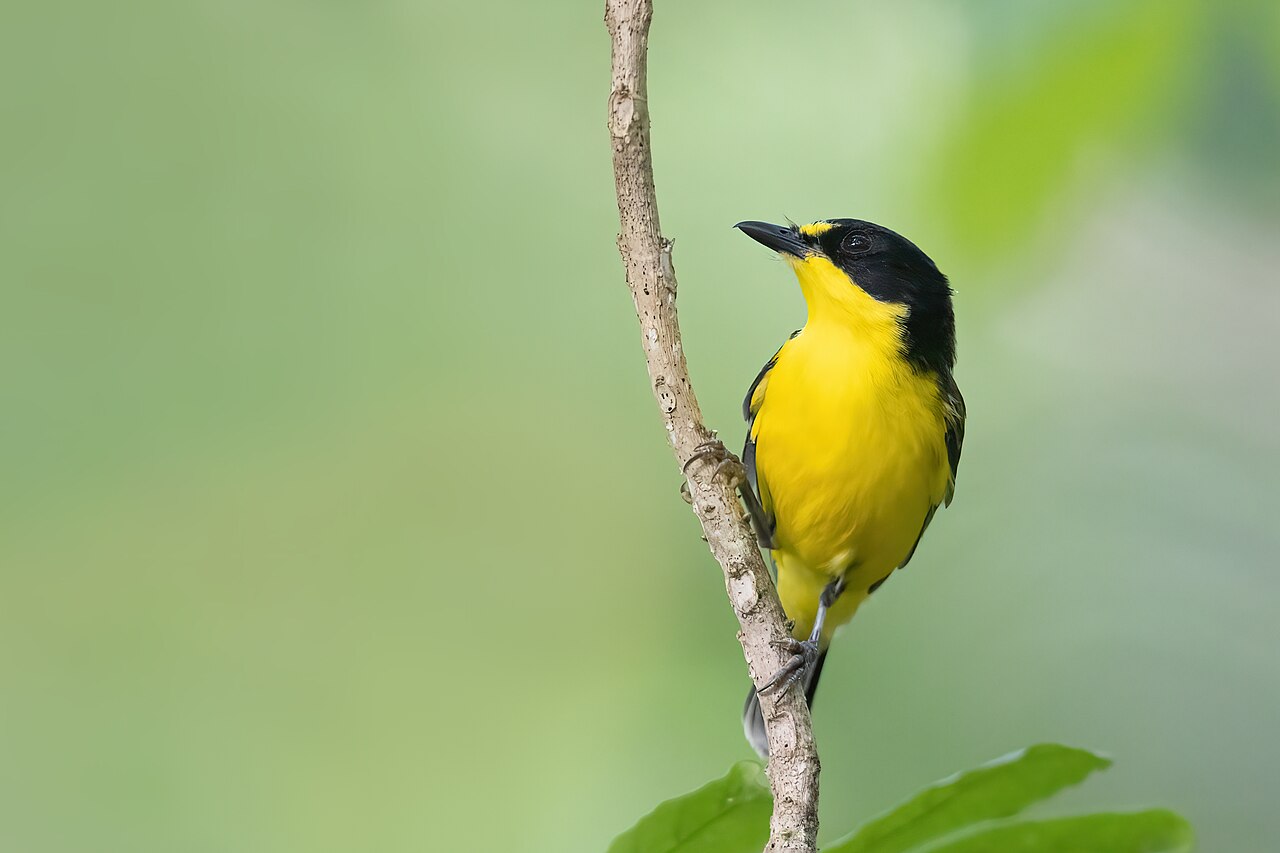
The yellow-throated bunting, also known as the elegant bunting, is a species of bird in the family Emberizidae.
Region
East Asia
Typical Environment
Breeds in temperate forests and wooded hills across parts of northeastern China, the Korean Peninsula, and the Russian Far East, and occurs widely in Japan and southern China outside the breeding season. It favors forest edges, secondary growth, bamboo thickets, riparian scrub, and clearings with dense understory. In winter it also uses shrubby farmland margins, parks, and gardens. The species typically forages close to the ground or within low vegetation, moving between cover and open patches.
Altitude Range
Sea level to 2000 m
Climate Zone
Temperate
Ease of Keeping
Beginner friendly: 2/5
The yellow-throated bunting, also called the elegant bunting, is a striking East Asian songbird known for the male’s vivid yellow throat and bold black-and-white head pattern. It frequents forest edges and thickets, often skulking low in cover but becoming more visible in winter flocks. During the breeding season it switches from mainly seeds to more insects, especially for nestlings. Its clear, tinkling song is delivered from low perches within woodland or bamboo stands.

Temperament
shy and skulking
Flight Pattern
short rapid wingbeats with slightly undulating flight
Social Behavior
Breeds in pairs, nesting low in shrubs or dense ground cover and defending small territories. Outside the breeding season it often forms small flocks, sometimes mixed with other buntings. The nest is cup-shaped and the species is thought to be largely monogamous.
Migratory Pattern
Partial migrant
Song Description
The male’s song is a clear, tinkling series of sweet notes, often delivered from a low perch within thickets. Calls include a thin metallic 'tsik' and soft chips used to keep contact in cover.
Plumage
Males show a bright yellow throat with crisp black-and-white head stripes, rich brown upperparts with dark streaking, and pale underparts with fine flank streaks. Females and immatures are duller, with buffy throats, less contrasting head patterns, and heavier streaking. The plumage is neat and finely patterned, with a clean facial contrast in males.
Diet
Feeds primarily on grass and weed seeds, plus small grains. During the breeding season it increases intake of insects such as beetles, caterpillars, and other arthropods, especially for feeding chicks. It will also take small berries when available. Foraging is mostly by ground gleaning and low-branch picking.
Preferred Environment
Forages along forest edges, clearings, bamboo stands, and scrubby margins where seed plants and insects are abundant. In winter it uses hedgerows, shrubby fields, and sometimes parks and gardens, typically staying close to dense cover.