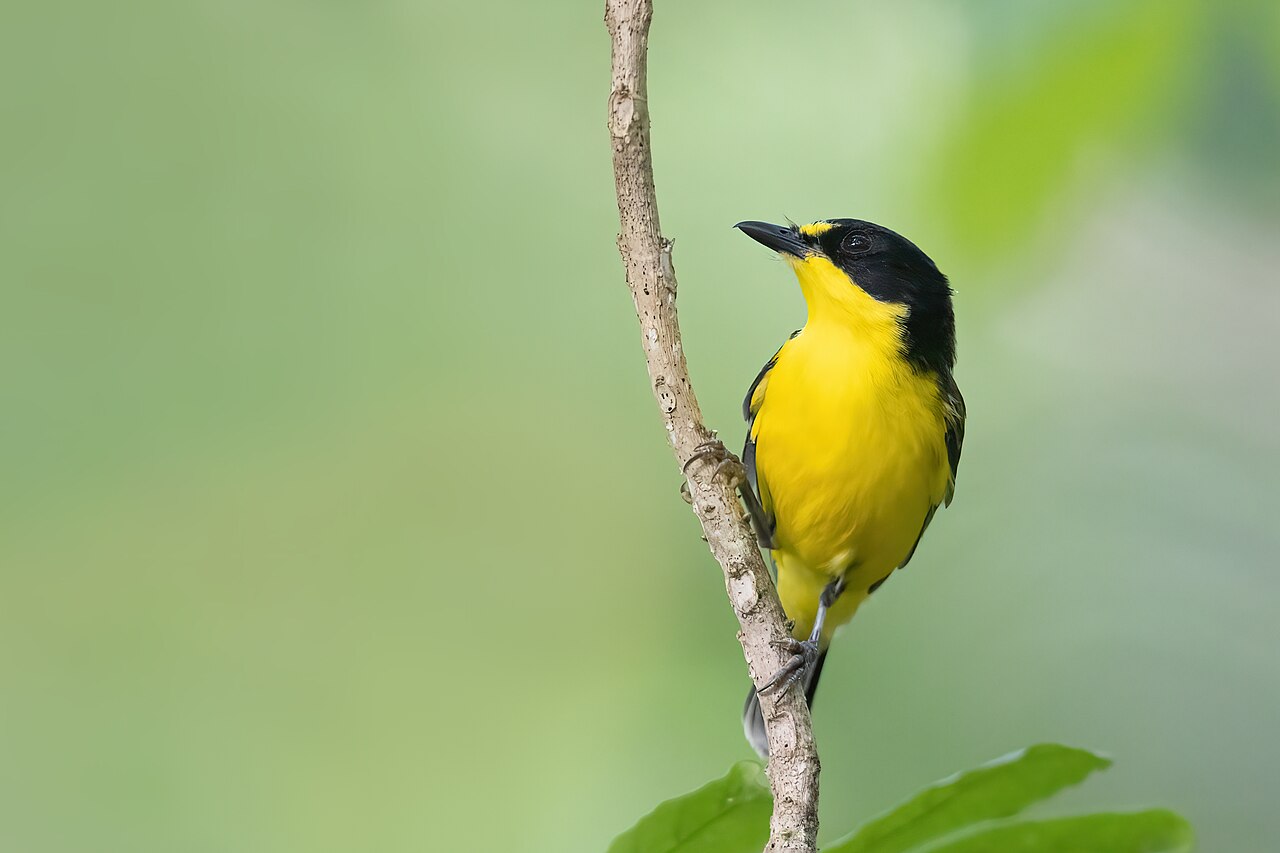
The yellow-throated cuckoo is a species of cuckoo in the family Cuculidae. It is distributed across the African tropical rainforest. It is threatened by deforestation.
Region
Congo Basin and West-Central African Rainforest
Typical Environment
Occurs in lowland and foothill tropical rainforests across central Africa, favoring primary forest but also using mature secondary growth and forest edges. It keeps mostly to the canopy and subcanopy, where it forages discreetly among foliage. Riverine forest corridors can serve as movement routes. It is generally absent from open savanna and heavily degraded habitats.
Altitude Range
Sea level to 1500 m
Climate Zone
Tropical
Ease of Keeping
Beginner friendly: 1/5
A shy forest cuckoo, the yellow-throated cuckoo is best detected by its clear, whistled calls from the mid to upper canopy. Like many cuckoos, it is a brood parasite, laying its eggs in the nests of smaller passerines such as greenbuls and sunbirds. It depends on intact tropical rainforest and suffers where large tracts are logged or converted.

Temperament
secretive and canopy-dwelling
Flight Pattern
short rapid wingbeats with swift dashes through the canopy
Social Behavior
Usually solitary or in pairs, moving quietly while foraging. It is a brood parasite, depositing eggs in nests of smaller forest birds; the host then raises the cuckoo chick. Breeding activity coincides with peak insect abundance following rains.
Migratory Pattern
Resident
Song Description
A clear, repeated whistle or series of thin, melodic notes that carry through the forest canopy. Calls are most frequent at dawn and in the early morning, with softer contact notes given while foraging.
Plumage
Glossy green upperparts with clean, pale underparts and fine barring; the throat and upper breast show a distinct yellow wash. Tail is dark with pale spots on the tips of the outer feathers. Females/immatures are duller with more extensive barring below.
Diet
Feeds mainly on caterpillars, including hairy species that many birds avoid, as well as other soft-bodied insects and their larvae. Will also take small beetles, orthopterans, and occasional spiders. Foraging typically involves gleaning from leaves and twigs, with short sallies to snatch prey.
Preferred Environment
Mid to upper canopy of humid evergreen forest, especially along edges, gaps, and vine tangles where caterpillars are abundant. Sometimes visits fruiting or flowering trees that attract insect prey.