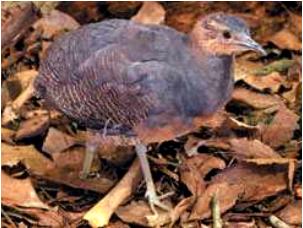
The yellow-legged buttonquail is a buttonquail, one of a small family of birds which resemble, but are unrelated to, the true quails. This family is peculiar in that the females are larger and more colourful than the males and are polyandrous.
Region
South and Southeast Asia
Typical Environment
This species occurs widely across the Indian Subcontinent, Myanmar, Thailand, Laos, Cambodia, Vietnam, and parts of southern China. It favors open grasslands, fallow fields, scrubby edges, and stubble or harvested croplands. Buttonquails often use dense ground cover and field margins for concealment. They are typically patchily distributed where suitable grassy or lightly cultivated habitats persist.
Altitude Range
0–1500 m
Climate Zone
Subtropical
Ease of Keeping
Beginner friendly: 2/5
The yellow-legged buttonquail resembles true quails but belongs to a separate family (Turnicidae). Unusually, females are larger, more colorful, and polyandrous, courting males with a low booming call and leaving them to incubate and rear the young. It is a secretive ground-dweller that often runs rather than flies when disturbed.


Downy four-day-old chicks
Temperament
shy and cryptic
Flight Pattern
short rapid wingbeats; low, fluttering flush over short distances
Social Behavior
Females defend territories and court multiple males, which then incubate the eggs and care for the chicks. Nests are shallow ground scrapes hidden in grass. Family groups keep to dense cover and typically freeze or run when threatened rather than take long flights.
Migratory Pattern
Partial migrant
Song Description
The female gives a low, booming, drumming call that carries surprisingly far, especially at dawn and dusk. Other calls include soft clucks and churrs used for contact within cover.
Plumage
Upperparts sandy to brown with dark mottling and fine barring; underparts paler and lightly streaked. Females show richer rufous tones and a darker throat-breast area, while males are plainer and duller. The tail is very short and often hidden.
Diet
Feeds on a mix of grass seeds and small invertebrates such as ants, termites, beetles, and small spiders. It forages by walking and picking items from the ground, sometimes scratching lightly in leaf litter. Diet shifts with season and habitat, taking more seeds in dry periods and more invertebrates when rains increase insect availability.
Preferred Environment
Typically forages along grassy field edges, stubble, and lightly cultivated plots with ample cover. It also uses scrubby patches and fallow lands where it can remain concealed while feeding.