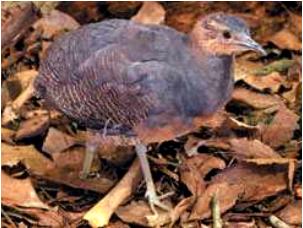
The yellow-legged thrush is a songbird of northern and eastern South America and the Caribbean.
Region
Northern South America and Lesser Antilles
Typical Environment
Found from northern and eastern South America into parts of the Caribbean, occupying humid forests, forest edges, and well-wooded foothills. It favors mature and secondary evergreen forests, especially where fruiting trees are common. On islands it keeps to interior rainforest and shaded ravines, while on the mainland it also uses montane slopes and riparian woodland. It is generally sedentary but may move locally following fruit availability.
Altitude Range
Sea level to 2200 m
Climate Zone
Tropical
Ease of Keeping
Beginner friendly: 2/5
This forest thrush is often heard before it is seen, delivering mellow, fluting phrases from shaded perches. Males are strikingly dark with bright yellow legs, bill, and eye-ring, while females are browner and more subtly marked. It is an important seed disperser at fruiting trees and can become locally common where native fruit is abundant.


Temperament
shy and retiring
Flight Pattern
short rapid wingbeats
Social Behavior
Usually seen singly or in pairs, staying low to mid-canopy in shaded forest. It builds a neat cup nest on branches or in tree forks, and pairs defend small territories during breeding. Outside the breeding season it may gather loosely at fruiting trees with other frugivores.
Migratory Pattern
Resident
Song Description
Song is a series of rich, fluted whistles and melodious phrases delivered at a measured pace. Calls include soft tchup notes and thin seeps given from cover.
Plumage
Male is uniformly dark slaty to blackish with a clean, smooth appearance; female is brownish-olive above with paler, lightly mottled underparts. Both sexes show a contrasting bright orbital ring and clean, unmarked wings and tail.
Diet
Primarily eats soft fruits and berries from native trees such as melastomes, laurels, and palms. Supplements its diet with insects, spiders, and other small invertebrates gleaned from foliage or taken from the ground. Occasionally consumes small snails or seeds and will opportunistically visit fruiting shrubs in gardens near forest.
Preferred Environment
Forages at fruiting trees in the midstory and canopy, and also along shaded forest edges. Will descend to the ground to pick fallen fruit in leaf litter, especially along trails and streambanks.