
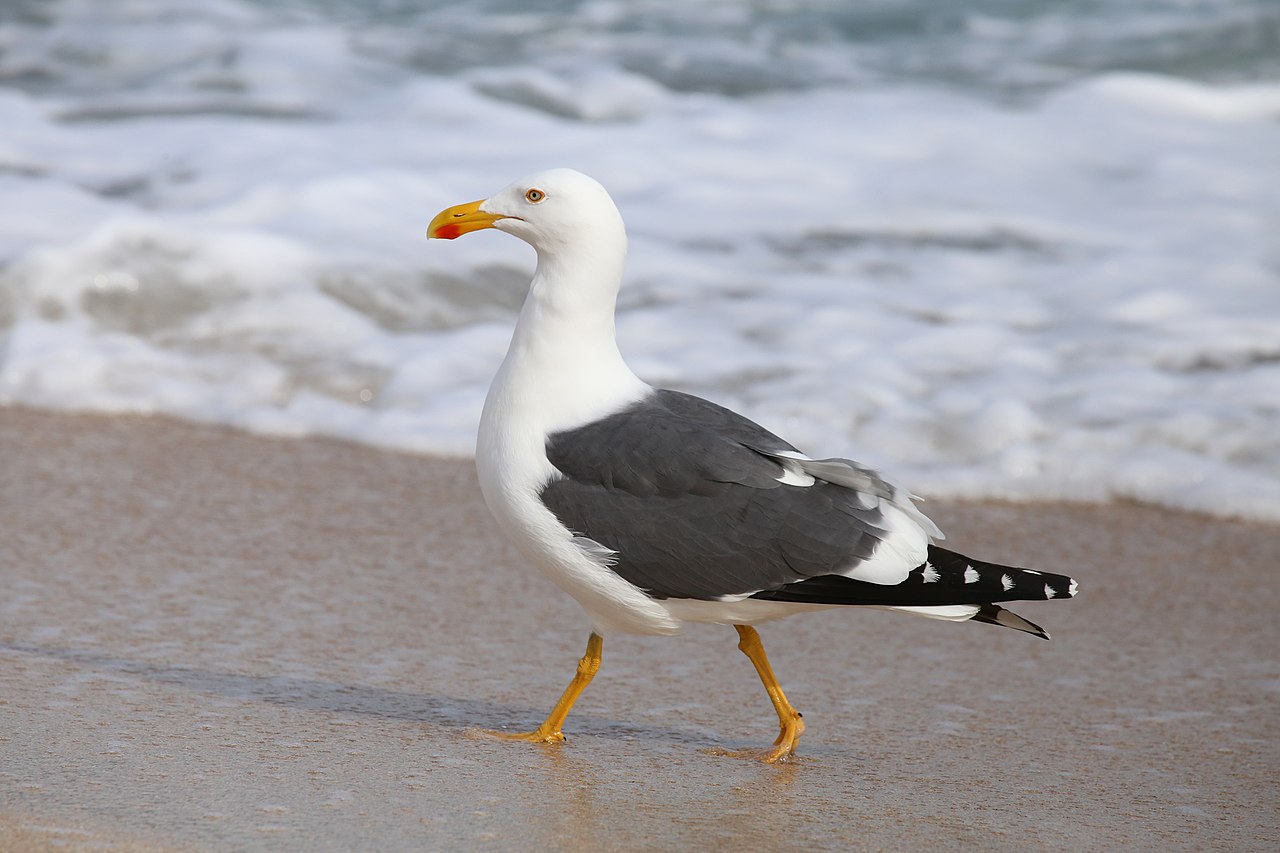
The yellow-footed gull is a large gull, closely related to the western gull and thought to be a subspecies until the 1960s. It is endemic to the Gulf of California.
Region
Gulf of California
Typical Environment
It occurs chiefly around the Gulf of California’s arid coasts and offshore islands, frequenting rocky shorelines, sandy beaches, estuaries, and coastal lagoons. Breeding colonies are typically on low, sparsely vegetated islands with open ground for nesting. Away from colonies it is common around fishing ports, shrimp farms, saltworks, and refuse sites. It forages mostly in nearshore waters but also patrols beaches and mudflats. Post-breeding dispersal can carry some individuals along the Pacific coast of northwestern Mexico and rarely into the southwestern United States.
Altitude Range
Sea level to 200 m
Climate Zone
Arid
Ease of Keeping
Beginner friendly: 1/5
The yellow-footed gull is a large, heavy-billed gull with bright yellow legs, closely related to the western gull and long treated as its subspecies. It is endemic to the Gulf of California, where it breeds on coastal islands and along desert shores. After breeding it may disperse northward along the Pacific coast and occasionally reach southern California.


Temperament
social and opportunistic
Flight Pattern
strong flier with steady wingbeats and some soaring
Social Behavior
Breeds in loose colonies or aggregations on islands, nesting on the ground in shallow scrapes lined with plant material. Pairs are generally monogamous for the season; both sexes incubate and tend the young. Outside the breeding season it gathers in flocks at rich food sources such as ports and fish-processing sites.
Migratory Pattern
Partial migrant
Song Description
Calls are loud, yelping series typical of large Larus gulls, including rattling long-calls and harsh squawks. Birds give sharp alarm notes at colonies and nasal, laughing sequences during social displays.
Plumage
Adult with white head and underparts, dark slate-gray mantle and upperwings, blackish primaries with white mirrors; nonbreeding birds show brownish streaking on head and neck. Juveniles and immatures are mottled brown, gradually gaining a darker gray mantle and cleaner white underparts with age.
Diet
An opportunistic omnivore taking small fish, crustaceans, mollusks, and marine invertebrates, along with carrion and offal. It scavenges around fishing boats and processing plants and readily consumes refuse. It will also take bird eggs and chicks when available and kleptoparasitize other seabirds. On shore it forages for stranded prey and invertebrates along the tideline.
Preferred Environment
Feeds mainly in nearshore marine waters, surf zones, estuaries, and tidal flats. Common around harbors, shrimp farms, saltworks, and garbage dumps where food is abundant. Often follows fishing activity and patrols beaches and rocky shores.


