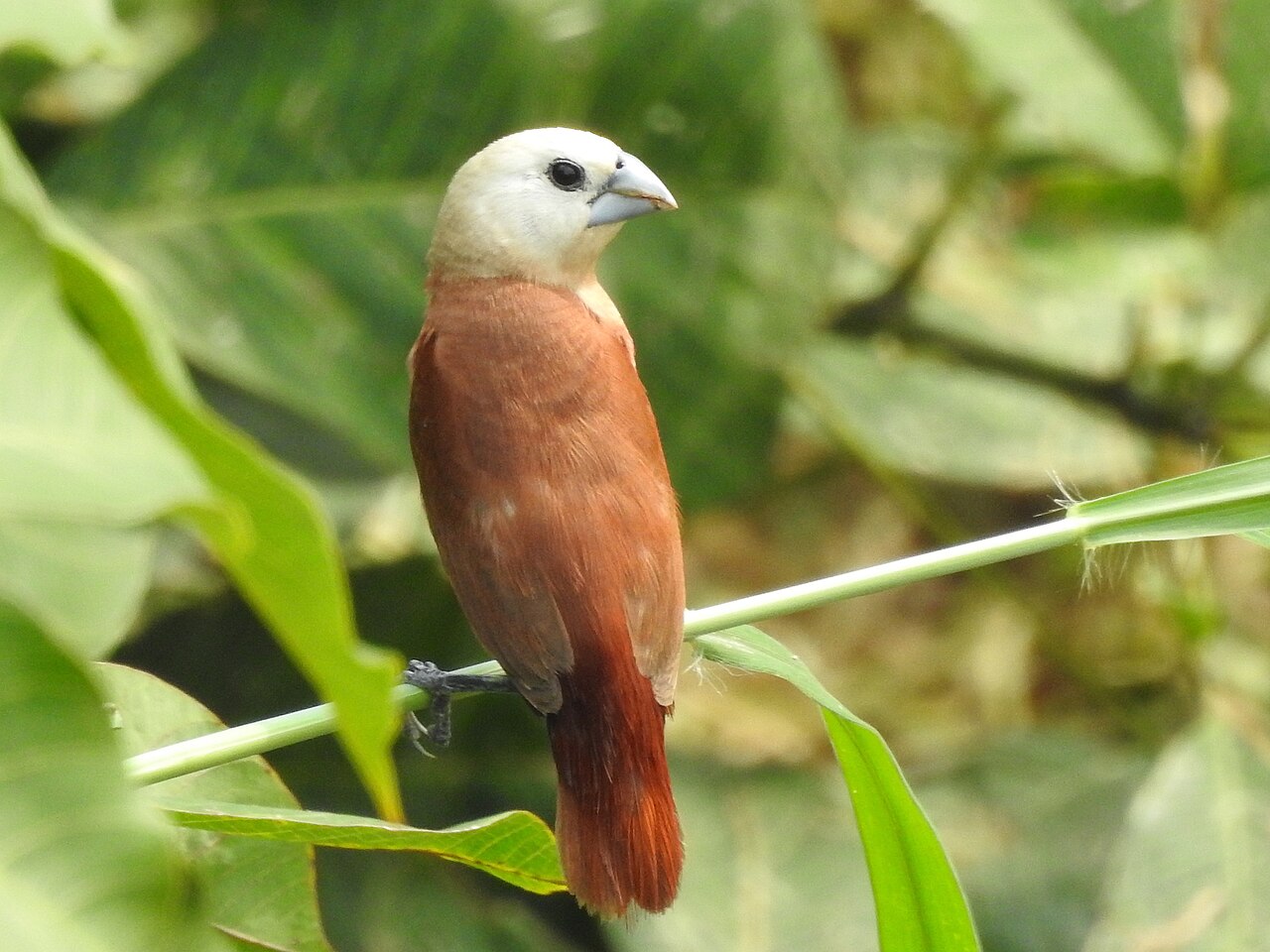
The white-headed mousebird is a bird belonging to the mousebird family, Coliidae. It is found only in east Africa where it occurs in southern Somalia and parts of Kenya with its range just extending into southern Ethiopia and northern Tanzania. It inhabits arid bushland up to 1,400 metres above sea-level.
Region
East Africa
Typical Environment
Occurs from southern Somalia and eastern Kenya to southern Ethiopia and locally into northern Tanzania. Prefers arid and semi-arid bushland, thorn scrub, and Acacia-Commiphora thickets, including edges of dry savanna and degraded scrub. It may visit orchards and gardens where fruiting shrubs are available. Typically found up to about 1,400 m, favoring dense, thorny cover for feeding and roosting.
Altitude Range
Sea level to 1400 m
Climate Zone
Arid
Ease of Keeping
Beginner friendly: 2/5
The white-headed mousebird is a slender, long-tailed member of the mousebird family, endemic to arid and semi-arid bushlands of East Africa. It is highly acrobatic, often clambering and hanging upside down while feeding. Small flocks roost communally, huddling together for warmth. Its distinctive white head and very long, graduated tail make it easy to pick out among thorn scrub.

Temperament
social and active
Flight Pattern
short rapid wingbeats with brief glides
Social Behavior
Usually seen in small, tight-knit flocks that move together through thorny bushes. Roosts communally, often huddling in line to conserve heat. Breeding pairs build a shallow twig nest concealed in dense scrub, and helpers may sometimes assist in rearing young.
Migratory Pattern
Resident
Song Description
Vocalizations are soft, high-pitched twitters and chattering notes, given frequently while moving through cover. Alarm calls are sharper squeaks that alert the flock.
Plumage
Smooth, sleek plumage with a clean white head and throat contrasting with warm brown to grey-brown upperparts and paler buff underparts; very long, narrow, graduated tail feathers.
Diet
Primarily consumes soft fruits and berries, including figs and other small, native fruits. Also takes flower buds, young leaves, and shoots, with occasional small invertebrates. Foraging is often acrobatic, with birds clambering and hanging to reach food. They obtain much of their moisture from succulent fruits.
Preferred Environment
Feeds within dense thorn scrub, acacia thickets, and fruiting shrubs at bush edges. Will forage in semi-open areas and sometimes in gardens or orchards when fruit is available.