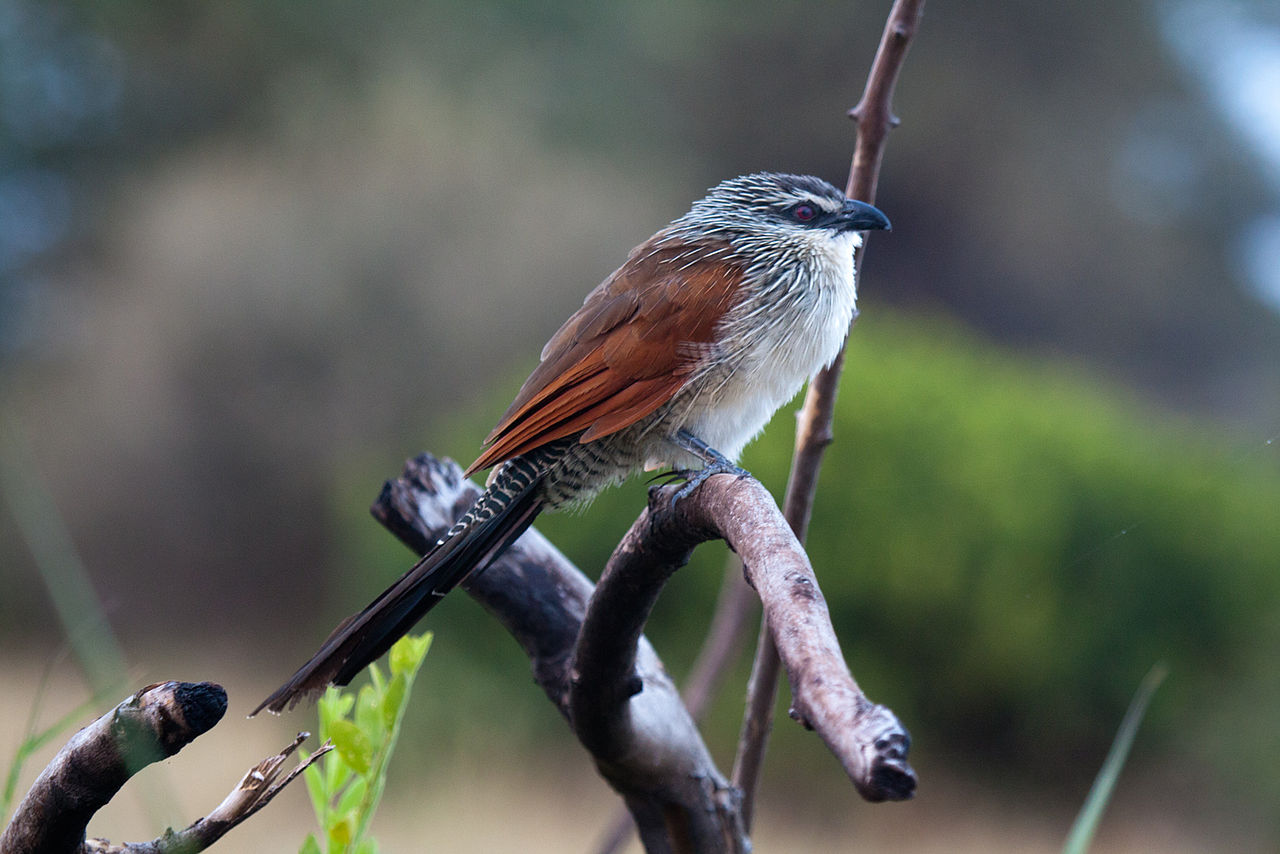
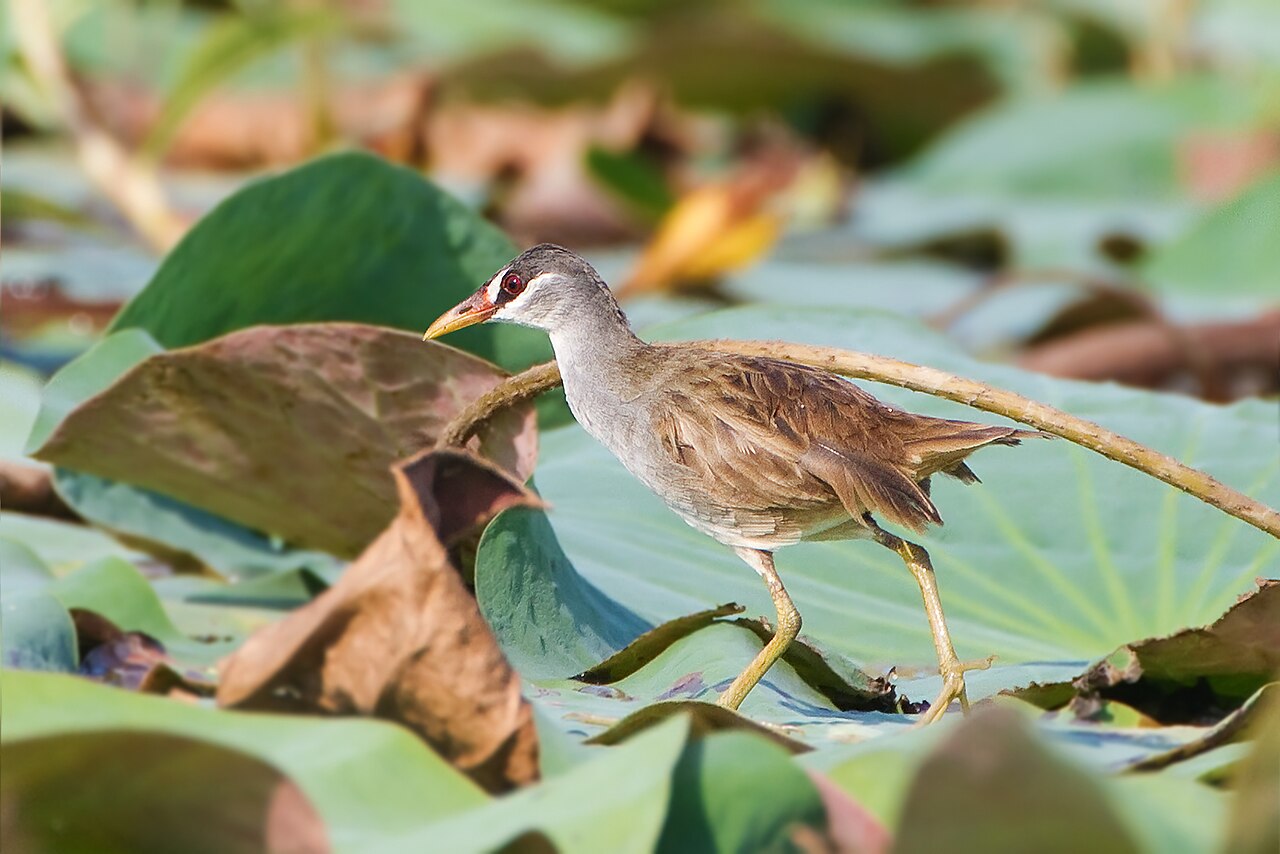
The white-browed bush chat, also known as Stoliczka's bushchat, is an Old World flycatcher in the genus Saxicola. The alternative name is after the discoverer, geologist and explorer Ferdinand Stoliczka.
Region
Thar Desert and Indus Plains
Typical Environment
Occurs patchily in northwestern India and adjacent Pakistan, primarily in arid and semi-arid scrub. It favors sparsely vegetated sandy or saline flats with scattered low shrubs and grasses, often near seasonal wetlands or fallow fields. Birds use prominent low perches to forage and scan, shifting locally with monsoon-driven vegetation changes. Agricultural intensification and removal of native scrub have fragmented suitable habitat.
Altitude Range
0–500 m
Climate Zone
Arid
Ease of Keeping
Beginner friendly: 1/5
Also called Stoliczka's bushchat, it is an arid-zone specialist of the Thar Desert region, notable for its relatively large bill among bushchats. The bold white eyebrow gives the species its common name. It is scarce and localized, with habitat loss from agriculture and shrub clearance posing major threats.


Temperament
wary and skulking, but will perch conspicuously
Flight Pattern
short rapid wingbeats with low, bounding flights between shrubs
Social Behavior
Usually seen singly or in pairs, maintaining small territories in suitable scrub. Nests are placed low in dense bushes or on/near the ground, with both parents involved in care. Likely monogamous within a season and sensitive to disturbance near nest sites.
Migratory Pattern
Partial migrant
Song Description
Song is a soft series of chatters and whistles delivered from a low perch, interspersed with brief pauses. Calls include sharp tacks and thin seeps, used as contact and alarm notes.
Plumage
Sandy-brown upperparts with paler buff underparts and a crisp white supercilium over a darker eye-line. The bill is relatively stout and long for a bushchat. Females are duller and more uniformly brown; males show slightly stronger contrast and cleaner underparts.
Diet
Primarily takes insects such as beetles, ants, termites, caterpillars, and small orthopterans. It hunts by sallying from low perches and by ground-gleaning among sparse shrubs and grasses. Occasional small berries or seeds may be consumed when insect prey is scarce.
Preferred Environment
Feeds along the edges of open scrub, saline flats, and lightly grazed or fallow fields with scattered bushes. Often forages on bare ground patches near shrubs that provide quick cover.