The white-browed crake is a species of bird in the family Rallidae. It is found in Australia, Brunei, Cambodia, Fiji, Hong Kong, Indonesia, Japan, India, Malaysia, Micronesia, New Caledonia, Palau, Papua New Guinea, the Philippines, Samoa, Singapore, Solomon Islands, Thailand, and Vanuatu.
Region
Southeast Asia and Australasia
Typical Environment
Inhabits freshwater and brackish wetlands including marshes, swamps, mangroves, rice paddies, and shallow lagoons. Prefers areas with dense emergent vegetation such as reeds and sedges, but also uses open mudflats and floating mats of aquatic plants. Often associated with lowland wetlands near coasts and river floodplains. It is widespread across much of tropical Asia to northern Australia and numerous Pacific islands.
Altitude Range
Sea level to 1000 m
Climate Zone
Tropical
Ease of Keeping
Beginner friendly: 2/5
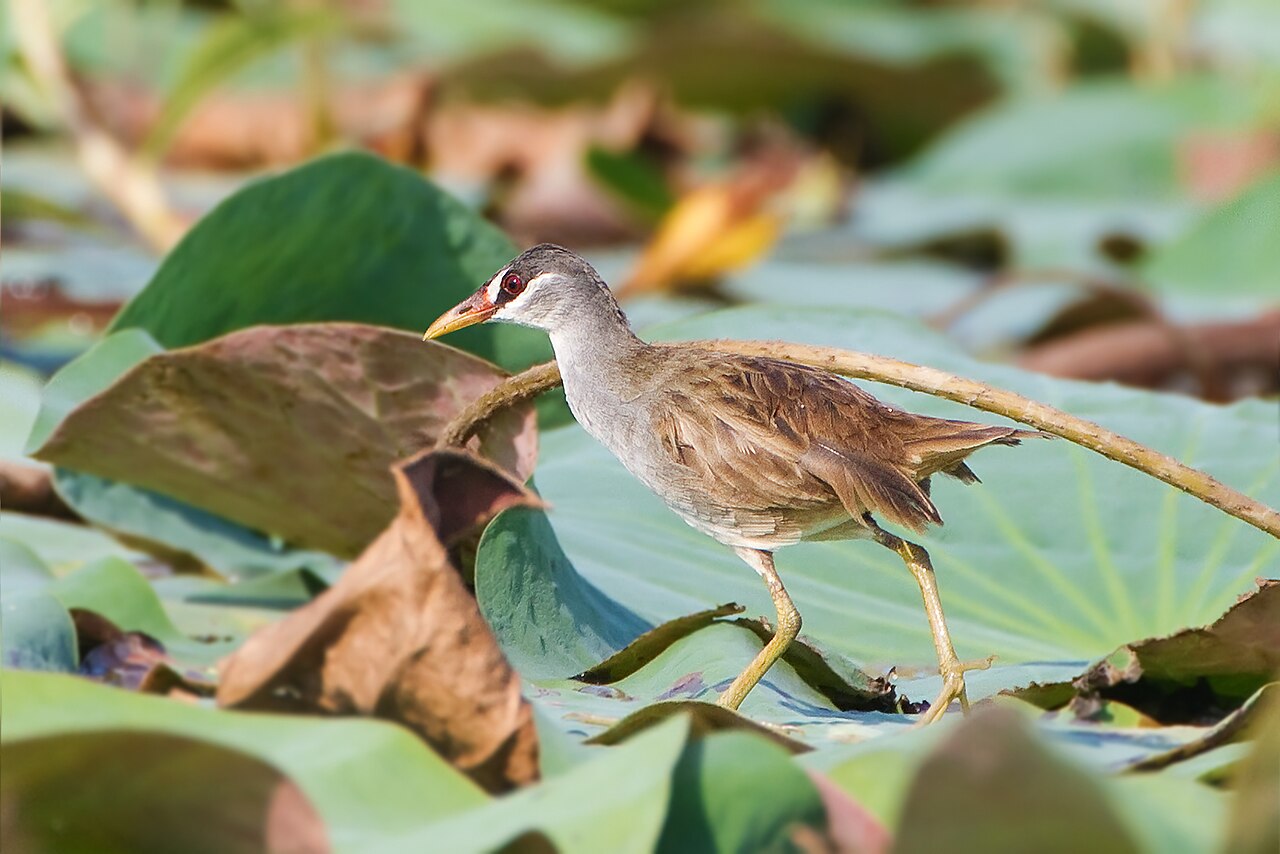
A small, secretive rail, the white-browed crake is most easily recognized by its bold white eyebrow and preference for dense wetland vegetation. It often forages on floating plants or mud edges and may flick its tail while moving. Despite its shy nature, it can be vocal at dawn and dusk, which helps reveal its presence. It occurs widely from South and Southeast Asia to Australia and many Pacific islands.

Temperament
secretive but active
Flight Pattern
short rapid wingbeats, low over vegetation or water
Social Behavior
Usually solitary or in pairs, but small groups may gather where food is plentiful. Nests are placed in dense emergent vegetation over shallow water, sometimes on floating platforms. Both parents typically participate in incubation and chick-rearing. Clutch sizes are modest, and broods may move quickly into cover after hatching.
Migratory Pattern
Resident
Song Description
Vocalizations include repeated sharp kek or tik notes, rattling trills, and harsh, metallic calls. Most calling occurs at dawn and dusk and can carry across wetlands. Alarm notes are abrupt and help coordinate movements through cover.
Plumage
Compact rail with grey-brown upperparts, paler grey face and underparts, and a clean white supercilium extending behind the eye. Throat whitish, with buff to grey tones on the breast and belly; flanks often show fine barring. Undertail coverts pale and frequently flashed while moving.
Diet
Omnivorous, taking aquatic and terrestrial invertebrates such as insects, snails, and small crustaceans. Also consumes seeds, shoots, and other plant matter, especially in rice fields and marsh edges. Will pick prey from the water surface, probe soft mud, and glean from vegetation. Opportunistic and adaptable to seasonal food availability.
Preferred Environment
Feeds along the edges of shallow wetlands, on exposed mud, and among dense reeds and sedges. Frequently uses floating vegetation and mangrove margins. Often forages quietly under cover, emerging briefly into open patches.