

The Westland petrel (Procellaria westlandica),, also known as the Westland black petrel, is a moderately large seabird in the petrel family Procellariidae, that is endemic to New Zealand. Described by Robert Falla in 1946, it is a stocky bird weighing approximately 1,100 grams (39 oz), and is one of the largest of the burrowing petrels. It is a dark blackish-brown colour with black legs and feet. It has a pale yellow bill with a dark tip.
Region
Southwest Pacific
Typical Environment
Breeds in the Paparoa Range on the West Coast of New Zealand’s South Island, nesting in burrows on steep, forested slopes close to the coast. Forages mainly over the continental shelf and slope off the West Coast and around the Chatham Rise. Outside the breeding season, many disperse widely across the South Pacific, with notable concentrations off Peru and Chile where they exploit productive upwellings and fishery discards. At sea they use dynamic soaring over open ocean swells and frequently attend trawlers.
Altitude Range
Sea level to 700 m
Climate Zone
Temperate
Ease of Keeping
Beginner friendly: 1/5
The Westland petrel breeds only on steep, forested slopes near Punakaiki on New Zealand’s South Island and returns to colonies under cover of darkness. It is long-lived and monogamous, nesting in burrows and forming dense colonies. At sea it often follows fishing vessels to scavenge discards, which can be both a food source and a threat due to bycatch.


Westland petrel specimen

Westland petrel egg
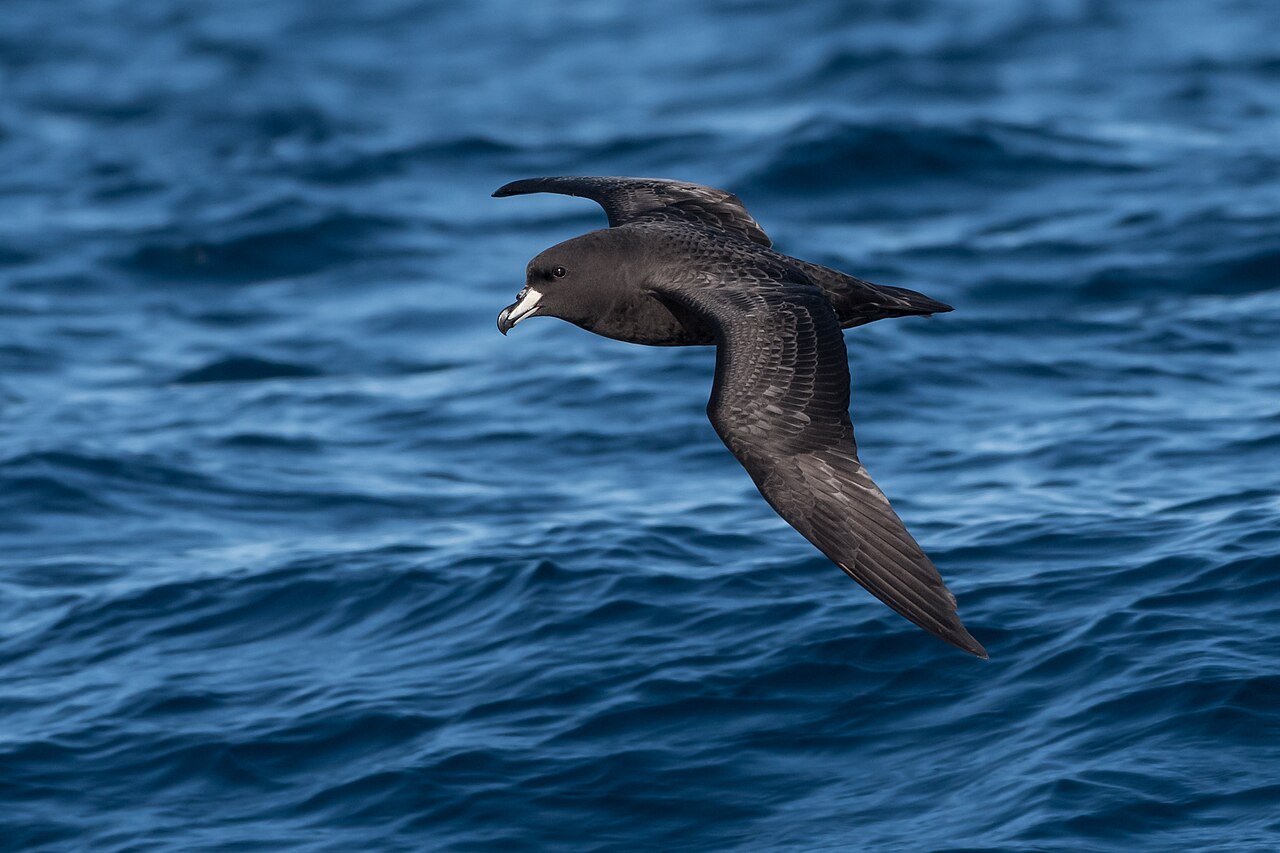
Westland petrel in flight

Western petrel burrows.

Westland petrel hunting

Measuring a Westland Petrel.

Sign near Punakaiki warning drivers about Westland petrels on the road
Temperament
colonial nester and often gregarious at sea around vessels
Flight Pattern
soaring glider using dynamic soaring with long, stiff-winged arcs over waves
Social Behavior
Breeds colonially in burrows, with pairs returning to the same sites annually. Mostly nocturnal at colonies, arriving and departing after dark to avoid predators. Monogamous with shared incubation and chick-rearing duties; adults are territorial around the burrow entrance.
Migratory Pattern
Seasonal migrant
Song Description
At colonies, gives deep, gruff croaks and wailing calls at night, especially during pair displays and territorial encounters. Generally quiet while at sea.
Plumage
Uniform dark blackish-brown with a slightly paler sheen on upperparts; overall sleek, stocky build typical of Procellaria petrels.
Diet
Feeds primarily on fish, squid, and crustaceans taken near the surface. Frequently scavenges fishery waste and offal behind trawlers. Will also seize prey driven to the surface by predatory fish or marine mammals.
Preferred Environment
Forages over productive shelf and slope waters, around upwellings and frontal zones. Often follows fishing vessels and congregates where discards are available.


