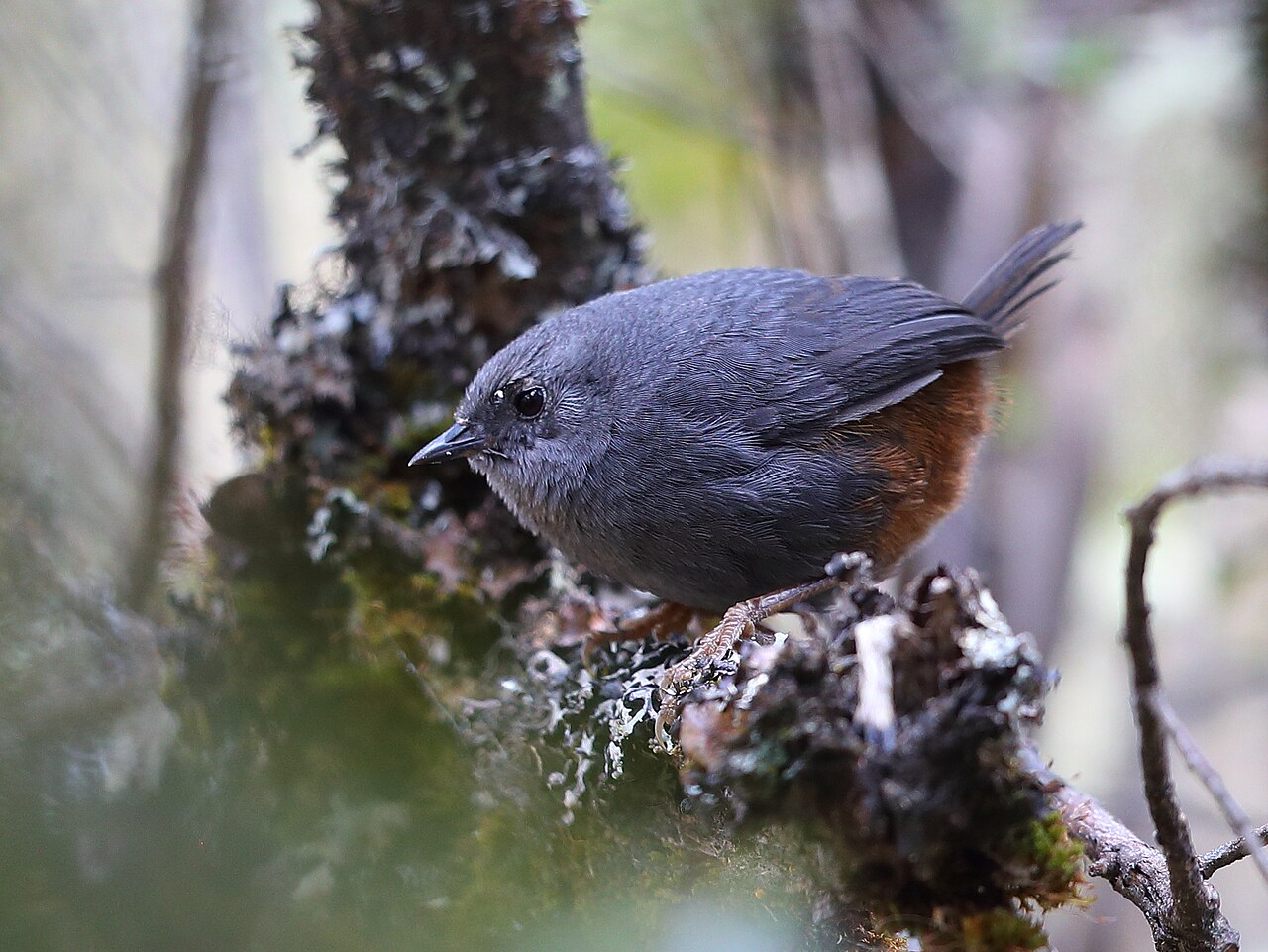
The Vietnamese cutia is a bird species in the family Leiothrichidae. It is found in Laos and Vietnam.
Region
Annamite Range
Typical Environment
Occurs in subtropical to tropical montane evergreen broadleaf forests of central and southern Vietnam and adjoining Laos, especially on humid, mossy slopes and ridges. It favors mature forest with dense epiphytes, oaks and rhododendrons, and complex mid- to upper-canopy structure. Birds move through trees methodically, probing bark, lichen, and dead leaf clusters. It is generally local but can be fairly common where suitable habitat persists. Encroachment and fragmentation of highland forests limit its distribution.
Altitude Range
900–2200 m
Climate Zone
Highland
Ease of Keeping
Beginner friendly: 1/5
The Vietnamese cutia is a forest-dwelling babbler-like songbird of the Annamite Range in Vietnam and adjacent Laos. It often forages acrobatically along mossy trunks and branches, gleaning insects with a stout, slightly decurved bill. Pairs or small family groups frequently join mixed-species flocks in the mid to upper canopy. It was formerly treated as a subspecies of the Himalayan cutia but is now recognized as a distinct species.

Temperament
secretive but active
Flight Pattern
short rapid wingbeats between perches
Social Behavior
Usually seen in pairs or small groups that maintain contact while moving through the canopy. Frequently associates with mixed-species flocks of insectivores. Nesting is presumed monogamous; a cup-like nest is placed in dense foliage or a fork, with both sexes participating in care.
Migratory Pattern
Resident
Song Description
Soft, clear whistles and thin, bell-like notes delivered in short phrases from mid-canopy perches. Calls include high, sibilant seeps used to keep contact within groups.
Plumage
Striking patterned plumage with warm rufous underparts, bold black-and-white panels on the wings and scapulars, and a barred tail. The head shows contrasting dark areas with paler streaking; the back is mottled with fine spotting. Females are duller and browner overall with less vivid contrast.
Diet
Primarily arthropods such as beetles, caterpillars, and other larvae gleaned from bark, moss, and dead leaf clusters. It will probe epiphytes and lichen mats, and occasionally takes small berries when available. Foraging is deliberate, often hanging or sidling along branches to inspect hidden crevices.
Preferred Environment
Feeds in the mid to upper forest canopy of humid montane evergreen forest, especially in areas with heavy moss and epiphyte growth. Prefers mature forest edges, ridgelines, and interior glades where insect prey concentrates.