
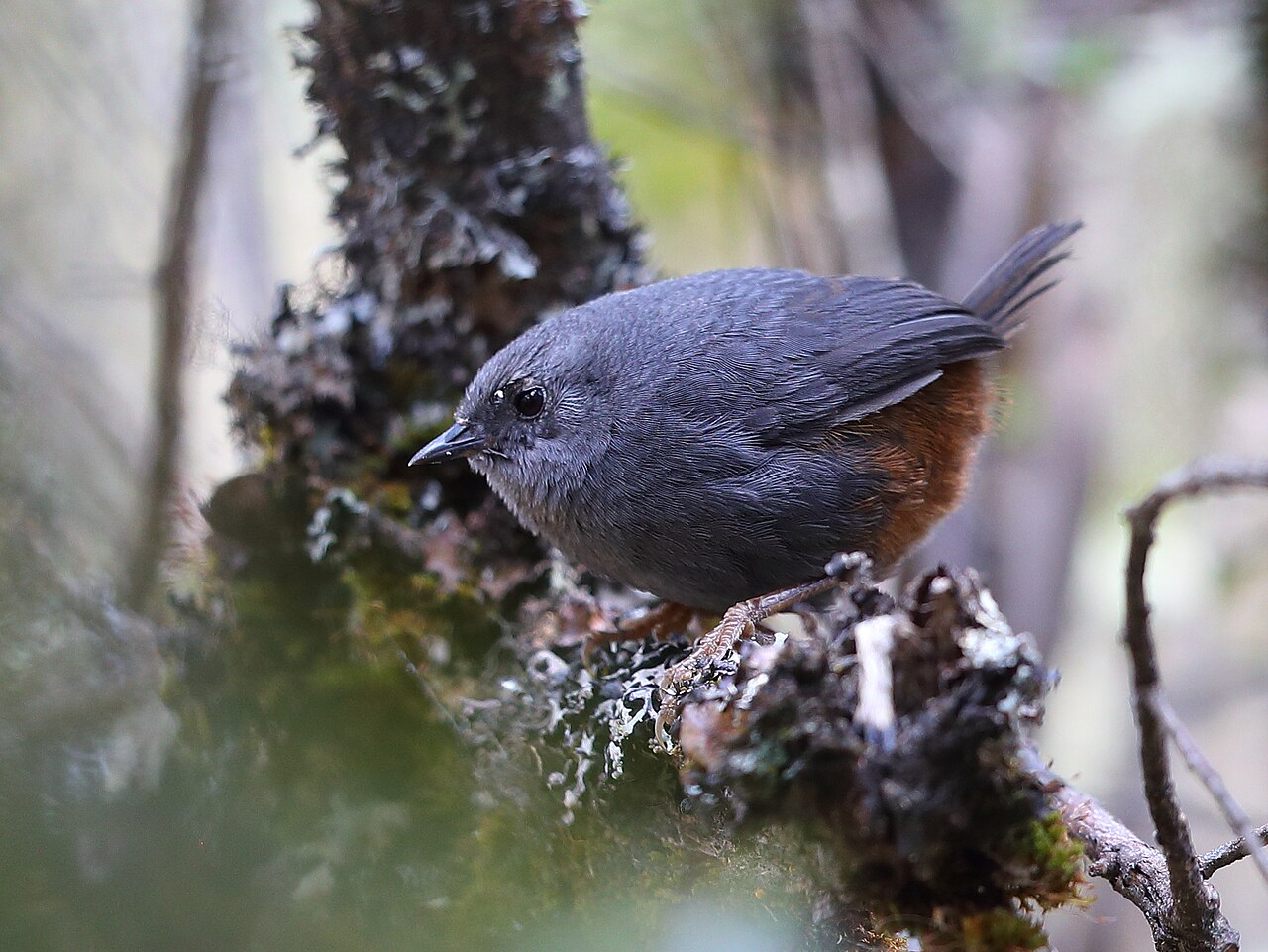
The Vilcabamba tapaculo is a small passerine bird in the family Rhinocryptidae. It is endemic to Peru.
Region
Central-southern Peruvian Andes
Typical Environment
Occurs in humid montane forest and dense Chusquea bamboo of the Vilcabamba–Urubamba region. It favors steep slopes, ravines, and forest edges with thick, tangled understory. Birds keep close to the ground, weaving through bamboo culms and mossy root tangles. Local distribution can be patchy, tied closely to bamboo availability. Where habitat is intact, it may be fairly common but inconspicuous.
Altitude Range
2200–3600 m
Climate Zone
Highland
Ease of Keeping
Beginner friendly: 1/5
This elusive tapaculo spends most of its time in dense understory and bamboo thickets, where it is far more often heard than seen. Identification typically relies on its distinctive song patterns because plumage is very similar to related species. It is restricted to Peru’s Vilcabamba–Urubamba region in the Andes. Conservation depends on safeguarding humid montane forests and Chusquea bamboo stands.


Temperament
skulking and secretive
Flight Pattern
short rapid wingbeats, low to the ground
Social Behavior
Usually found singly or in pairs, maintaining small territories in dense understory. Nests are placed low, often in earthen banks or concealed in thick vegetation, and lined with moss and fibers. Clutches are typically small, and both adults may attend the nest.
Migratory Pattern
Resident
Song Description
Song is a repetitive series of clear notes or trills, often accelerating slightly and delivered from hidden perches within bamboo. Calls include sharp ticks and soft churrs that carry through dense vegetation.
Plumage
Compact, rounded tapaculo with mostly dark slaty-gray plumage; brownish wings and rump with fine barring on the flanks and undertail coverts.
Diet
Primarily takes small arthropods such as insects, spiders, and other invertebrates gleaned from leaf litter and low vegetation. It probes mossy roots, bamboo culms, and fallen debris for prey. Occasional small seeds or berries may be taken incidentally but are not a major component of the diet.
Preferred Environment
Forages on or just above the forest floor in dense Chusquea bamboo and tangled understory of humid montane forest. Often uses natural runways under vegetation, moving methodically and remaining concealed.


