

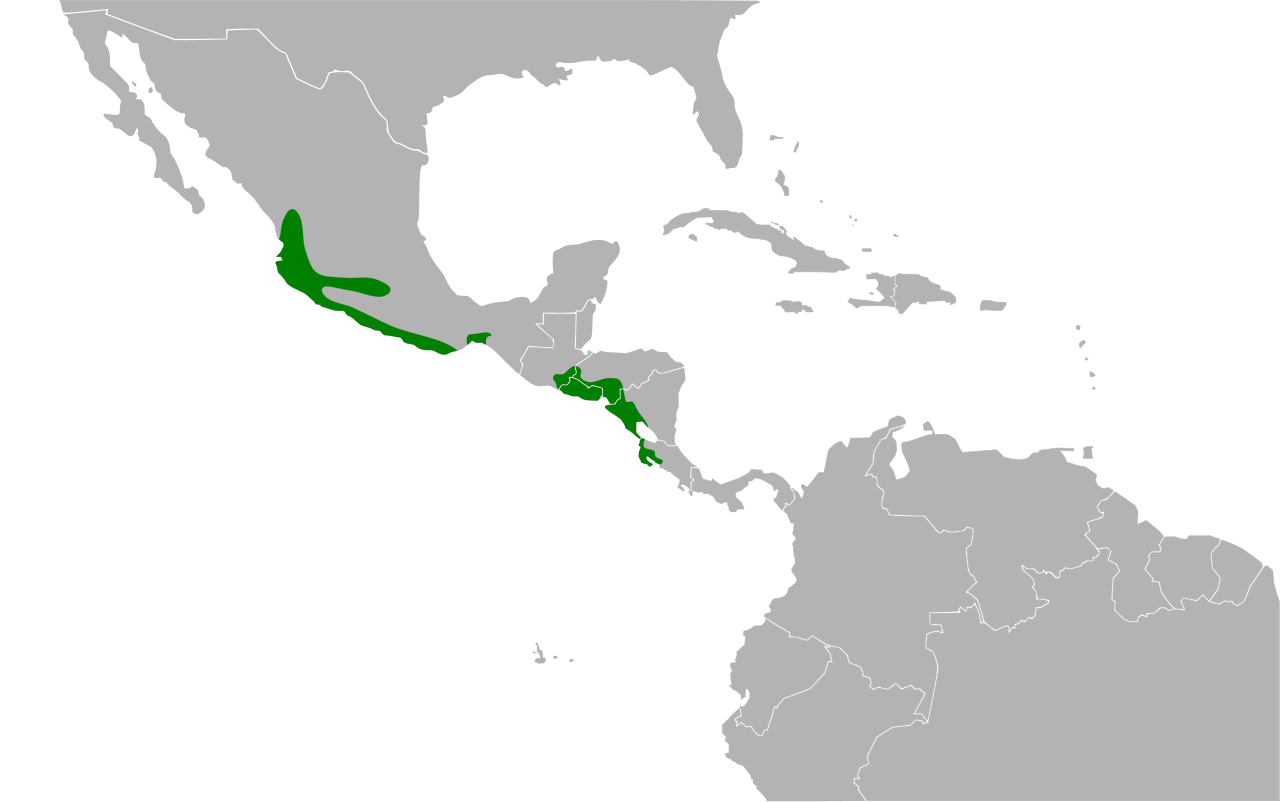
The stripe-headed sparrow is an American sparrow which breeds from Pacific coastal south-western Mexico, including the transverse ranges, Cordillera Neovolcanica to Pacific coastal northern Costa Rica.
Region
Pacific slope of Mesoamerica
Typical Environment
Occurs from the Pacific coastal slopes of southwestern Mexico south through Guatemala, El Salvador, Honduras, Nicaragua, and into northern Costa Rica. It inhabits dry to semi-arid scrub, thorn forest, open woodland, weedy fields, and hedgerows. The species commonly uses edges of agriculture and disturbed second-growth where shrubs and grasses are abundant. It is largely a lowland and foothill bird and is typically absent from dense, closed-canopy forest.
Altitude Range
0–1600 m
Climate Zone
Tropical
Ease of Keeping
Beginner friendly: 2/5
Also known as the stripe-headed sparrow, this species was formerly placed in the genus Aimophila and is now in Peucaea. It favors scrubby, open habitats and often forages on or near the ground with its tail slightly cocked. Males deliver a bright, whistled song from exposed perches during the breeding season. It adapts well to human-altered landscapes such as fields and roadside thickets.

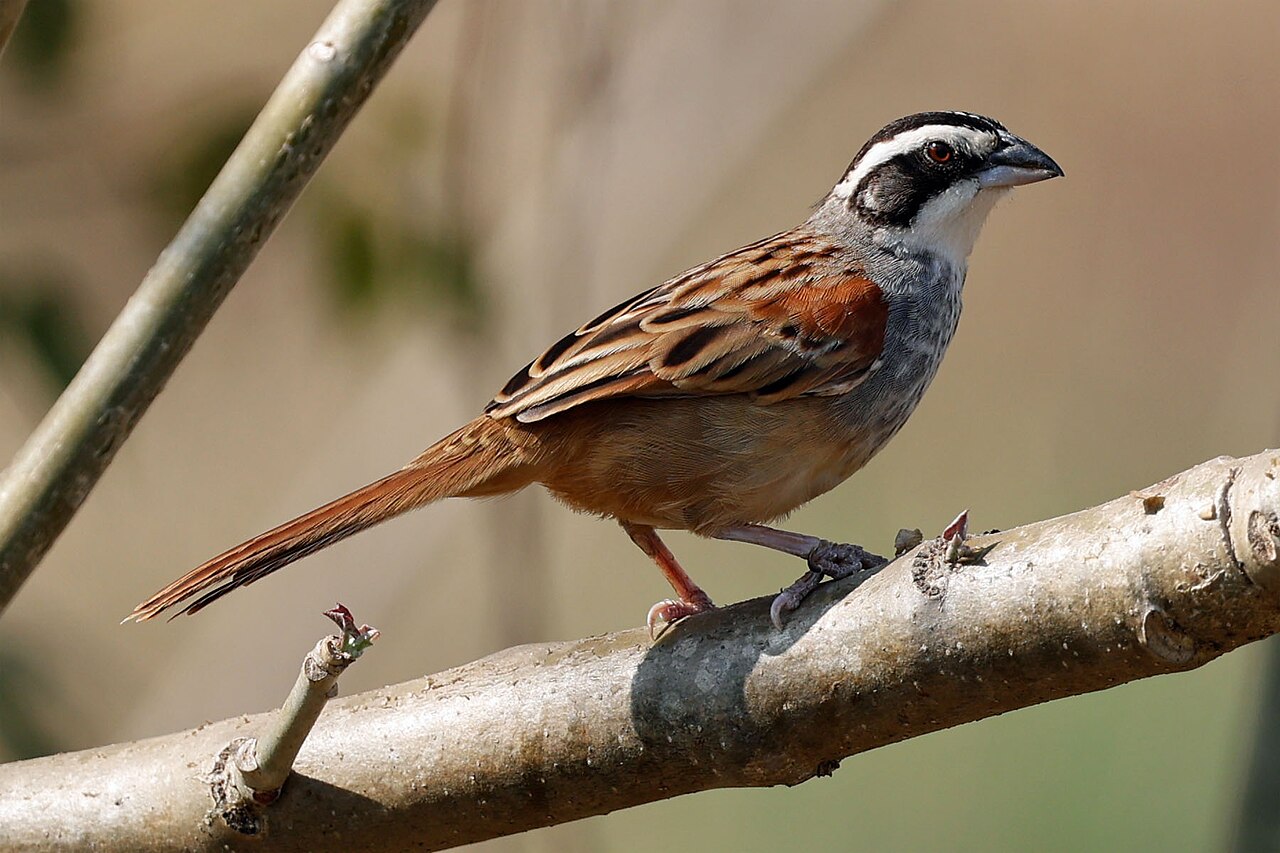
Near Terrero, Costa Rica, 8 March 2024.
Temperament
social and active
Flight Pattern
short rapid wingbeats with low, undulating flights between shrubs
Social Behavior
Usually seen in pairs or small family groups, foraging on or near the ground. Nests are cup-shaped and placed low in shrubs or dense grasses; clutches are typically small. Pairs defend nesting territories but may gather loosely in suitable feeding areas outside peak breeding.
Migratory Pattern
Resident
Song Description
The song is a clear, bright series of whistles and short trills delivered from exposed perches. Calls include sharp chips and thin tseets used to maintain contact in scrubby cover.
Plumage
Brown upperparts with subtle darker streaking and a grayish nape, gray underparts, and a distinctly rufous tail. The head shows bold pale stripes that contrast with darker crown and lateral crown areas, giving a strongly striped look. Wings are brown with warm rufous edging and the throat is pale.
Diet
Eats a mix of grass and weed seeds, small fruits, and a variety of insects and other arthropods. In the breeding season, it increases insect intake for protein, often gleaning from low foliage or the ground. It also scratches in leaf litter and short grass to uncover seeds and small invertebrates.
Preferred Environment
Feeds along field margins, roadside thickets, open scrub, and the edges of dry forest. Often uses areas with scattered bushes, fencerows, and weedy patches that provide both cover and seed resources.


