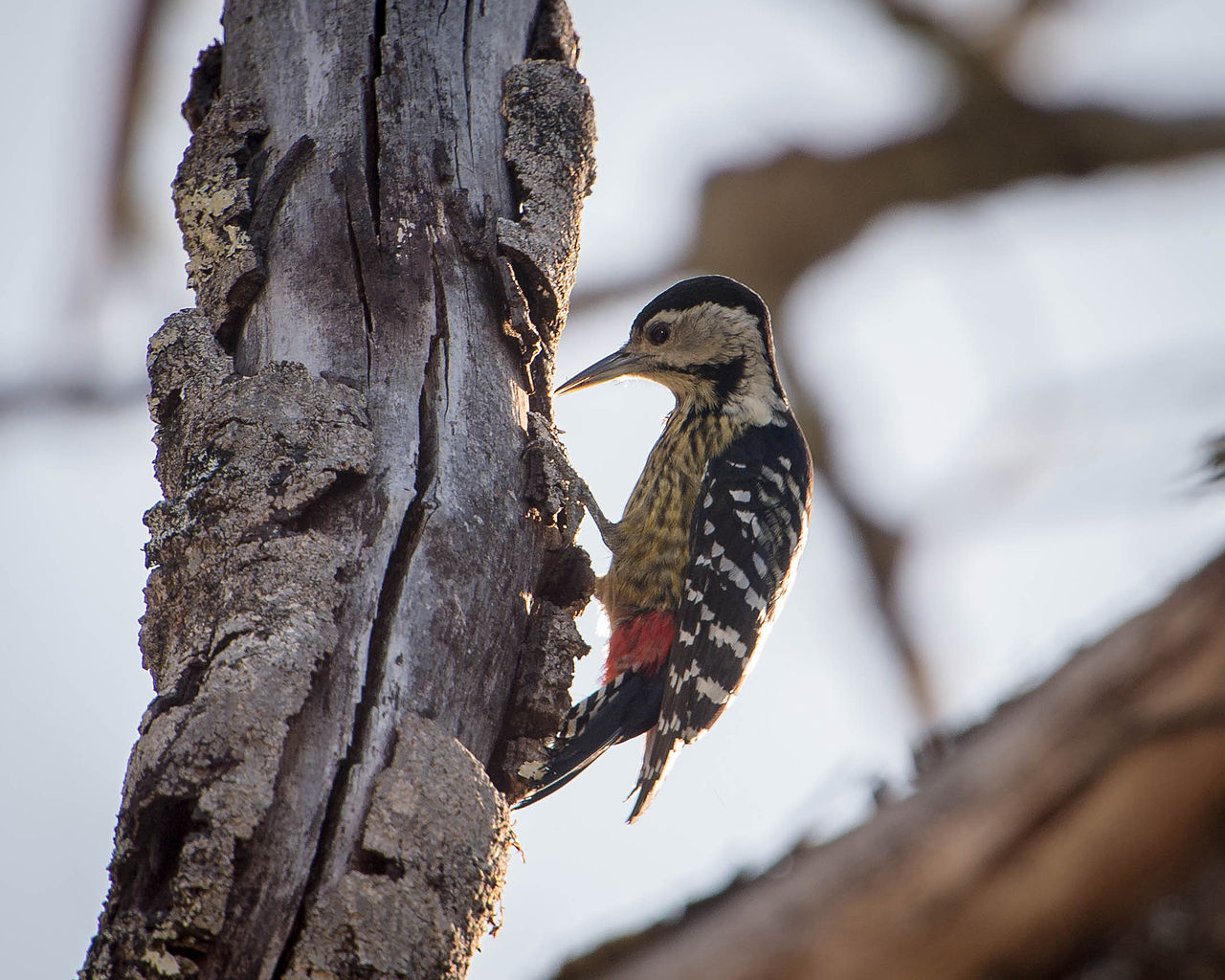
The stripe-breasted rhabdornis, also known as the stripe-breasted creeper or plain-headed creeper, is a species of bird currently placed in the starling family, Sturnidae. It is endemic to the Philippines on the islands of Mindanao, Leyte, Samar and Biliran. It is typically found in tropical montane and submontane forest but has been found as low as 230 masl in Leyte. It is part of a species complex that includes the Visayan rhabdornis and the Grand rhabdornis which were formerly subspecies of this bird.
Region
Philippines, Southeast Asia
Typical Environment
Endemic to the southern and eastern central Philippines, occurring on Mindanao, Leyte, Samar, and Biliran. It inhabits tropical submontane and montane forest, including mossy forest, forest edges, and mature secondary growth. Birds often use mid-story to canopy levels and will descend to lower elevations where suitable forest remains. It is occasionally found in disturbed habitats with large trees and epiphytes near intact forest.
Altitude Range
230–2000 m
Climate Zone
Tropical
Ease of Keeping
Beginner friendly: 1/5
The stripe-breasted rhabdornis, also called the stripe-breasted or plain-headed creeper, is a bark-gleaner that moves nuthatch-like along trunks and large branches. It has been placed in the starling family (Sturnidae) by many authorities, though its relationships have been debated. It is part of a Philippine species complex that includes the Visayan and Grand rhabdornis, both formerly treated as subspecies.

Temperament
active and arboreal
Flight Pattern
short rapid wingbeats between trees
Social Behavior
Usually seen singly, in pairs, or in small family parties, and frequently joins mixed-species flocks in the canopy. It forages by creeping along trunks and large branches, probing bark crevices and epiphytes. Nesting is presumed in tree cavities or dense epiphyte clumps, with both parents attending the young.
Migratory Pattern
Resident
Song Description
Vocalizations are thin, high-pitched chips and trills, often given while foraging. The song is a brief, wiry chatter interspersed with squeaky notes.
Plumage
Warm brown upperparts with slightly paler rump, whitish underparts with distinct dark streaking across the breast that fades toward the belly, and a clean, plain head without bold facial markings.
Diet
Primarily gleans insects and other small arthropods from bark, lichens, and epiphytes. It also takes small fruits and may visit flowering trees for nectar or insects attracted to blooms. Prey is picked, probed, or snapped from the surface of trunks and branches.
Preferred Environment
Feeds in the mid-story to canopy of mature forest, especially on large trees with rough bark and abundant epiphytes. Will use forest edges and older secondary growth where big trees persist.