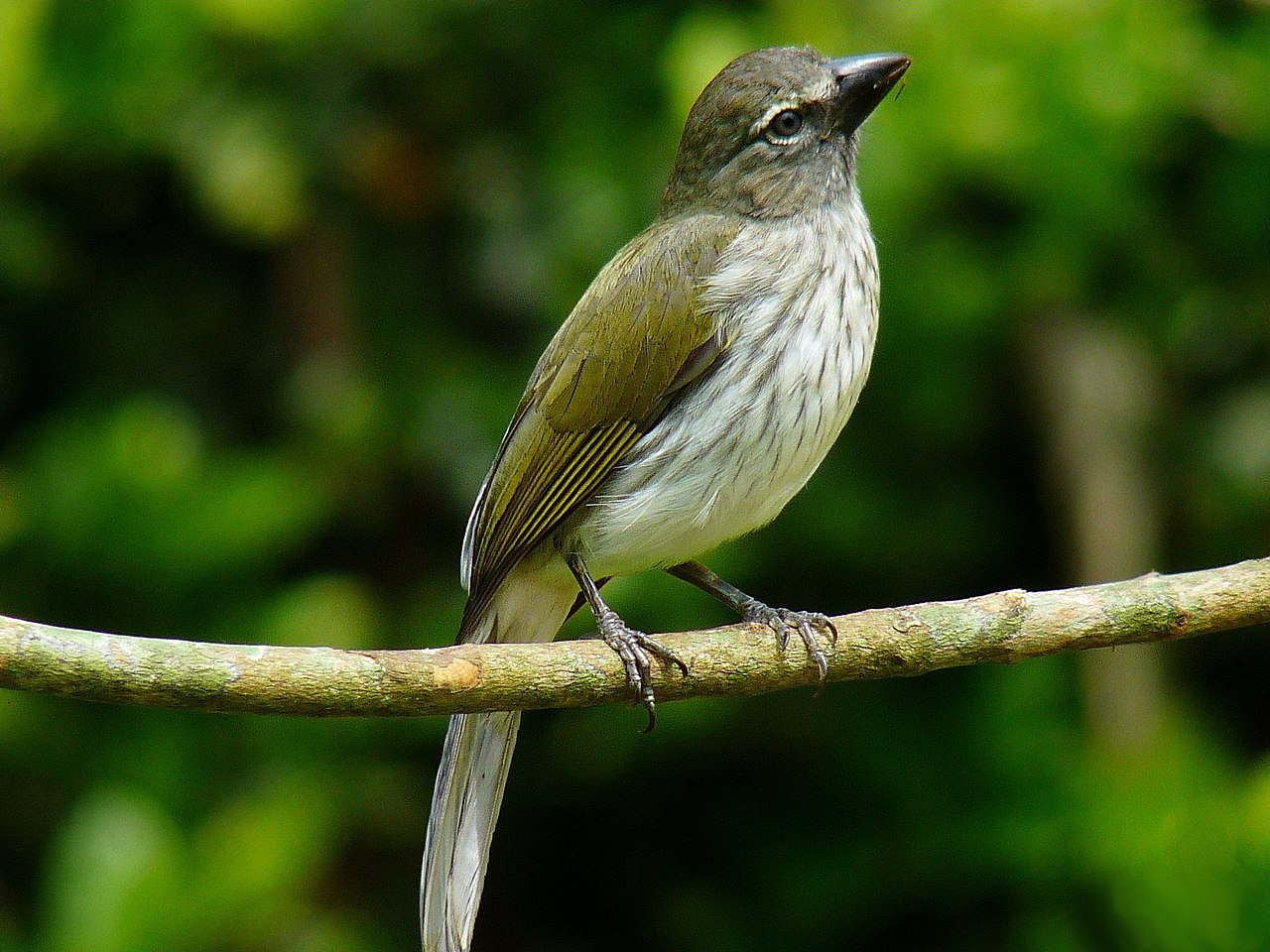
The streaked flycatcher is a passerine bird in the family Tyrannidae, the tyrant flycatchers. It is found in Mexico, in every South American country except El Salvador, in Trinidad and Tobago, in every mainland South American country, and as a vagrant to Bonaire.
Region
Central and South America
Typical Environment
Found from Mexico south through much of Central America and across most of mainland South America, also on Trinidad and Tobago, with occasional vagrants to nearby islands. It favors semi-open habitats including forest edges, gallery forests, second growth, savannas with scattered trees, plantations, and wooded towns and parks. It is common along rivers and in riparian woodland where tall perches are available. The species generally avoids dense interior rainforest, instead using edges and gaps. It adapts well to human-modified mosaics where fruiting trees and ample perches occur.
Altitude Range
0–2000 m
Climate Zone
Tropical
Ease of Keeping
Beginner friendly: 1/5
The streaked flycatcher is a large, boldly patterned tyrant flycatcher that often hunts from exposed perches and can be mistaken for the Great Kiskadee. It ranges from Mexico through much of Central and South America and on Trinidad and Tobago. It eats both insects and fruit, which helps it persist in semi-open and human-modified landscapes. Its loud, piercing calls are a key clue to identification and differ from the kiskadee’s distinctive ‘kis-ka-dee’ refrain.


Canopy Camp - Darien, Panama

Jorupe Preserve - Ecuador

Temperament
alert and conspicuous
Flight Pattern
short rapid wingbeats with sallying flights from high perches
Social Behavior
Typically seen singly or in pairs, especially during the breeding season when pairs defend territories. Nests are placed high in trees in semi-open woodland or along forest edges; both parents attend the young. Outside of breeding, small family groups may forage together and sometimes join mixed-species flocks in edge habitats.
Migratory Pattern
Partial migrant
Song Description
Voice is loud and penetrating, with sharp squeaky whistles and harsh notes delivered from exposed perches. Calls often come in repeated phrases and carry far in open country. The tone is more nasal and less rhythmic than the Great Kiskadee’s classic call.
Plumage
Upperparts brown to olive-brown with darker streaking; wings and tail show warm rufous edging. Underparts yellowish with bold dark streaks on the throat and breast, grading to cleaner yellow on the belly. Head shows a dark mask and bold pale supercilium; crown may conceal a small orange or rufous patch. Overall impression is a large, streaky flycatcher with rufous tones in the wings and tail.
Diet
Takes a wide variety of flying and arboreal insects, including beetles, wasps, and grasshoppers, captured by aerial sallies or hawking from perches. Also consumes fruit and berries, especially when insect prey is less available, and may visit fruiting trees regularly. This flexible, omnivorous diet helps it thrive in edge and secondary habitats.
Preferred Environment
Feeds from high, exposed perches along forest edges, riparian corridors, and in clearings where it has open airspace to sally. Frequently forages in second growth, plantations, and parks with scattered tall trees, and visits fruiting shrubs and trees.