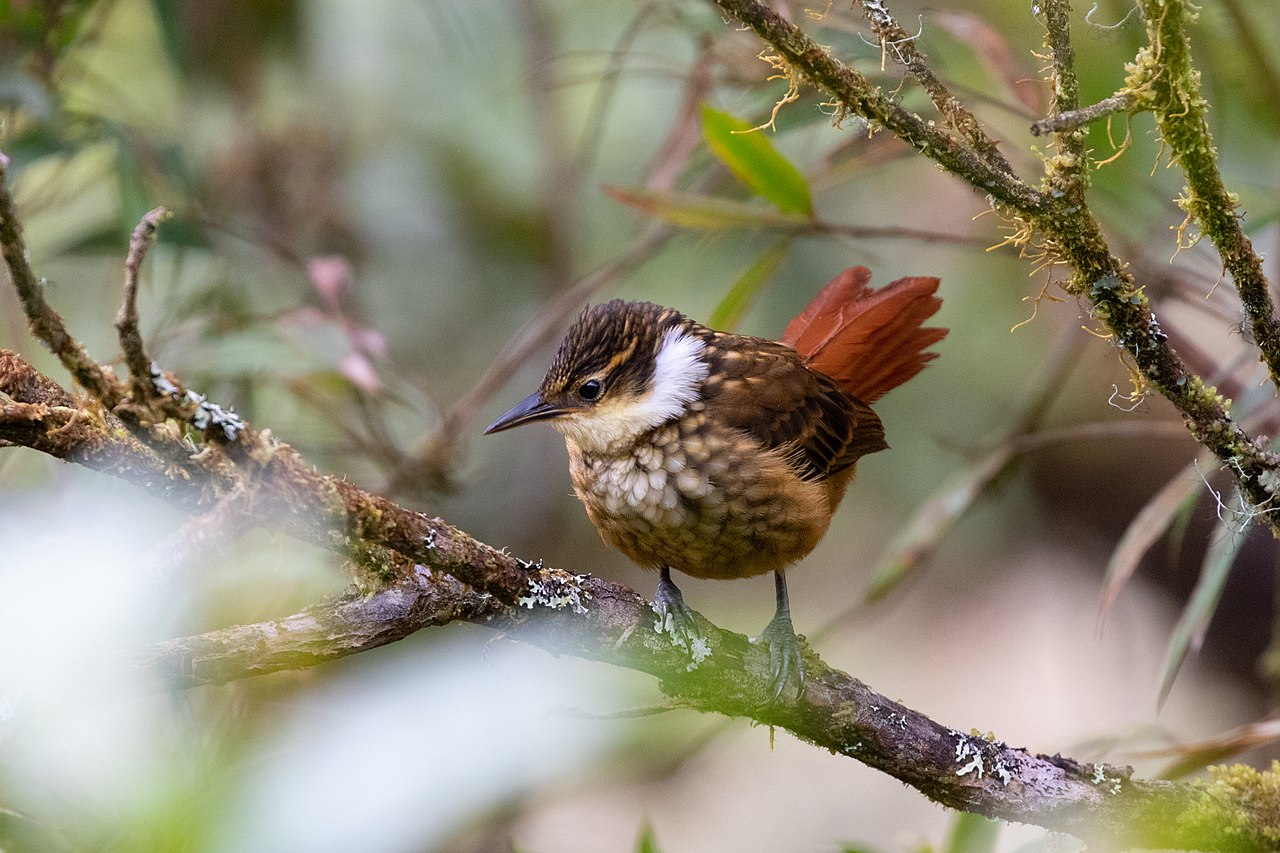
The streaked spiderhunter is a species of bird in the family Nectariniidae.
Region
South and Southeast Asia
Typical Environment
Occurs in tropical and subtropical evergreen forests, forest edges, and secondary growth, as well as gardens and plantations with flowering plants like bananas and gingers. It favors areas with abundant nectar sources and often moves along forest edges and clearings. The species is present from lowlands to montane zones and adapts well to disturbed habitats if flowers are plentiful. It perches to feed or hovers briefly at blossoms, especially where tubular flowers are dense.
Altitude Range
0–2500 m
Climate Zone
Tropical
Ease of Keeping
Beginner friendly: 1/5
The streaked spiderhunter is a large sunbird with a notably long, decurved bill adapted for probing deep tubular flowers. It feeds heavily on nectar but also takes spiders and insects, which inspired its name. It often pierces the base of flowers to access nectar and can act as both a pollinator and a nectar robber. Nests are ingeniously sewn or attached beneath large leaves such as banana with plant fibers and spider silk.


Temperament
active but somewhat shy
Flight Pattern
short rapid wingbeats with direct, purposeful flight
Social Behavior
Usually seen singly or in pairs, sometimes loosely associating where flowers are abundant. Pairs maintain small feeding territories when resources are concentrated. The nest is a suspended purse-like structure attached beneath a large leaf using plant fibers and spider webs.
Migratory Pattern
Resident
Song Description
Calls are sharp, high-pitched tseet or tsee notes, often repeated in quick series. Song is simple and metallic, carrying well through the canopy.
Plumage
Olive-brown upperparts with heavy yellowish streaking on the head, throat, breast, and belly; wings and tail darker and plain. Feathers have a sleek, close-fitting texture typical of sunbirds.
Diet
Primarily nectar from tubular flowers such as bananas, gingers, and other flowering shrubs and trees. It uses its long decurved bill and brush-tipped tongue to extract nectar efficiently. It also consumes spiders and small insects, gleaned from foliage or taken from webs, supplementing protein especially during breeding. The species sometimes pierces the base of flowers to access nectar directly.
Preferred Environment
Feeds along forest edges, clearings, and in gardens or plantations rich in flowering plants. Often forages from mid-story to canopy, occasionally descending to feed on cultivated bananas.