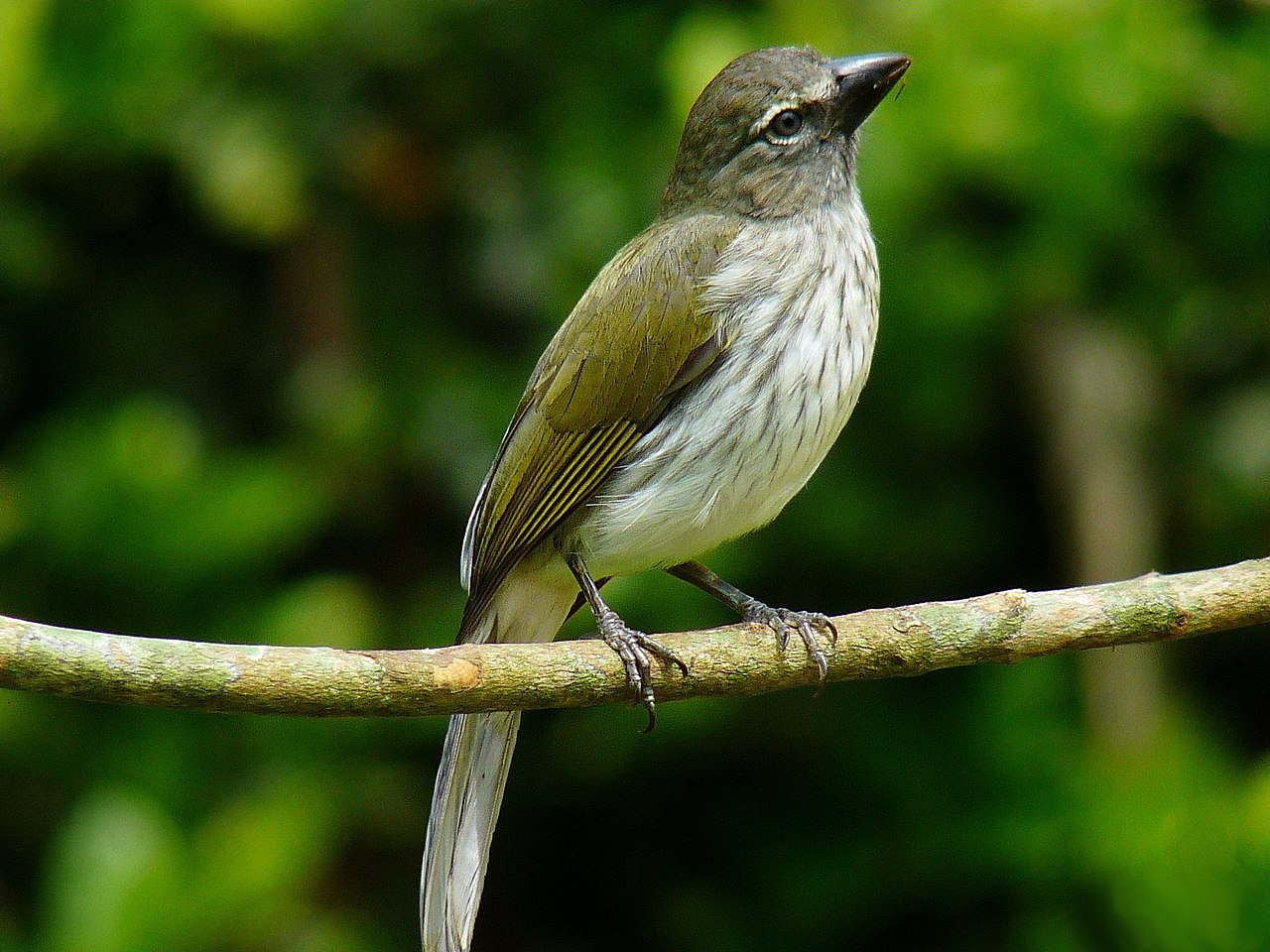
The streaked saltator is a species of saltator in the family Thraupidae. It is found in Colombia, Costa Rica, Ecuador, Guadeloupe, Panama, Peru, and Venezuela.
Region
Central America and northern South America
Typical Environment
Occurs from southern Central America (Costa Rica and Panama) into northwestern South America, including Colombia, Venezuela, Ecuador, and Peru. It favors semi-open habitats such as forest edges, secondary growth, scrub, plantations, and settled areas with ample shrubs and fruiting trees. Common in foothills and lowlands, it adapts well to human-modified landscapes as long as cover and food are available.
Altitude Range
Sea level to 2000 m
Climate Zone
Tropical
Ease of Keeping
Beginner friendly: 1/5
The Streaked Saltator is a robust tanager with a heavy, seed-cracking bill and boldly streaked underparts that give the species its name. It frequents forest edges, second growth, and gardens, often moving in pairs or small family groups. Its varied whistled phrases carry well at dawn, making it a conspicuous voice in many tropical lowland and foothill habitats.


Temperament
wary but confiding at edges; often deliberate and methodical
Flight Pattern
short rapid wingbeats between perches
Social Behavior
Usually found singly, in pairs, or small family groups, sometimes accompanying mixed-species flocks at forest edges. Nests are typically cup-shaped and placed low to mid-level in dense shrubs; both parents tend young. Territorial during breeding, but more tolerant in non-breeding season.
Migratory Pattern
Resident
Song Description
A series of clear whistled notes and short phrases, often repeated, with a mellow, flute-like quality. Calls include sharp chinks and metallic notes used for contact and alarm.
Plumage
Olive-green upperparts with a grayish head and boldly streaked whitish underparts. The texture is smooth with clear, dark streaking across the breast and flanks.
Diet
Eats a mix of fruits, seeds, flower buds, and small invertebrates. Uses its stout bill to crack hard seeds and husk fruit, occasionally gleaning insects from foliage. Will visit fruiting shrubs and small trees and may sample cultivated fruits in gardens.
Preferred Environment
Forages in dense shrubs, hedgerows, plantation edges, and second-growth thickets from low to mid-levels. Often feeds along edges where sunlight promotes fruiting and seeding plants.