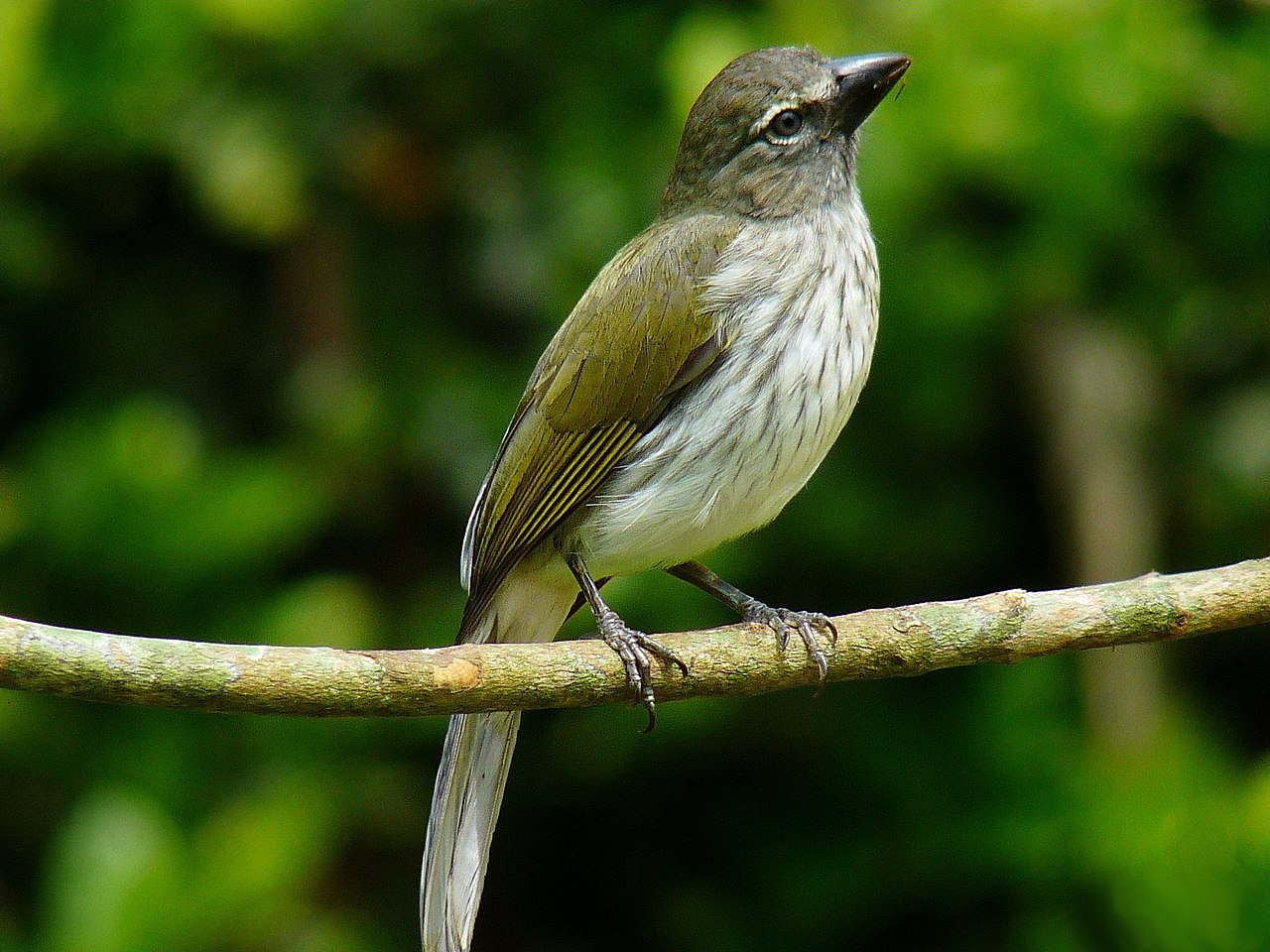
The streaked bulbul, or green-backed bulbul, is a songbird species in the bulbul family (Pycnonotidae). It is found on the Malay Peninsula, Sumatra, and Borneo. Its natural habitat is subtropical or tropical moist lowland forests. It is becoming rare due to habitat loss.
Region
Sundaland (Malay Peninsula, Sumatra, Borneo)
Typical Environment
Prefers subtropical and tropical moist lowland forests, including forest edges and well-developed secondary growth. It frequents the mid to upper canopy, especially where fruiting figs and other berry-bearing trees are present. The species tolerates lightly disturbed habitats but declines where primary forest is extensively cleared. It is generally absent from open farmlands and heavily urbanized zones.
Altitude Range
Sea level to 1200 m
Climate Zone
Tropical
Ease of Keeping
Beginner friendly: 2/5
This bulbul is often seen at fruiting trees and plays an important role as a seed disperser in Southeast Asian lowland forests. It is typically shy but will join mixed-species flocks in the canopy. Ongoing loss of lowland rainforest in Sundaland is the main threat to its populations.

Temperament
shy and alert
Flight Pattern
short rapid wingbeats between trees
Social Behavior
Usually seen singly, in pairs, or small family groups, and often joins mixed-species foraging flocks in the canopy. Breeding pairs are territorial within suitable forest patches, nesting in concealed sites among foliage. They attend fruiting trees with other bulbuls and thrushes, tolerating close proximity while feeding.
Migratory Pattern
Resident
Song Description
A series of clear, whistled notes interspersed with chatters and short trills. Calls include sharp chips and metallic twinks, often delivered from mid-canopy perches and during foraging bouts.
Plumage
Olive-green to greenish-brown upperparts with heavily streaked whitish underparts; fine dark streaking across the breast and flanks. Slightly shaggy or tousled head feathers and a modest, notched crest. Underparts contrast with a green-backed mantle and darker wings and tail.
Diet
Feeds primarily on soft fruits and berries, especially figs (Ficus), as well as other seasonally available drupes. Supplements its diet with insects and other small invertebrates gleaned from foliage and bark. Will hawk short distances to catch flying insects and may probe into clusters of leaves for hidden prey.
Preferred Environment
Forages in the mid to upper canopy of primary and mature secondary lowland forest, often at forest edges and along rivers. Frequently visits fruiting trees where it may mix with other frugivorous birds.