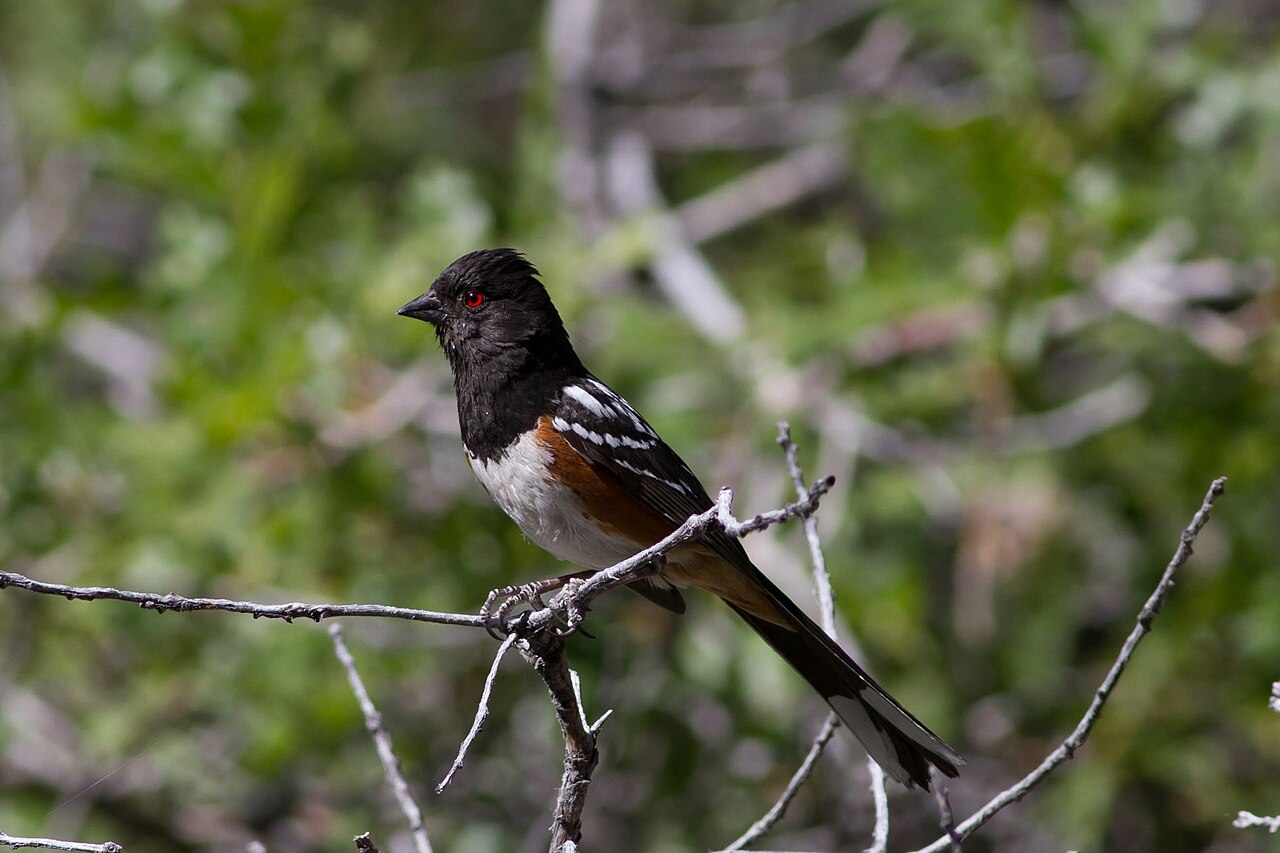
The spotted tody-flycatcher is a species of bird in the family Tyrannidae, the tyrant flycatchers. It is found on Trinidad and in every mainland South American country except Argentina, Chile, Paraguay, and Uruguay.
Region
Northern and eastern South America and Trinidad
Typical Environment
Occurs widely from northeastern Venezuela and the Guianas through much of northern and eastern Brazil, and on Trinidad. It favors lowland habitats including mangroves, riverine thickets, forest edges, second-growth scrub, and coastal woodlands. Often seen in tangled vegetation along watercourses and lagoon margins. Generally avoids dense interior forest, preferring semi-open, brushy areas.
Altitude Range
Sea level to 1200 m
Climate Zone
Tropical
Ease of Keeping
Beginner friendly: 1/5
A tiny tyrant flycatcher, the spotted tody-flycatcher is notable for its broad, flattened bill and the bold dark spotting on its bright yellow underparts. It forages actively in pairs or small family groups, often in mangroves and shrubby edges. Like others in its genus, it builds a pendulous, purse-like nest with a side entrance. Its sharp, high-pitched calls and rapid trills are often heard before the bird is seen.


Temperament
social and active
Flight Pattern
short rapid wingbeats
Social Behavior
Typically seen in pairs or small family groups maintaining small territories in shrubby thickets. They are energetic gleaners, moving methodically through low to mid-level foliage. Nests are pendulous, purse-like structures suspended from branches with a side entrance, and both parents tend the young.
Migratory Pattern
Resident
Song Description
A series of sharp, high-pitched chip notes interspersed with rapid, rattling trills. Vocalizations are frequent and carry well in mangroves and dense scrub, often revealing the bird’s presence before it is visible.
Plumage
Olive-green upperparts with darker wings edged yellowish; underparts bright yellow heavily spotted or streaked with black, especially on the breast and flanks. Tail dark with subtle pale edging; feathers sleek and close-fitting.
Diet
Feeds primarily on small insects and other arthropods, including flies, beetles, and small spiders. Captures prey by short sallies from perches and by gleaning from leaves and twigs. The broad, flattened bill aids in snapping up tiny, agile prey. It occasionally hovers briefly to pick insects from foliage.
Preferred Environment
Forages in mangroves, riparian thickets, and scrubby forest edges, usually from the understory to mid-canopy. Often works along edges of waterways and in dense, tangled vegetation where insect abundance is high.