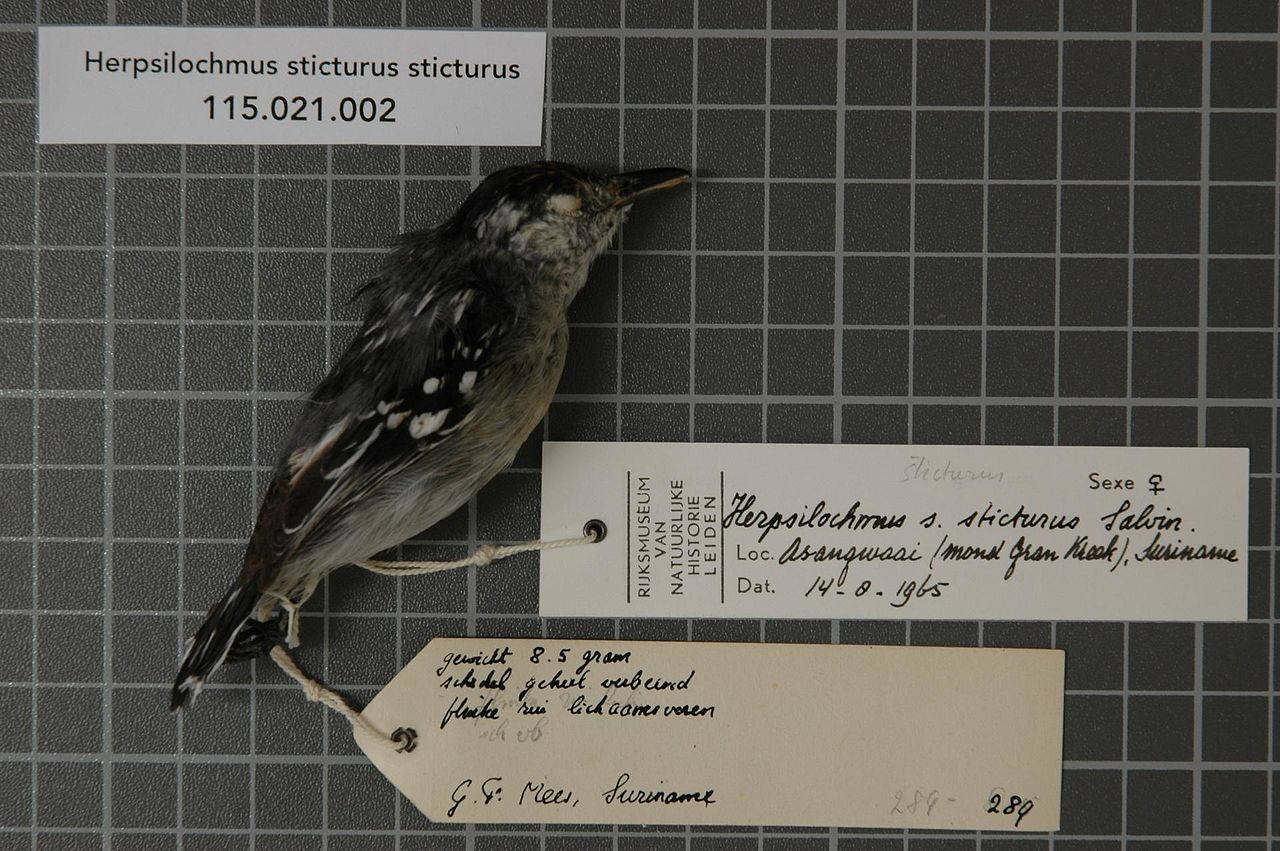
The spot-crowned woodcreeper, is a passerine bird in the subfamily Dendrocolaptinae of the ovenbird family Furnariidae. it is found in Middle America from Mexico to Panama.
Region
Southern Mexico and Central America
Typical Environment
Inhabits humid and semi-humid montane forests, especially pine–oak, cloud forest, and mature second growth. It forages from the understory to the mid-canopy, most often on trunks and large branches. Common along forest edges, ravines, and in somewhat disturbed but well-wooded areas. Frequently associates with mixed-species flocks in the highlands.
Altitude Range
800–3000 m
Climate Zone
Highland
Ease of Keeping
Beginner friendly: 1/5
This highland woodcreeper occurs from southern Mexico through much of Central America, where it clings to trunks and large limbs, probing bark for hidden prey. It often joins mixed-species flocks and can be heard giving thin, whistled phrases in montane forests. Formerly confused with the lowland Streak-headed Woodcreeper, it is now widely treated as a separate species with distinctive crown spotting. By consuming bark-boring insects, it plays a helpful role in forest health.


L. a. neglectus at Savegre Lodge, Costa Rica

Temperament
quiet and somewhat shy
Flight Pattern
short rapid wingbeats; mostly creeps along trunks and branches
Social Behavior
Usually seen singly or in pairs, often accompanying mixed-species flocks. Nests in natural cavities or old woodpecker holes, with both sexes contributing to nesting duties. Territorial during the breeding season but tolerant of other species while foraging.
Migratory Pattern
Resident
Song Description
Song is a series of thin, clear, slightly descending whistles delivered in short phrases. Calls include high, sharp notes used to keep contact while moving through the forest.
Plumage
Warm brown woodcreeper with fine pale streaking above and faint streaking below, a distinctly spotted crown, and a rufous-tinged tail. Upperparts are brown with buffy streaks; underparts are tawny-brown with subtle streaks. Texture is sleek with stiff tail feathers used for support against trunks.
Diet
Primarily arthropods such as beetles, ants, spiders, and larvae gleaned from bark and crevices. Probes and pecks at loose bark and epiphytes to extract hidden prey. Occasionally takes small vertebrates or other invertebrates when available.
Preferred Environment
Forages on tree trunks and large limbs, from lower levels to mid-canopy in montane forest. Often follows mixed-species flocks to exploit flushed insects and may work along forest edges and clearings with remnant large trees.