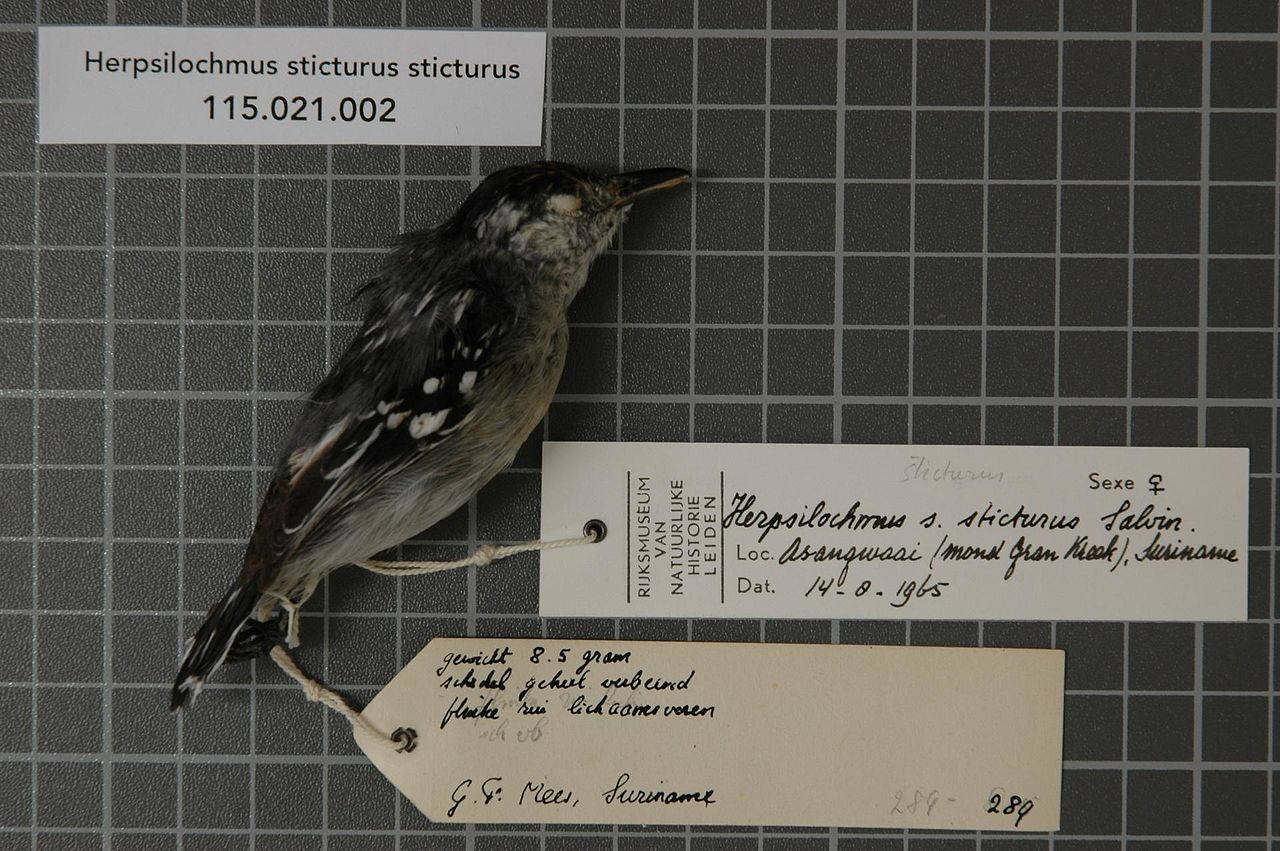
The spot-necked babbler is a species of bird in the family Timaliidae.
Region
Sundaland
Typical Environment
Found in the lowland and hill evergreen forests of the Malay Peninsula, Sumatra, Borneo, and nearby islands. It favors dense understory, vine tangles, and bamboo thickets, often near forest edges and along shaded streams. The species tolerates selectively logged forest but is most numerous in mature primary forest. It generally stays concealed close to the ground, moving through leaf litter and low shrubs.
Altitude Range
0–1500 m
Climate Zone
Tropical
Ease of Keeping
Beginner friendly: 1/5
The spot-necked babbler is a shy understory bird of Southeast Asian forests, belonging to the babbler family Timaliidae. It is best detected by its duet-like calls as it forages in pairs or small parties through dense thickets and bamboo. The species gets its name from the neat pale spotting and scaling on the throat and foreneck.

Temperament
secretive and skulking
Flight Pattern
short rapid wingbeats through dense cover
Social Behavior
Usually seen in pairs or small family groups that move methodically through dense vegetation. It occasionally joins mixed-species flocks in the understory. Nest is a cup or dome-like structure placed low in shrubs or bamboo, with both parents sharing care.
Migratory Pattern
Resident
Song Description
Song is a series of mellow whistles and ringing notes, often delivered antiphonally by a pair. Calls include sharp chips and chattering scolds when agitated. Vocalizations carry well through thickets despite the bird’s tendency to stay hidden.
Plumage
Warm brown to olive-brown upperparts with paler, buffy underparts showing fine spots and scaling on the throat and foreneck. The crown and mantle are plain, with subtle streaking on the neck. Plumage appears soft and slightly fluffy, aiding a cryptic look in the understory.
Diet
Primarily feeds on insects and other small arthropods such as beetles, ants, termites, and spiders. It gleans prey from leaves, twigs, and the forest floor, occasionally probing into curled leaves or moss. Small berries or seeds may be taken opportunistically.
Preferred Environment
Forages in dense understory of primary and secondary forest, especially among bamboo, vine tangles, and sapling thickets. Often works along shaded trails and stream margins where cover is abundant.