
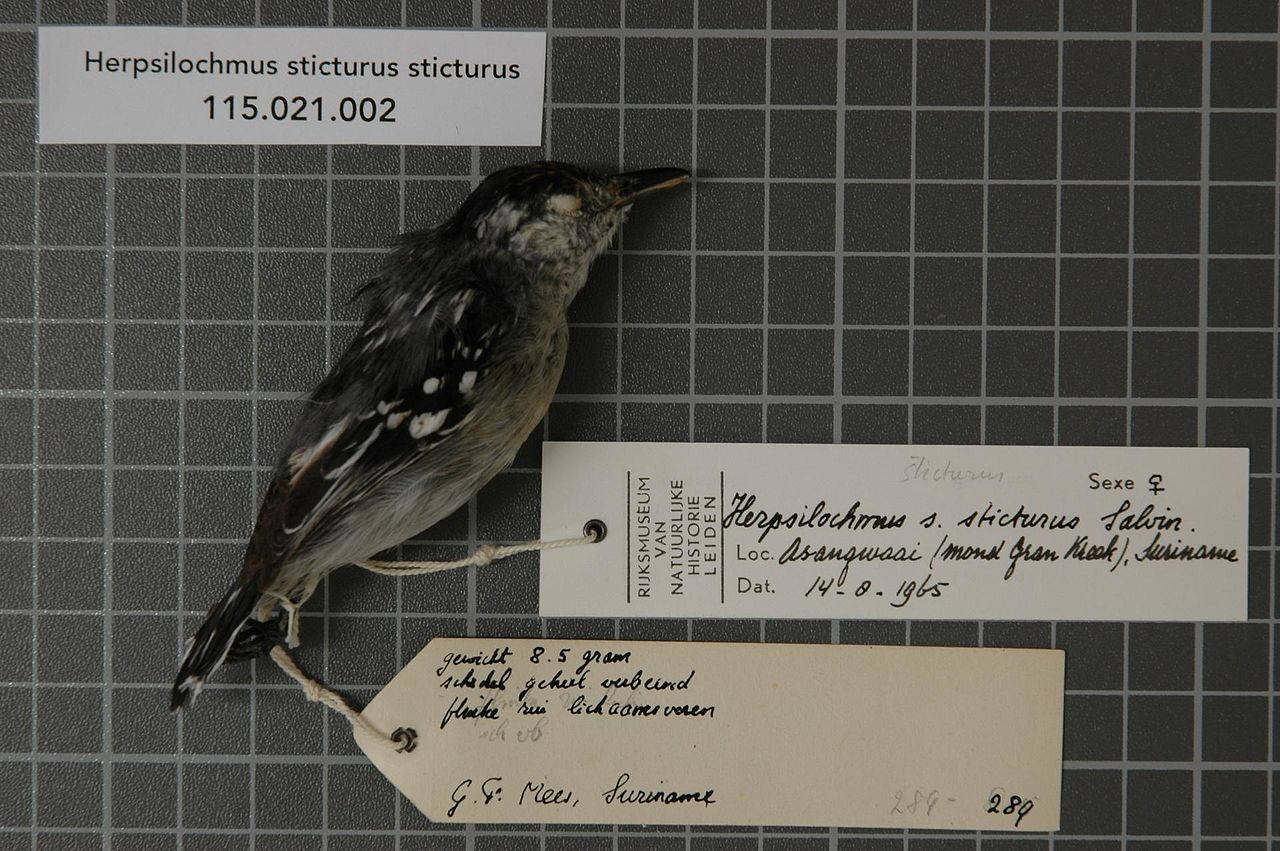
The spot-tailed antwren is a species of bird in subfamily Thamnophilinae of family Thamnophilidae, the "typical antbirds". It is found in Brazil, French Guiana, Guyana, Suriname, and Venezuela.
Region
The Guianas and northern Amazonia
Typical Environment
Occurs in lowland evergreen forests across Brazil (north of the Amazon), French Guiana, Guyana, Suriname, and southern Venezuela. Prefers terra firme forest but also uses forest edges and tall secondary growth. Most foraging is in the midstory to canopy, where it joins mixed flocks. It generally avoids heavily degraded habitats and extensive open areas.
Altitude Range
0–800 m
Climate Zone
Tropical
Ease of Keeping
Beginner friendly: 1/5
The spot-tailed antwren is a small canopy-dwelling antbird that forages actively in pairs and often joins mixed-species flocks. Males and females frequently perform duets, a hallmark of many antbirds. It is not an obligate ant-follower, instead gleaning small arthropods from foliage and twigs. Its distinctive spotted tail and crisp wing markings help separate it from similar Herpsilochmus species.


Temperament
active and furtive
Flight Pattern
short rapid wingbeats between perches
Social Behavior
Typically forages in pairs and regularly joins mixed-species flocks in the midstory and canopy. Pairs maintain small territories and communicate with antiphonal duets. Nest is a small cup suspended or attached to forked vegetation in the understory to midstory.
Migratory Pattern
Resident
Song Description
A fast, high-pitched series of thin notes that accelerate slightly, often given as a male–female duet. Calls include sharp chips and soft trills used to keep contact in dense foliage.
Plumage
Small, slim antwren with neat, contrasting patterning; tail shows fine pale spots. Wings have clear pale wingbars and spotting; underparts are light with subtle streaking or wash depending on sex.
Diet
Feeds primarily on small arthropods such as insects and spiders. Gleans prey from leaves and fine twigs, often hover-gleaning at the tips of branches. Occasionally sallies to catch flushed prey and may opportunistically attend army-ant activity without depending on it.
Preferred Environment
Forages in the midstory to canopy of humid lowland forest, especially along edges, gaps, and vine tangles. Frequently associates with mixed-species flocks moving through the canopy strata.


