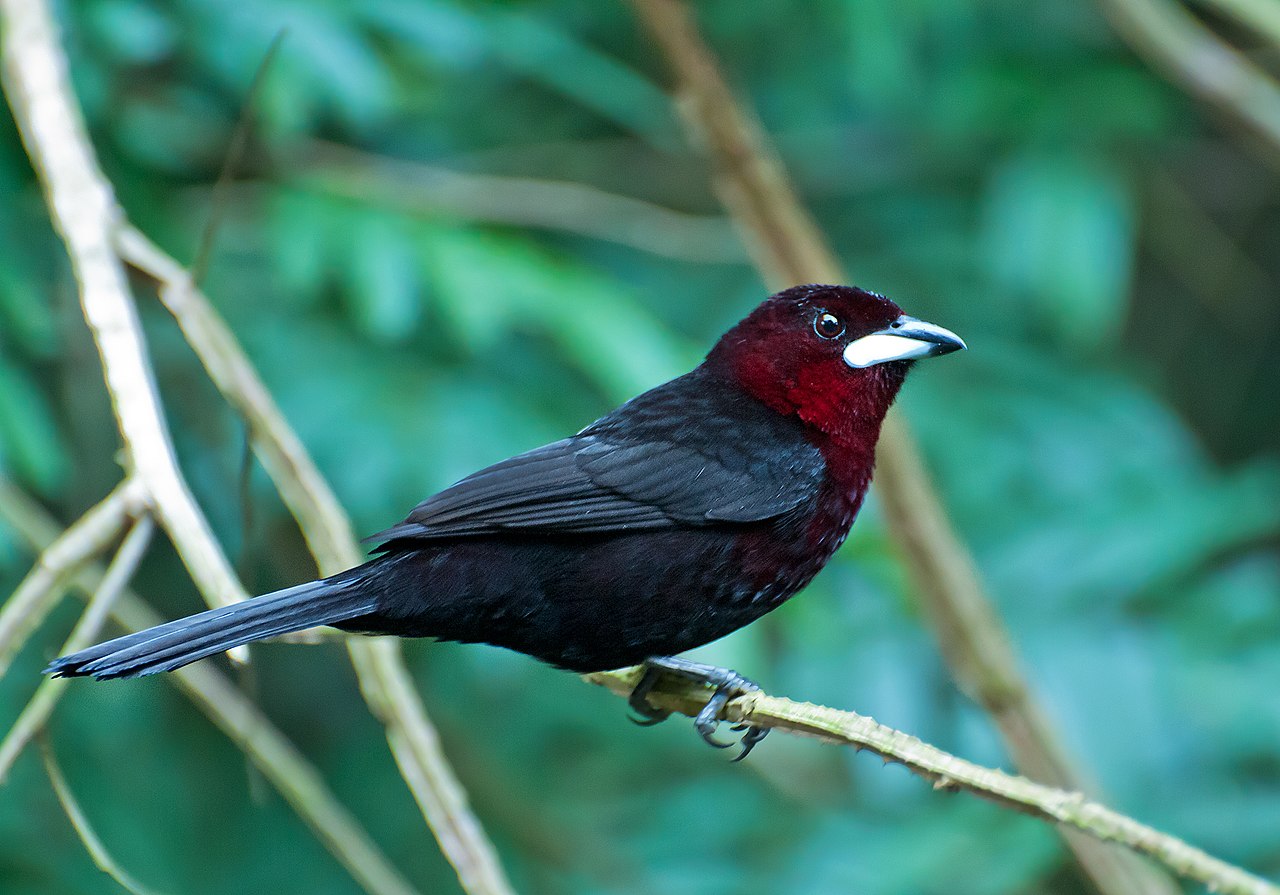
The silver oriole is a species of bird in the family Oriolidae. It breeds in southern China and winters in mainland Southeast Asia.
Region
South China and Mainland Southeast Asia
Typical Environment
Breeds in subtropical evergreen and mixed broadleaf forests of southern China, favoring mature canopy and wooded valleys. In the non-breeding season it uses lowland and foothill evergreen forests, secondary growth, and forest edges across Thailand, Laos, Cambodia, and Vietnam. It forages high in the canopy, often around fruiting trees such as figs. It may also occur along riparian corridors and in lightly wooded agricultural mosaics with tall trees.
Altitude Range
0–1200 m
Climate Zone
Subtropical
Ease of Keeping
Beginner friendly: 1/5
The silver oriole is a striking, scarce oriole with males showing pale silvery plumage contrasted by a black mask and flight feathers. It breeds in southern China and migrates to mainland Southeast Asia for the non-breeding season. It is often overlooked due to its canopy-dwelling habits and confusion with the black-naped oriole. Habitat loss and trapping have contributed to its decline.

Temperament
secretive and canopy-dwelling
Flight Pattern
strong flier with direct, purposeful flight
Social Behavior
Typically seen singly or in pairs during breeding; in winter it may join small mixed-species flocks in the canopy. Nests are neat, suspended cups placed high in trees. Likely monogamous, with both parents participating in rearing young.
Migratory Pattern
Seasonal migrant
Song Description
Song is mellow and fluty, consisting of clear, whistled phrases delivered from high perches. Calls include soft chups and harsher scolding notes when alarmed.
Plumage
Male largely silvery-white to pale grey with glossy black mask, throat, wings, and tail; contrasting white wing panel. Female duller, grey-olive above with paler underparts and less contrasting head pattern.
Diet
Takes a mix of fruits and invertebrates, including figs, berries, caterpillars, beetles, and other insects. It gleans prey from foliage and occasionally sallies to take flying insects. During the non-breeding season, fruit can comprise a large portion of the diet.
Preferred Environment
Forages mainly in the upper and mid-canopy of evergreen and mixed forests. Frequently visits fruiting trees along edges, river corridors, and in semi-open woodland.