
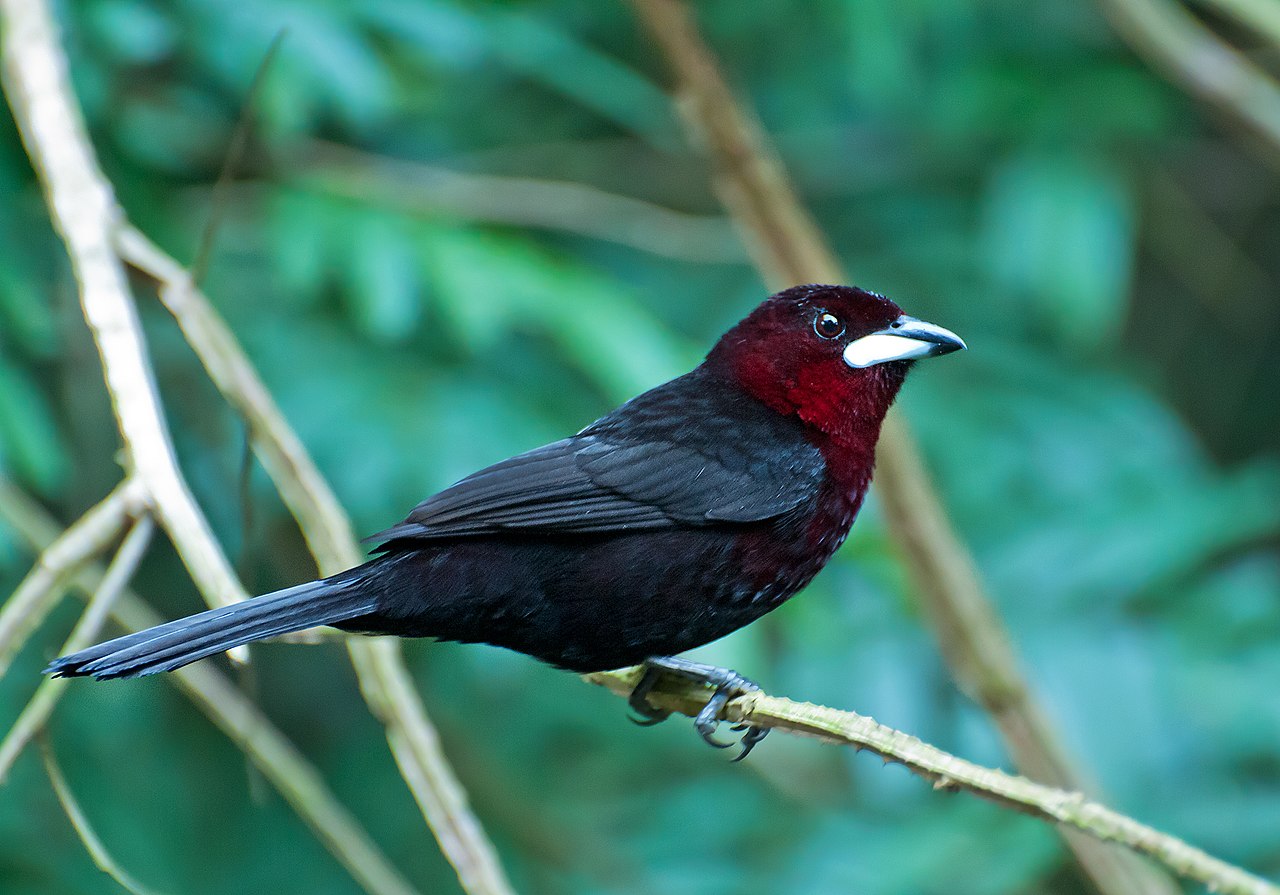
The silver-beaked tanager is a medium-sized passerine bird. This tanager is a resident breeder in South America from eastern Colombia and Venezuela south to Paraguay and central Brazil, Peru and on Trinidad. It is common and conspicuous.
Region
Amazon Basin and northern South America, including Trinidad
Typical Environment
Occurs widely from eastern Colombia and Venezuela south through the Amazon and Orinoco basins to central Brazil, Peru, Bolivia, Paraguay, and on Trinidad. Prefers forest edges, riverine thickets, secondary growth, plantations, and gardens rather than dense interior forest. Common along waterways and in scrubby clearings where fruiting shrubs are abundant. Frequently seen in towns and rural areas, adapting well to human-altered landscapes.
Altitude Range
Sea level to 1500 m
Climate Zone
Tropical
Ease of Keeping
Beginner friendly: 2/5
The silver-beaked tanager is renowned for the male’s striking, pale silvery upper mandible that contrasts with his deep crimson-black plumage. It thrives in disturbed habitats, often visiting gardens and fruit feeders, especially in the Guianas and Trinidad. Several subspecies vary subtly in tone and gloss, but all share the distinctive silvery bill. Pairs and small groups are conspicuous along forest edges and rivers.


Ramphocelus carbo
Temperament
social and active
Flight Pattern
short rapid wingbeats with brief undulations
Social Behavior
Often found in pairs or small family groups, sometimes joining loose mixed-species flocks at fruiting trees. Nests are cup-shaped and placed low to mid-level in shrubs or small trees. Males display from exposed perches and may chase rivals along edges and clearings.
Migratory Pattern
Resident
Song Description
Song is a series of soft whistles and warbles interspersed with sharper notes. Calls include thin metallic chips and short rattles. Vocalizations are frequent at dawn and from prominent perches.
Plumage
Males show velvety deep maroon to blackish-red body with glossy black wings and tail; females are browner with duller rufous underparts. Feathers appear sleek and slightly glossed, especially on the male’s head and breast.
Diet
Primarily eats soft fruits and berries from shrubs and small trees. Supplements diet with insects and other small arthropods gleaned from foliage. Will visit feeders for papaya, banana, and other fruit in gardens. Occasionally takes nectar or small seeds.
Preferred Environment
Forages along forest edges, river margins, second growth, and cultivated areas where fruiting plants are abundant. Often feeds at mid-levels but also descends to low shrubs and visits open yards with fruiting ornamentals.


