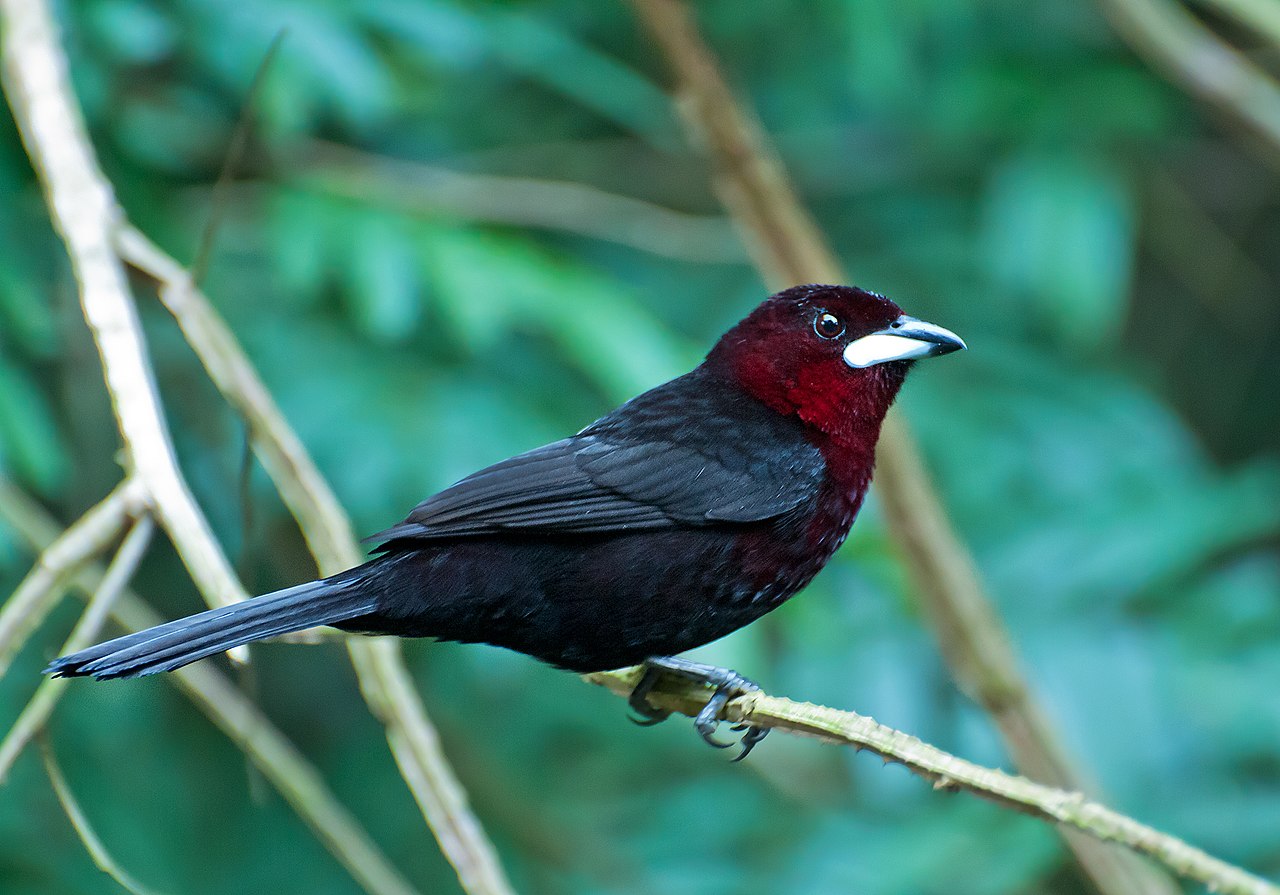
The silver-backed tanager, also known as the silvery tanager, is a species of bird in the tanager family. It is found in humid highland forests in southern Ecuador, Peru, and Bolivia. It is regularly spotted at Machu Picchu.
Region
Andes Mountains
Typical Environment
Occurs along the east slope of the Andes from southern Ecuador through Peru to western Bolivia. Favors humid montane and cloud forests, forest edges, and tall secondary growth. Frequently uses fruiting trees, vine tangles, and bamboo thickets near clearings. It is most often encountered in the mid to upper canopy but will descend to edges and gardens where fruit is available.
Altitude Range
1200–3000 m
Climate Zone
Highland
Ease of Keeping
Beginner friendly: 1/5
Also called the silvery tanager, this Andean species is often seen around Machu Picchu and other humid montane forests. It was formerly placed in the genus Tangara and is now widely treated as Stilpnia. Birds often join mixed-species flocks, and females are typically duller than males but share the distinctive silvery upperparts.


Temperament
social and active
Flight Pattern
short rapid wingbeats
Social Behavior
Commonly travels in pairs or small groups and regularly joins mixed-species flocks moving through the canopy. Builds a small cup nest concealed in dense foliage. Both sexes participate in foraging, and pairs may remain on territory year-round.
Migratory Pattern
Resident
Song Description
High, thin, tinkling phrases interspersed with soft chips. Calls are sharp and sibilant, given frequently while foraging in flocks.
Plumage
Shimmering silvery-gray mantle and back contrasting with darker wings and tail; subtle greenish collar on the nape; underparts clean gray to silvery with darker flanks. Head shows a dusky mask and darker crown, with bright, glossy tones on the back giving a metallic look.
Diet
Eats small fruits and berries, supplemented with insects and other arthropods. Gleans prey from leaves and twigs and will sally short distances to snatch flying insects. Often focuses on fruiting trees and will follow mixed flocks to exploit ephemeral resources.
Preferred Environment
Feeds mainly in the mid to upper canopy along forest edges, clearings, and secondary growth. Also visits gardens and orchards near cloud forest where fruit is abundant.