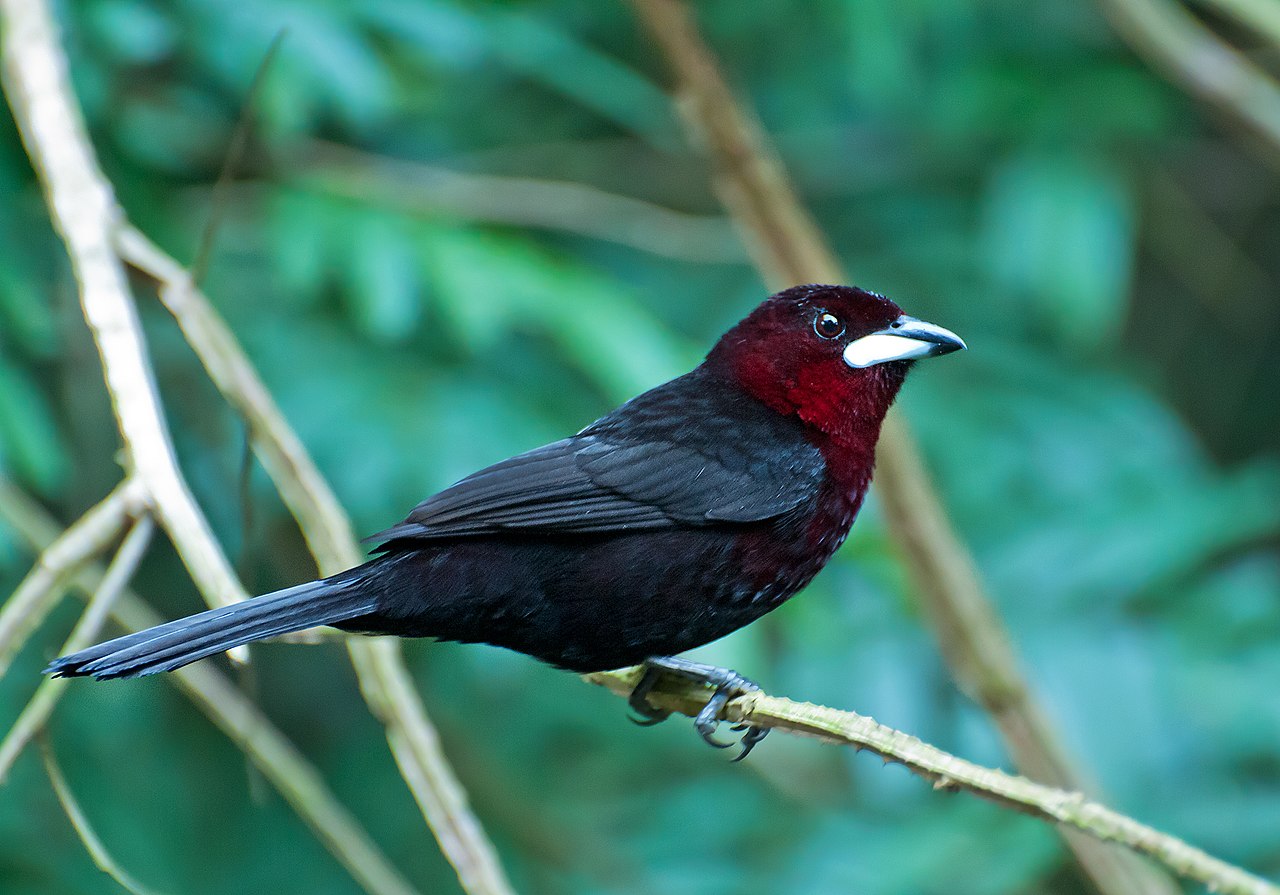
The silver-backed butcherbird is a small, shrike-like bird. It is almost identical to the grey butcherbird of which it considered by some authorities to be a subspecies, C. torquatus argenteus.
Region
New Guinea and Aru Islands
Typical Environment
Occurs in the lowlands of southern New Guinea, extending across the Trans-Fly region and nearby savannas, and on the Aru Islands. It frequents open forests, monsoon woodland, gallery forest, mangroves, and tree-scattered grasslands. The species also uses forest edges, clearings, and lightly wooded agricultural or village areas. It is generally absent from dense montane forest and prefers more open, lowland habitats.
Altitude Range
Sea level to 600 m
Climate Zone
Tropical
Ease of Keeping
Beginner friendly: 1/5
The silver-backed butcherbird is a shrike-like songbird of the New Guinea region, recognized by its pale, silvery-grey back and strong hooked bill. It has often been treated as a subspecies of the Grey Butcherbird (Cracticus torquatus argenteus), but many authorities now regard it as a distinct species. Like other butcherbirds, it may cache or impale prey to consume later. Its clear, musical calls are a prominent feature of lowland woodlands and savannas.

Temperament
solitary and territorial
Flight Pattern
short rapid wingbeats with direct, purposeful flights
Social Behavior
Usually found singly or in pairs that maintain territories year-round. Pairs build a cup nest in a fork or outer branch and both adults feed the young; helpers may occasionally assist. Courtship includes duet-like calling and mutual preening.
Migratory Pattern
Resident
Song Description
Rich, fluty whistles and melodious phrases delivered from prominent perches. Calls can be far-carrying and may include mimicry of other species.
Plumage
Clean, contrasting pattern with a silvery-grey mantle and back, black head and face, and whitish underparts; wings dark with a white panel and tail black with white tips.
Diet
Takes large insects, spiders, and other arthropods, along with small lizards, frogs, and occasionally small birds or nestlings. It hunts from exposed perches, dropping onto prey or snatching items from foliage and ground. Like other butcherbirds, it may wedge or impale prey to tear it apart. Opportunistically consumes some fruit when available.
Preferred Environment
Feeds along woodland edges, open forests, riparian strips, and mangrove margins where perches offer good visibility. It also forages in lightly wooded savanna, gardens, and around villages.