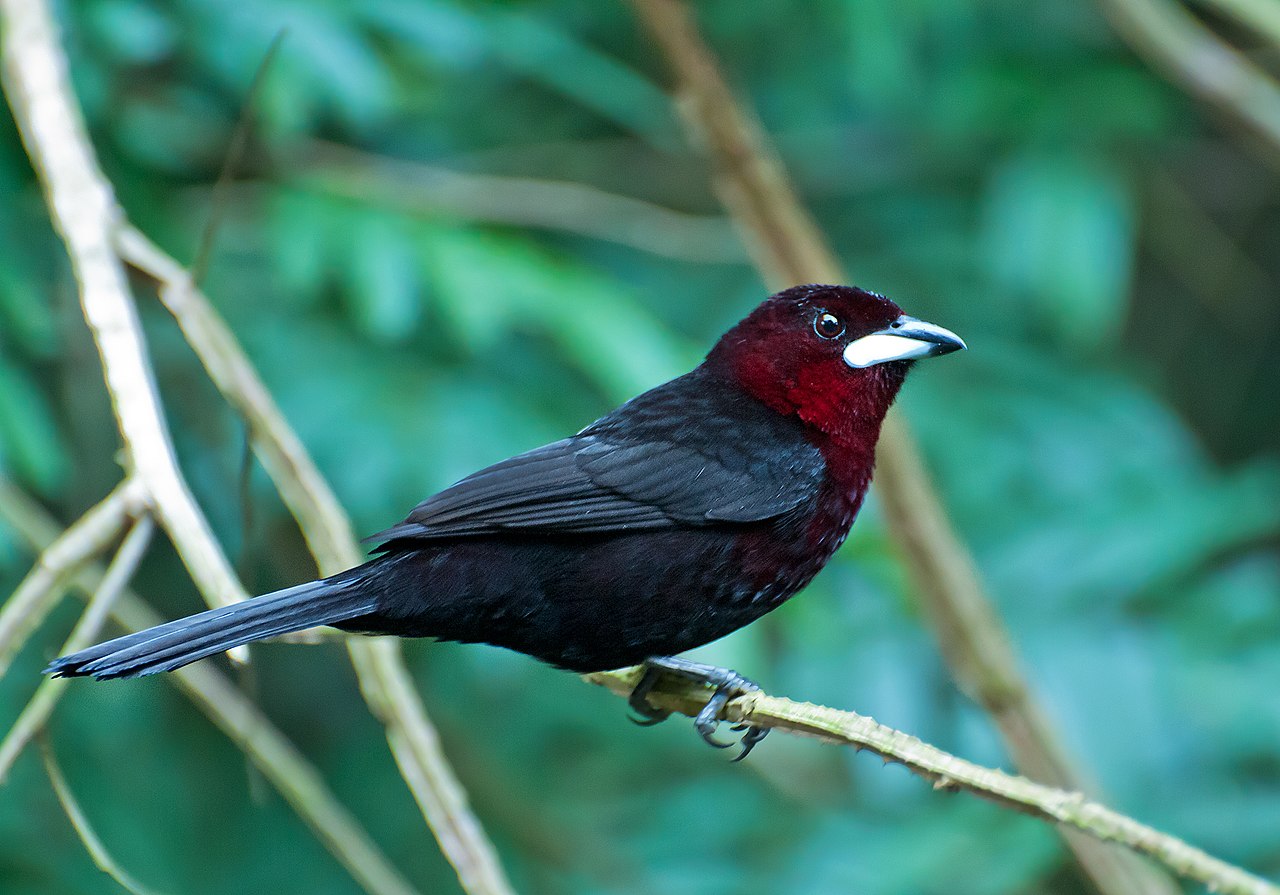
The silver-backed needletail is a species of swift in the family Apodidae. It is found in Southeast Asia, Sumatra, Java and Taiwan. It is a vagrant to Christmas Island. Its natural habitat is subtropical or tropical moist lowland forests.
Region
Southeast Asia
Typical Environment
Occurs from Indochina through the Malay Peninsula to Sumatra and Java, with records in Taiwan and as a vagrant to Christmas Island. It favors subtropical and tropical moist lowland forests and adjacent edges, but also ranges above rivers, plantations, and upland slopes. Often seen hawking high over forest canopies and along mountain ridgelines where updrafts concentrate insects. Roosting is on cliffs, large emergent trees, or inside natural cavities near foraging areas.
Altitude Range
Sea level to 2000 m
Climate Zone
Tropical
Ease of Keeping
Beginner friendly: 1/5
A powerful swift that spends most of its life on the wing, the silver-backed needletail is built for speed and endurance. Its stiff, spine-tipped tail feathers help it brace against vertical surfaces when roosting. Flocks often gather over ridgelines before storms, catching aerial insects carried upward by rising air.

Temperament
social and active
Flight Pattern
very fast flier with rapid, powerful wingbeats; long, arcing passes over canopy
Social Behavior
Typically seen in small to medium flocks, sometimes mixed with other swift species. Nests are placed in tree hollows, cliff crevices, or cavities, with both adults sharing incubation and chick rearing. Roosting often occurs communally at secure vertical sites near foraging areas.
Migratory Pattern
Partial migrant
Song Description
Vocalizations are high-pitched chips and twittering calls given in flight. Calls carry well at height but lack a complex song, functioning mainly for contact within fast-moving flocks.
Plumage
Sooty to dark brown overall with a contrasting pale silvery-grey saddle across the back and rump; wings long and scythe-like with a compact, barrel-chested body; tail short with stiff, needle-like tips.
Diet
Feeds almost exclusively on aerial insects such as beetles, flying ants and termites, wasps, and other small winged insects. It forages on the wing, often high above the canopy or over ridgelines where insects concentrate in updrafts. During hatches or pre-storm conditions, it may gather in large, fast-moving feeding flocks.
Preferred Environment
Most often hunts over forest edges, river corridors, and above hilltops where rising air masses lift insects. It also ranges over cultivated areas and clearings adjacent to mature forest.