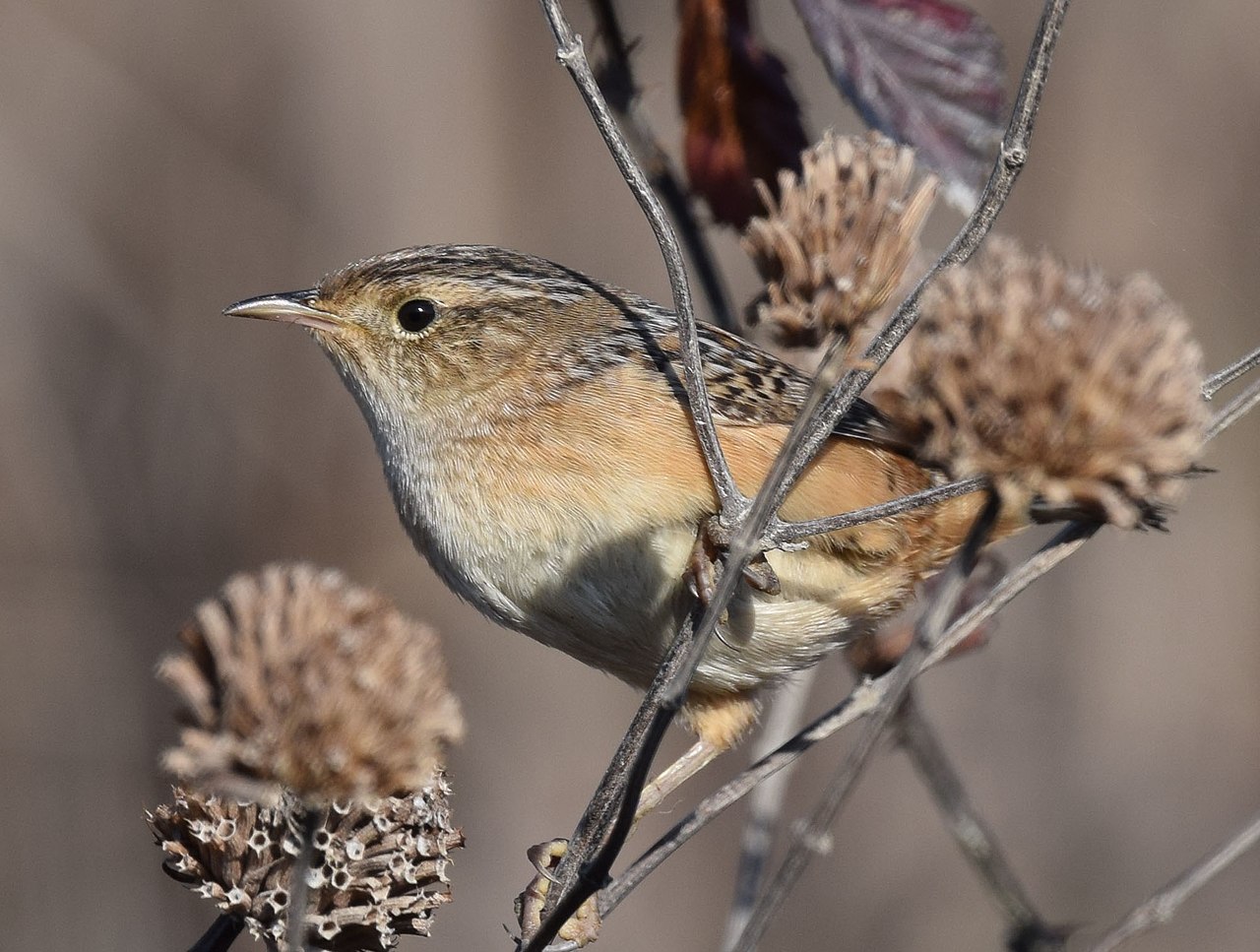
The scrub honeyeater is a species of bird in the family Meliphagidae. It is found across New Guinea. Its natural habitats are subtropical or tropical moist lowland forests and subtropical or tropical moist montane forests.
Region
New Guinea
Typical Environment
Occurs broadly across New Guinea in lowland and foothill zones, using subtropical and tropical moist forests. Common along forest edges, riverine thickets, secondary growth, gardens, and scrubby clearings. It also ventures into degraded woodland and selectively logged areas, tracking flowering trees and shrubs. More localized in dense interior forest but regular in semi-open mosaic habitats.
Altitude Range
Sea level to 2000 m
Climate Zone
Tropical
Ease of Keeping
Beginner friendly: 1/5
The scrub honeyeater is a small, drab-olive meliphagid widespread across New Guinea, where it readily uses forest edges and secondary growth. It often joins mixed-species foraging flocks and feeds on both nectar and small arthropods. Its adaptability to disturbed habitats helps keep populations stable. Vocalizations are thin, squeaky notes and brief rattles that can be heard from mid-canopy perches.

Temperament
active and somewhat skulking
Flight Pattern
short rapid wingbeats
Social Behavior
Typically seen singly, in pairs, or in small loose groups, and frequently associates with mixed-species flocks in the mid-canopy. Builds a small cup nest suspended in a fork or hung from foliage. Pairs maintain small territories around food resources during breeding.
Migratory Pattern
Resident
Song Description
Song and calls are thin, high-pitched squeaks and tinkling phrases interspersed with short rattles. Vocalizations carry through edge habitats but are modest in volume and easily overlooked among mixed flocks.
Plumage
Mostly olive to olive-brown above with paler, yellow-olive underparts and a slightly grayer head. Subtle pale crescent or spot at the rear of the ear-coverts and a faint whitish malar/gape line. Wings and tail edged yellow-olive; overall plain, lacking bold streaks.
Diet
Takes nectar from a variety of flowering trees and shrubs and supplements with small insects and spiders gleaned from foliage and bark. Will sally short distances to snatch flying insects when abundant. Also consumes occasional soft fruits and honeydew when available.
Preferred Environment
Forages in forest edges, secondary growth, riverine thickets, and gardens, typically from understory to mid-canopy. Often tracks seasonal blooms and concentrates around flowering trees.