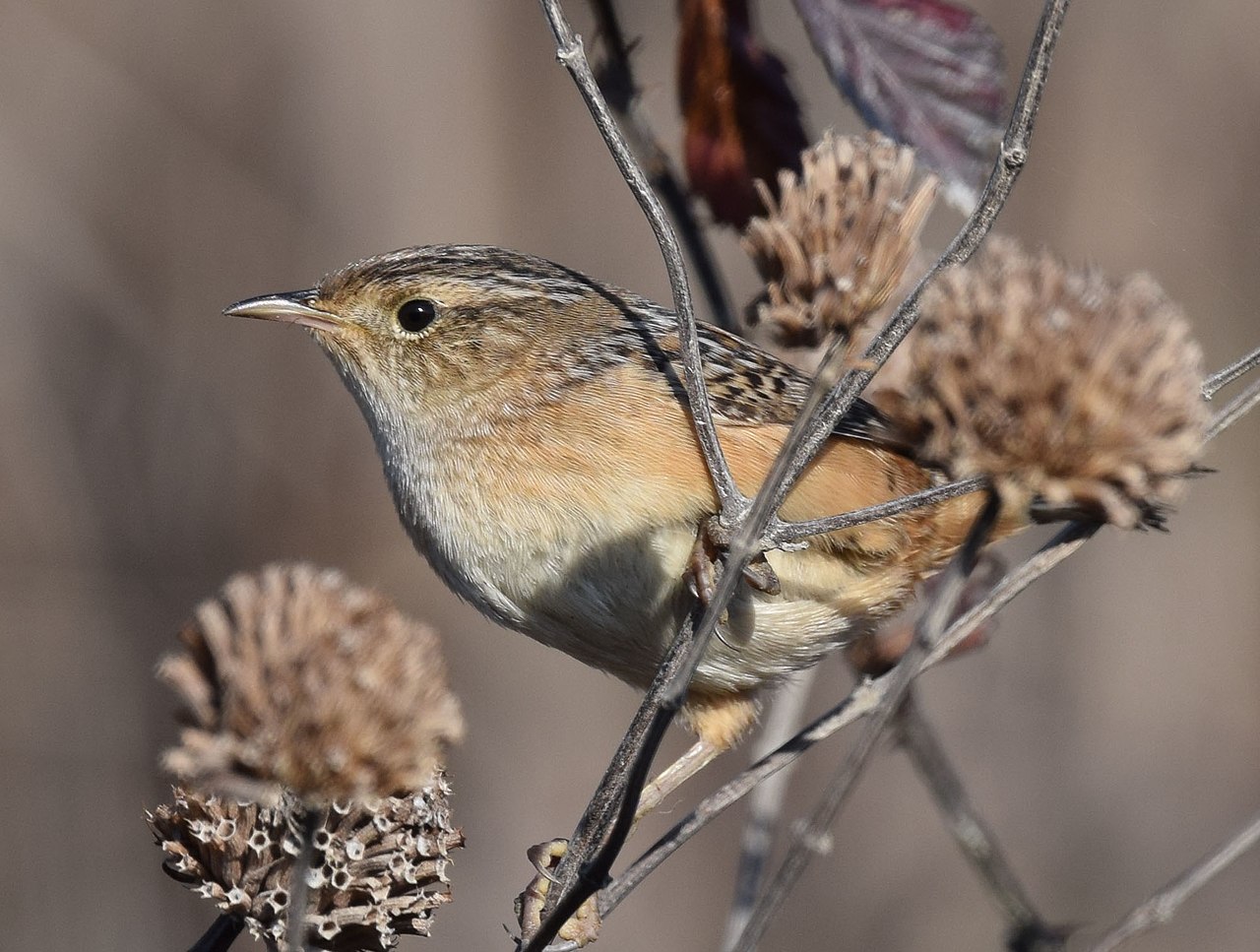
The seaside sparrow is a species of American sparrow.
Region
Atlantic and Gulf Coasts of the United States
Typical Environment
Found in coastal salt and brackish marshes from southern New England down the Atlantic seaboard, around Florida, and west along the Gulf Coast to Texas. It favors expansive, low-lying tidal marshes dominated by cordgrass (Spartina) and needlerush (Juncus). Nests are placed slightly above the highest regular tide line in dense vegetation and along tidal creeks. The species rarely occurs far inland except in brackish estuaries and river deltas.
Altitude Range
Sea level to 10 m
Climate Zone
Temperate
Ease of Keeping
Beginner friendly: 1/5
The seaside sparrow is tightly tied to coastal salt marshes and is one of the most salt‑marsh‑specialized North American passerines. It nests low in dense cordgrass, making it vulnerable to flooding from storms and king tides. The extinct Dusky Seaside Sparrow was a subspecies from Florida, highlighting how localized marsh losses can erase unique populations. Sea‑level rise and marsh degradation are ongoing conservation concerns for the species.


The recently-extinct dusky seaside sparrow (A. m. nigrescens)
Temperament
secretive and skulking
Flight Pattern
short rapid wingbeats low over the marsh
Social Behavior
Generally forms monogamous pairs in the breeding season, nesting in dense marsh grasses in well-hidden cup nests. Outside of breeding, it may forage in small loose groups, especially at low tide along tidal creeks. Territoriality is strongest during nesting when pairs defend small patches within suitable marsh.
Migratory Pattern
Partial migrant
Song Description
Song is a buzzy, insect-like trill that rises and ends abruptly, often delivered from a low perch in grass. Calls include sharp chips and metallic tseks, frequently given while moving through dense vegetation.
Plumage
Dusky olive-brown above with fine streaking, grayish head, and heavily streaked underparts with a dusky wash.
Diet
Eats insects, spiders, and other invertebrates such as amphipods, small crabs, and snails, supplemented with seeds of marsh plants like cordgrass. During the breeding season, animal prey dominates, while plant material and seeds increase in the non-breeding period. It often gleans from stems and probes among wrack and mud at marsh edges.
Preferred Environment
Forages on the ground and low vegetation within tidal saltmarshes, especially along creek banks, panne edges, and wrack lines. Low tides expose mudflats and creek margins where prey is more accessible.