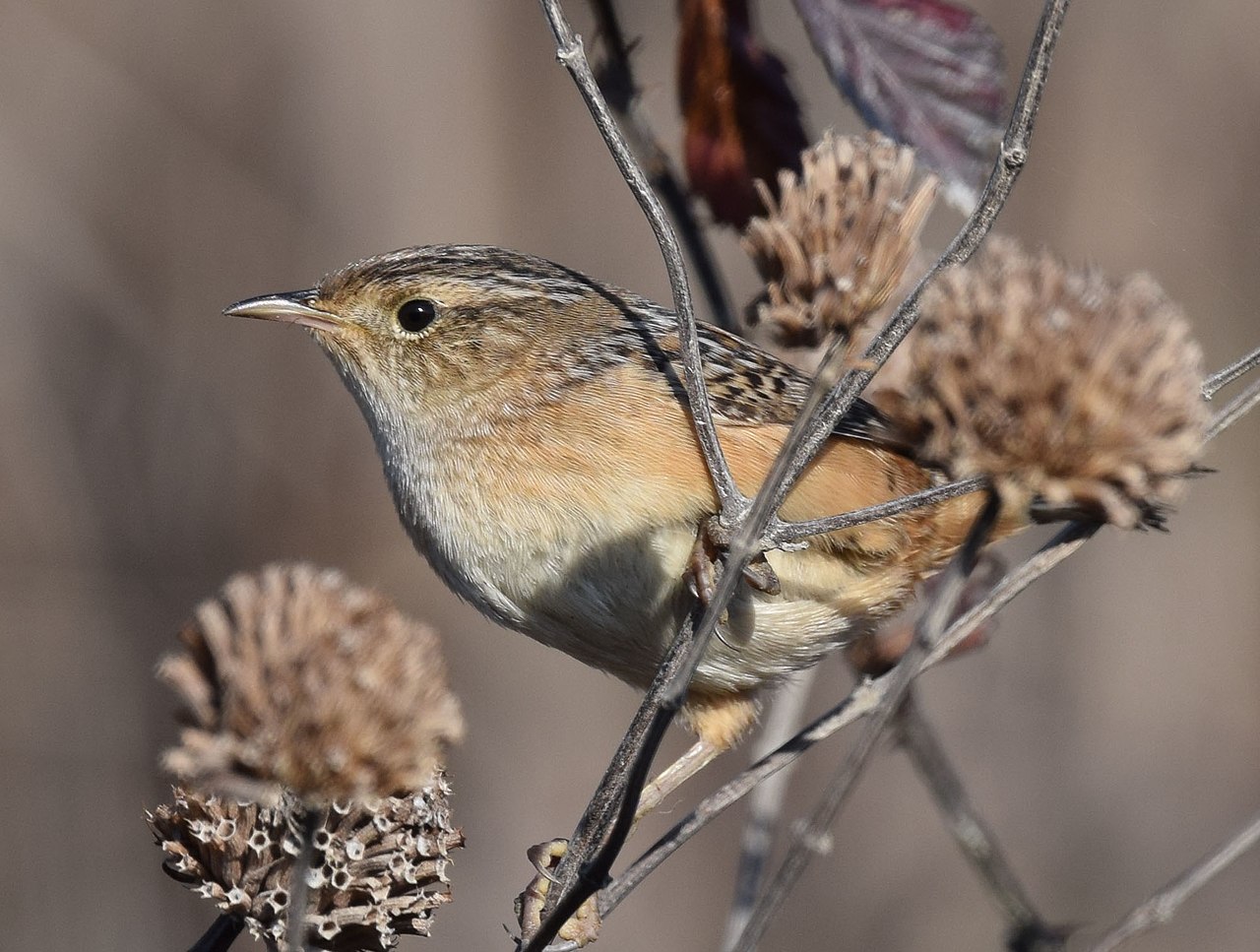
The sedge warbler is an Old World warbler in the genus Acrocephalus. It is a medium-sized warbler with a brown, streaked back and wings and a distinct pale supercilium. Sedge warblers are migratory, crossing the Sahara to get from their European and Asian breeding grounds to spend winter in Africa. The male's song is composed of random chattering phrases and can include mimicry of other species. The sedge warbler is mostly insectivorous.
Region
Europe and western Asia (breeding); sub-Saharan Africa (wintering)
Typical Environment
Breeds in wetlands with dense vegetation, especially reedbeds, sedge marshes, fens, and damp scrub. Prefers mosaic habitats with tall reeds, sedges, and scattered willows or shrubs near standing or slow-flowing water. During migration and winter, it uses reedbeds, river edges, flooded grasslands, and Sahelian scrub with tall grasses. It stages at rich wetland stopovers to rapidly gain fat before and after crossing the Sahara.
Altitude Range
Sea level to 1500 m
Climate Zone
Temperate
Ease of Keeping
Beginner friendly: 1/5
The sedge warbler is a lively Old World warbler famous for its rich, fast, and improvisational song that often includes mimicry of other birds. It breeds across temperate Europe and western Asia and migrates across the Sahara to winter in sub-Saharan Africa. Males may perform brief song-flights above reedbeds during the breeding season. Outside the breeding season, it can form loose flocks at reed-filled stopover sites.


Sedge warbler in its habitat: a reedbed. Uitkerke, Belgium.

Egg, Collection Museum Wiesbaden

Sedge warbler carrying grubs
Temperament
active but somewhat secretive; territorial in breeding season
Flight Pattern
short rapid wingbeats with low, darting flights; occasional brief song-flights
Social Behavior
Generally solitary or in pairs when breeding; males defend territories and sing from exposed perches or within reeds. The nest is a deep cup low in sedges or reeds; clutch typically 4–6 eggs. Both adults feed the nestlings; loose aggregations may form at rich stopover reedbeds during migration.
Migratory Pattern
Seasonal migrant
Song Description
A fast, chattering, and highly varied warble delivered in bursts, often including mimicry of other birds. Males may sing continuously, day and night, especially early in the breeding season. Song-flights with excited chatter are common over reedbeds.
Plumage
Upperparts warm brown with strong dark streaking; crown dark and streaked; underparts pale buff to whitish with a light buff wash on flanks. Distinct, broad pale supercilium contrasts with a darker eye-stripe. Wings and tail are brown with fine edging; no bold wingbars.
Diet
Primarily small insects and other invertebrates such as flies, beetles, caterpillars, spiders, and aphids. It gleans prey from reed stems and foliage, and also takes insects in short sallies. In late summer and autumn, it may supplement its diet with berries such as elder and bramble to build fat for migration.
Preferred Environment
Feeds within dense reeds, sedges, and wet scrub, often low to mid-vegetation. Uses reed edges, ditches, and marsh margins, and at stopovers concentrates in extensive reedbeds with abundant insect life.