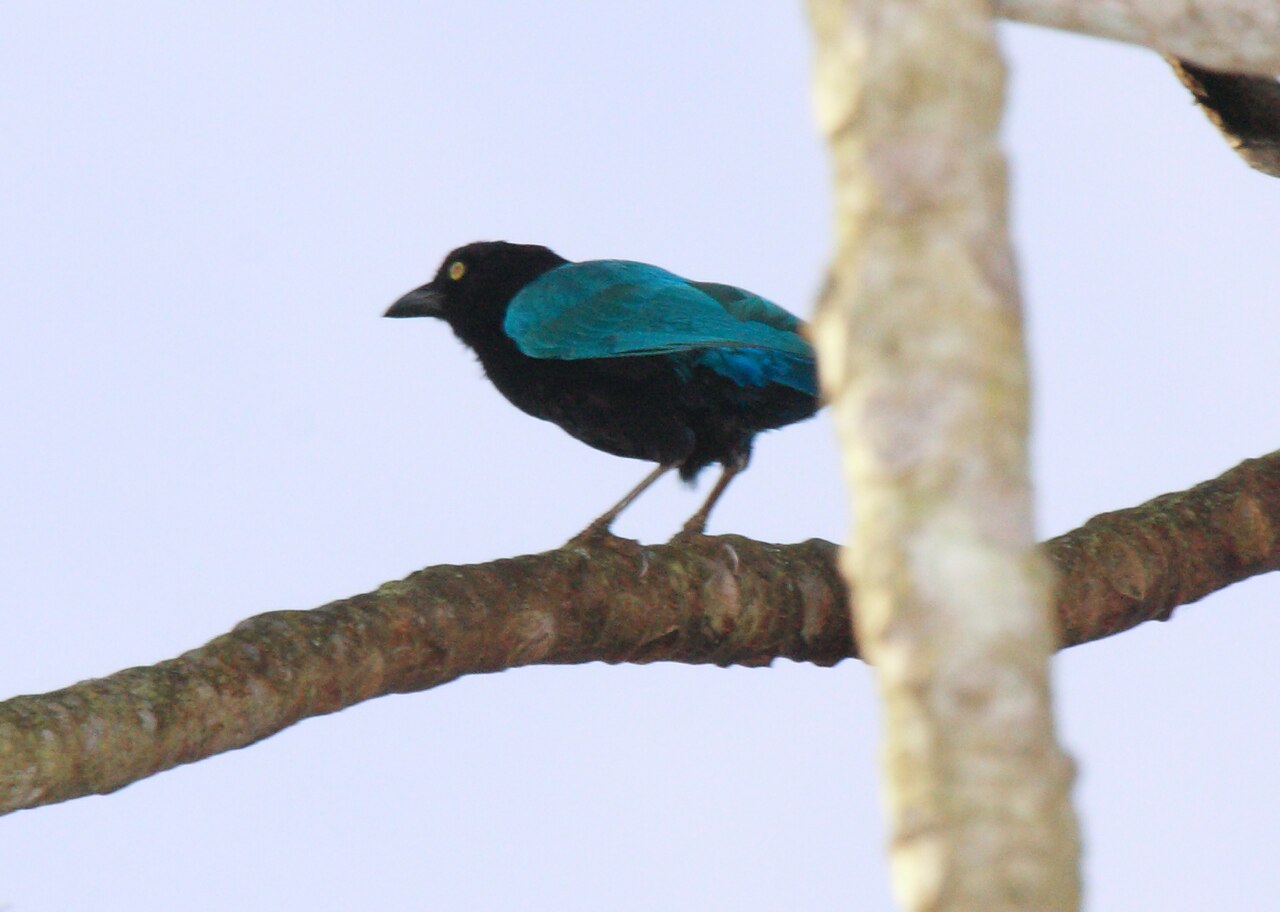
The Samoan white-eye is a species of bird in the family Zosteropidae. It is endemic to the island of Savai'i in Samoa.
Region
Samoan Islands
Typical Environment
This species is restricted to the upper montane and cloud forests of Savai'i, where trees are draped in epiphytes and mosses. It forages from the understory to the canopy, favoring dense, mature forest but also occurring along forest edges and ridgelines. It tolerates some secondary growth but generally avoids lowland agricultural areas. Intact, humid forest with a complex vertical structure is essential for nesting and feeding.
Altitude Range
900–1800 m
Climate Zone
Tropical
Ease of Keeping
Beginner friendly: 1/5
The Samoan white-eye is one of Samoa’s most localized birds, confined to high-elevation forests on the island of Savai'i. It often travels in small, active parties, gleaning insects and sipping nectar among moss-laden branches. Its bold white eye-ring makes it easy to recognize but it can be hard to find due to its remote montane habitat. Habitat loss, severe storms, and invasive predators are key concerns for its long-term survival.
Temperament
social and active
Flight Pattern
short rapid wingbeats
Social Behavior
Usually seen in pairs or small family groups, sometimes joining mixed-species foraging parties. Builds a small cup nest suspended in shrubs or small trees. Both parents typically participate in incubation and chick rearing.
Migratory Pattern
Resident
Song Description
A high, thin warble interspersed with soft chips and trills. Contact calls are quick, ringing notes given while moving through foliage.
Plumage
Olive-green upperparts with a yellowish throat and vent, and paler grayish-white underparts.
Diet
Feeds on small insects, spiders, and other arthropods gleaned from leaves and bark. Also takes nectar from flowers and small soft fruits, especially when insect prey is less abundant. Foraging is agile and methodical, often probing clusters of leaves and epiphytes.
Preferred Environment
Most frequently forages in humid montane forest from midstory to canopy. Uses forest edges, clearings, and ridgelines where flowering and fruiting plants are available.