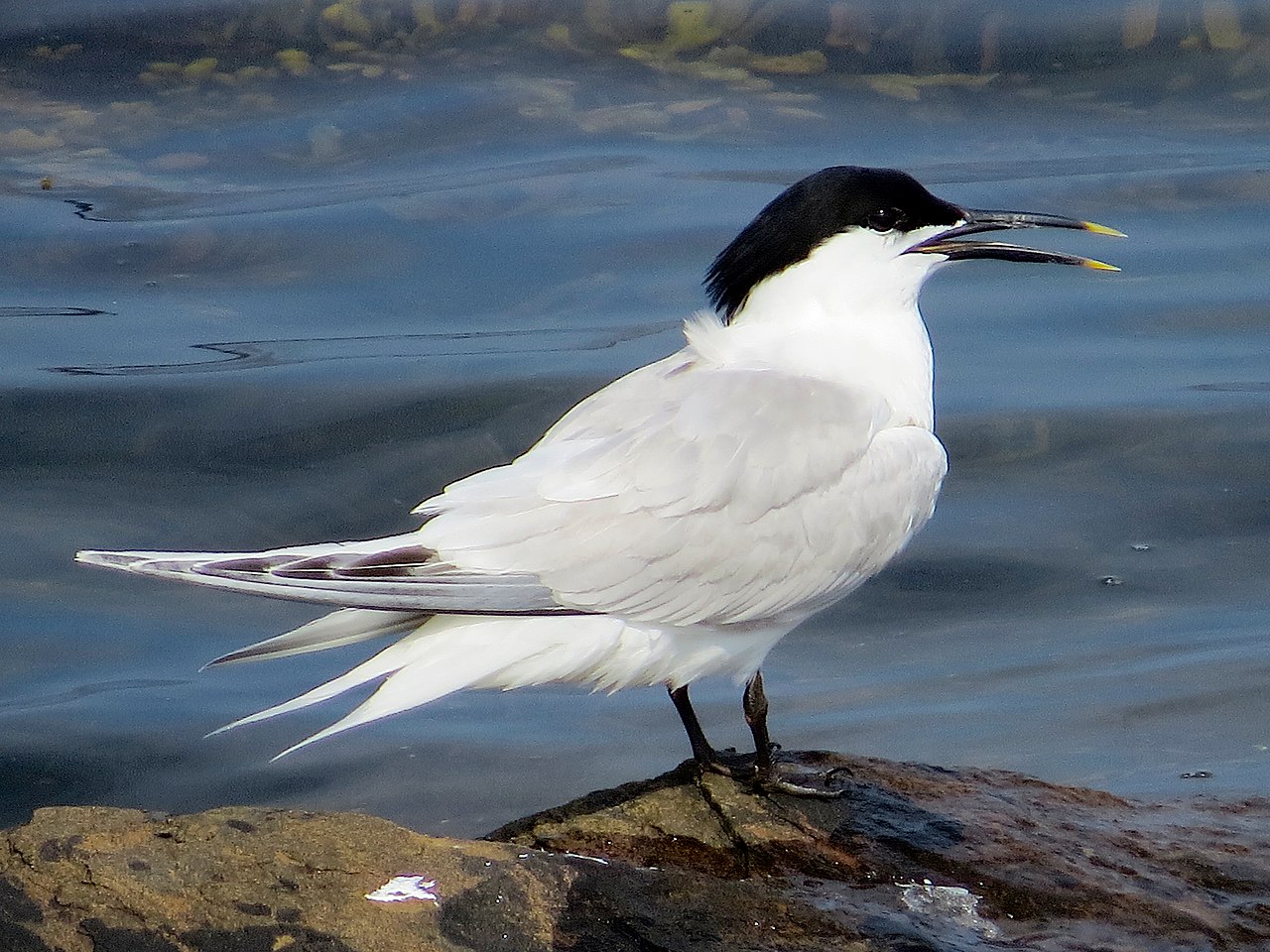
The sand martin, also known as the collared sand martin or common sand martin, and in the Americas as the bank swallow, is a migratory passerine bird in the swallow family Hirundinidae. It has a wide range in summer, embracing practically the whole Holarctic area, from Europe, across Asia to the Pacific Ocean, and throughout North America. It winters in eastern and southern Africa, southern Asia, and South America.
Region
Holarctic (breeding); Africa, South Asia and South America (nonbreeding)
Typical Environment
Breeds across much of the Holarctic, including Europe, temperate Asia, and North America, where it favors vertical sandy banks along rivers, lakes, and coastal dunes. Outside the breeding season it winters through sub-Saharan Africa, the Indian subcontinent and Southeast Asia, and parts of northern South America. Colonies often form in gravel pits, road cuttings, and other disturbed sites that expose soft substrates. Roosting in dense flocks over reedbeds or shrubs is common in the nonbreeding period.
Altitude Range
Sea level to 3000 m
Climate Zone
Temperate
Ease of Keeping
Beginner friendly: 1/5
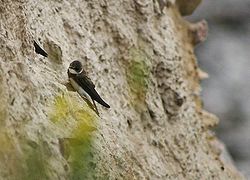
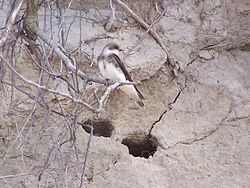
Sand martins, called bank swallows in the Americas, breed colonially in burrows they excavate into vertical sandy or loamy banks. They often take advantage of rivers, coastal dunes, and even human-made sand pits or quarries. Erosion control and riverbank hardening can remove nesting habitat, while newly exposed sand faces can quickly attract large colonies. They are agile aerial insectivores with a distinctive brown breast band.


R. r. shelleyi at Abbassia, Egypt


Temperament
social and active
Flight Pattern
agile flier with quick, shallow wingbeats and frequent glides
Social Behavior
Highly colonial breeder, with dozens to thousands of pairs nesting together in burrows excavated into vertical sand or silt faces. Pairs are generally monogamous within a season; both sexes dig the tunnel and share incubation and chick rearing. Outside the breeding season they form large flocks and often roost communally.
Migratory Pattern
Seasonal migrant
Song Description
A constant dry, buzzy twittering delivered in flight, with rolling trills and rattles. Contact calls are short, harsh chips; the overall voice is softer and more rattling than that of larger swallows.
Plumage
Soft brown upperparts with clean white underparts divided by a narrow, dusky brown breast band; slightly forked tail.
Diet
Feeds almost exclusively on small aerial insects such as midges, mosquitoes, flies, mayflies, and small beetles. Forages on the wing, often low over water or open ground, taking advantage of hatching insect swarms. Diet composition shifts with local abundance, focusing on emergent aquatic insects near rivers and lakes.
Preferred Environment
Hunts over rivers, lakes, wetlands, coastal lagoons, farmland, and open countryside, especially where insect densities are high. Frequently concentrates along watercourses and around colonies, expanding to surrounding open habitats.