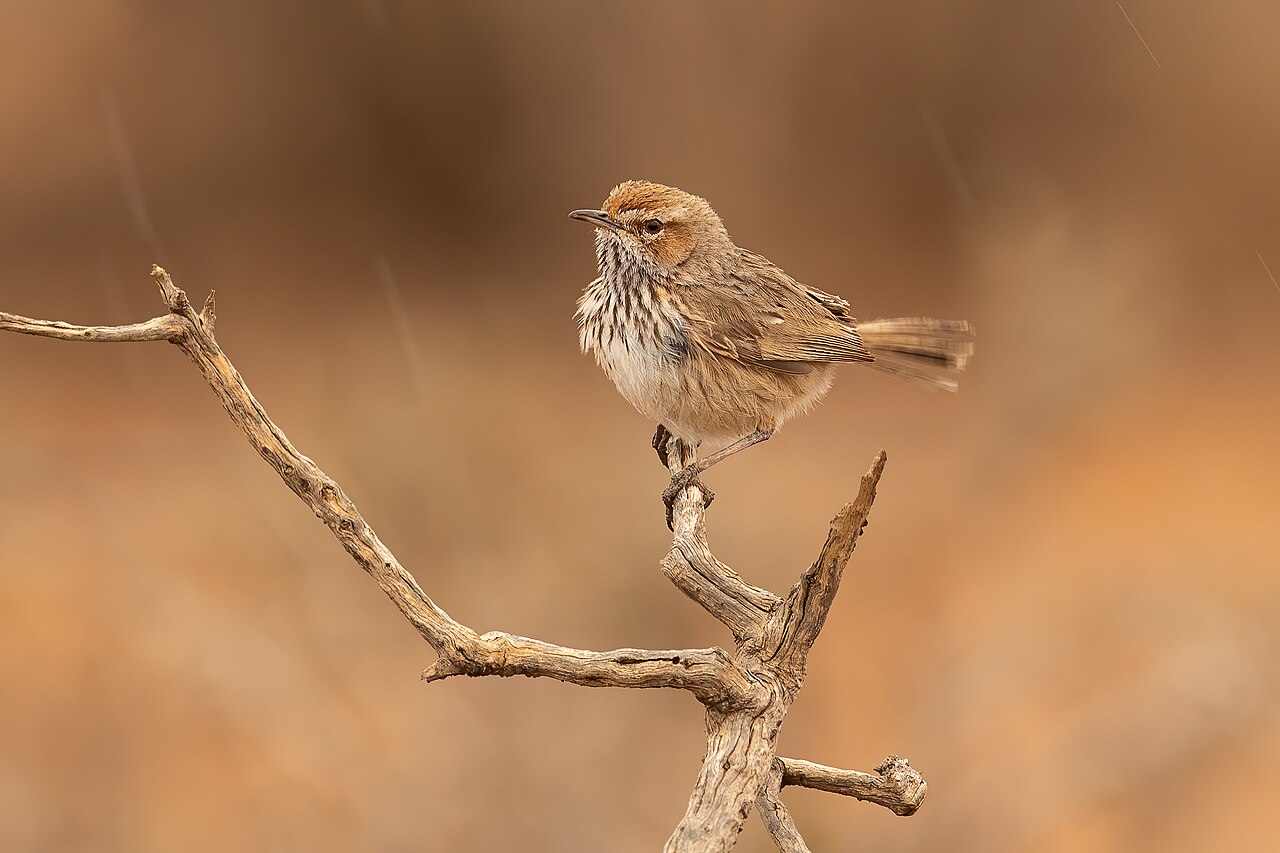
The rufous bristlebird is one of three extant species of bristlebirds. It is endemic to Australia and three subspecies have been described, from coastal south-western Western Australia, south-eastern South Australia and south-western Victoria. Its natural habitat is coastal shrublands and heathlands. It is threatened by habitat destruction.
Region
Southern Australia
Typical Environment
Found in coastal shrublands and heathlands of south-western Western Australia (historically), south-eastern South Australia, and south-western Victoria. It favors dense, long-unburnt coastal heath, tea-tree and banksia thickets, dune swales, and heathy woodland edges. The species keeps close to the ground, using thick understory for cover and nesting. Fragmentation, frequent fires, and invasive predators constrain its distribution and movement between habitat patches.
Altitude Range
Sea level to 400 m
Climate Zone
Temperate
Ease of Keeping
Beginner friendly: 1/5
The rufous bristlebird is a shy, ground-dwelling songbird that rarely flies, preferring to sprint between dense cover. It gets its name from the prominent bristles at the base of its bill, which help it probe leaf litter. Populations are fragmented along the southern Australian coast and are highly sensitive to frequent fires and habitat clearing. The western subspecies (D. b. litoralis) is believed extinct.

Temperament
secretive and skulking
Flight Pattern
reluctant flier with short rapid wingbeats low over the ground
Social Behavior
Usually found singly or in pairs holding year-round territories. Likely monogamous, with pairs maintaining close contact through calls. Nests are placed low in dense shrubs or tussocks, well concealed within thick heath.
Migratory Pattern
Resident
Song Description
A loud, ringing series of clear, repeated phrases that carries through dense vegetation. Pairs often duet, with sharp scolding calls given when disturbed.
Plumage
Rich rufous head and upperparts blending into brownish-olive back with subtle streaking; underparts grey-buff with a paler throat. Long, graduated tail often held cocked; fine rictal bristles visible around the bill.
Diet
Primarily takes ground-dwelling insects and other small invertebrates such as beetles, ants, spiders, and larvae. It probes and flicks through leaf litter and fine debris using its bill and facial bristles. Occasional small seeds and berries may be consumed, especially when invertebrates are scarce.
Preferred Environment
Feeds within dense coastal heath, thickets, and along track edges where leaf litter accumulates. Often forages in sheltered microhabitats with continuous understory cover.