
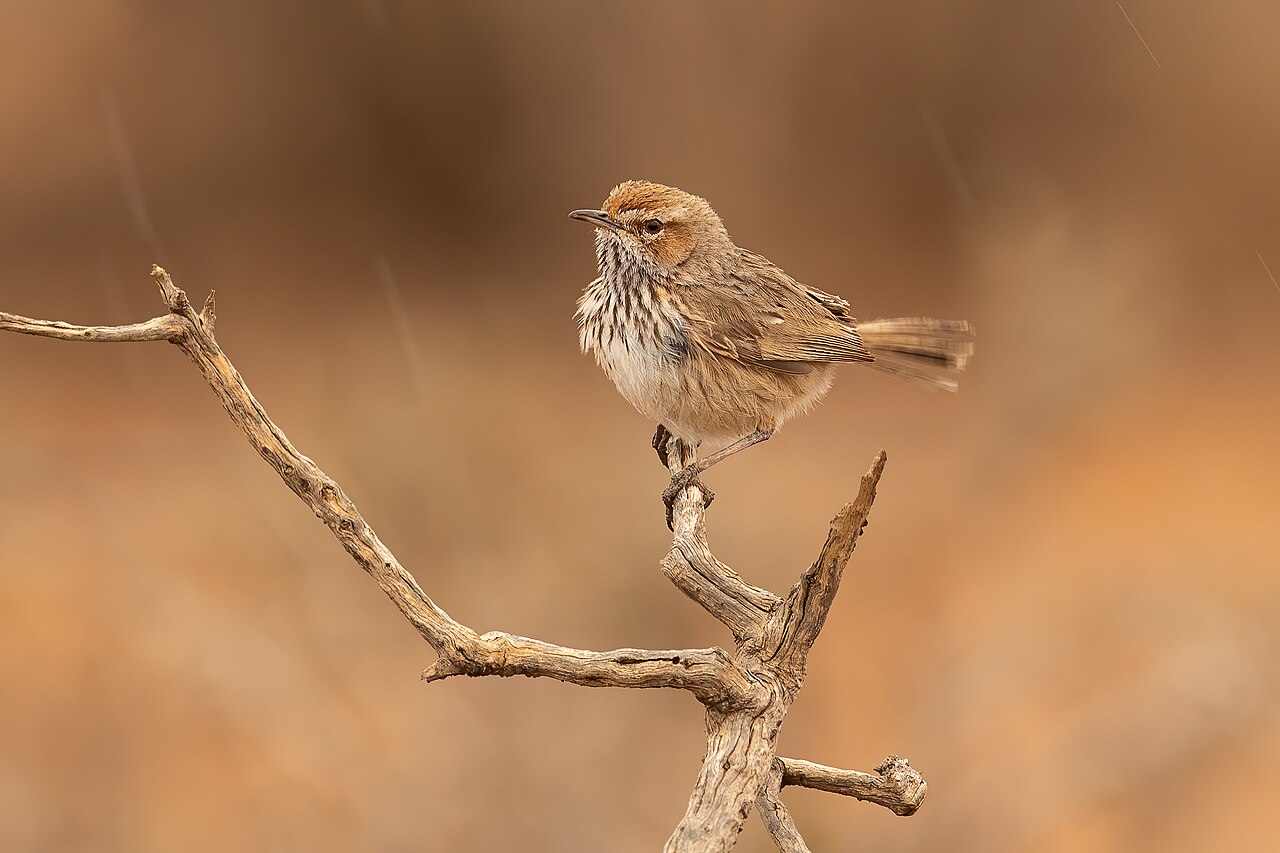
The rufous fieldwren also known as the desert wren or sandplain wren is a species of insectivorous bird in the family Acanthizidae, endemic to Australia.
Region
Southern Australia
Typical Environment
Found patchily across southern mainland Australia, especially in coastal and inland heaths, mallee shrublands, and sandplain scrub. It favors low, dense vegetation on sandy or loamy soils, including saltbush and samphire around inland saline flats. The species also occurs on coastal dunes and limestone heath. It keeps close to the ground, moving through cover and perching briefly to sing, particularly after rain.
Altitude Range
Sea level to 600 m
Climate Zone
Arid
Ease of Keeping
Beginner friendly: 1/5
The rufous fieldwren is a ground-loving songbird of open heath and shrublands, often running mouse-like through dense cover with its tail cocked. Despite its secretive habits, males deliver a loud, ringing song from exposed perches. Western populations are sometimes treated as a separate species (Western Fieldwren) in some taxonomies. It is primarily insectivorous and plays a role in controlling invertebrate populations.


Lake Tyrrell, Victoria, Australia

Rufous fieldwren

Striated fieldwren
Temperament
solitary and territorial
Flight Pattern
short rapid wingbeats with low, fluttering flights
Social Behavior
Usually seen singly or in pairs, maintaining territories year-round. Nests are built low in dense shrubs or grasses, typically domed with a side entrance. Breeding is mostly in spring to early summer, often following good rains, and both adults tend the young.
Migratory Pattern
Resident
Song Description
A loud, ringing series of trills and clear whistles delivered from a low perch or shrub top. Calls include sharp ticks and chatters given from cover. Song carries well across open heath and is used for territory advertisement.
Plumage
Warm rufous-brown upperparts with fine streaking, paler buff underparts with light streaks on the breast, and a slightly rufous rump and tail. Feathers are soft and mottled for camouflage in heath and scrub. Tail is often cocked and shows darker subterminal markings when spread.
Diet
Feeds mainly on insects and other small invertebrates such as beetles, ants, spiders, and larvae. It gleans from low shrubs and probes leaf litter and soil surface. Occasional small seeds may be taken, especially in drier periods, but animal prey dominates.
Preferred Environment
Forages on the ground and in the bases of shrubs within heaths, mallee understory, saltbush, and samphire flats. Often works along the edges of paths, bare patches, and litter-rich microhabitats where prey is accessible.


